
Trump Says Iran War 'Very Close to Over' as Fragile Ceasefire Nears Expiration
Cover image from independent.co.uk, which was analyzed for this article
President Trump stated the war with Iran is nearly concluded and direct talks could restart within days, possibly in Pakistan, boosting market sentiment. Despite the ongoing blockade, optimism for de-escalation is growing. Outlets highlight both hopeful signals and remaining hurdles.
PoliticalOS
Wednesday, April 15, 2026 — Politics
The Iran conflict now turns on whether renewed talks in Pakistan can bridge a deep nuclear divide before the April 22 ceasefire expires. Trump's blockade has increased pressure on Tehran but also risks escalation, while casualty counts and displacement figures remain fluid and only partially corroborated. The single most important reality is that both sides claim to want a deal yet have so far refused the compromises required to make one stick.
What outlets missed
Most coverage underplayed the full scale of humanitarian costs, with only isolated references to more than 1,200 civilian deaths and 3.2 million displaced inside Iran according to NPR and humanitarian monitors. Few outlets provided the precise nuclear proposals exchanged in Islamabad—a U.S. demand for a 20-year enrichment suspension versus Iran's three-to-five-year counteroffer—despite those details appearing in Reuters and Al Jazeera reporting. The sequence of events was often compressed: Iran's closure of the Strait of Hormuz in early March preceded the U.S. blockade by more than a month, yet many stories presented the American action as the first disruption. Independent verification of blockade effectiveness was thin; maritime data showing vessels still moving was mentioned by CNBC but omitted by pro-administration outlets. Finally, the reported assassination of Supreme Leader Ali Khamenei during the initial strikes, noted in Institute for the Study of War summaries, received almost no attention despite its potential to reshape Iranian succession and negotiating posture.
Trump Hails Imminent Iran Peace as US Blockade Tightens and His Polls Collapse
President Donald Trump declared Wednesday that the war with Iran is “very close to being over,” predicting a diplomatic breakthrough in the coming days while his administration simultaneously enforces a total naval blockade that has halted all maritime trade to and from the Islamic Republic. The optimistic rhetoric comes as a weekend round of talks in Pakistan failed to produce a deal, a two-week ceasefire approaches its April 21 expiration, and new polling shows Trump’s support among key domestic constituencies collapsing.
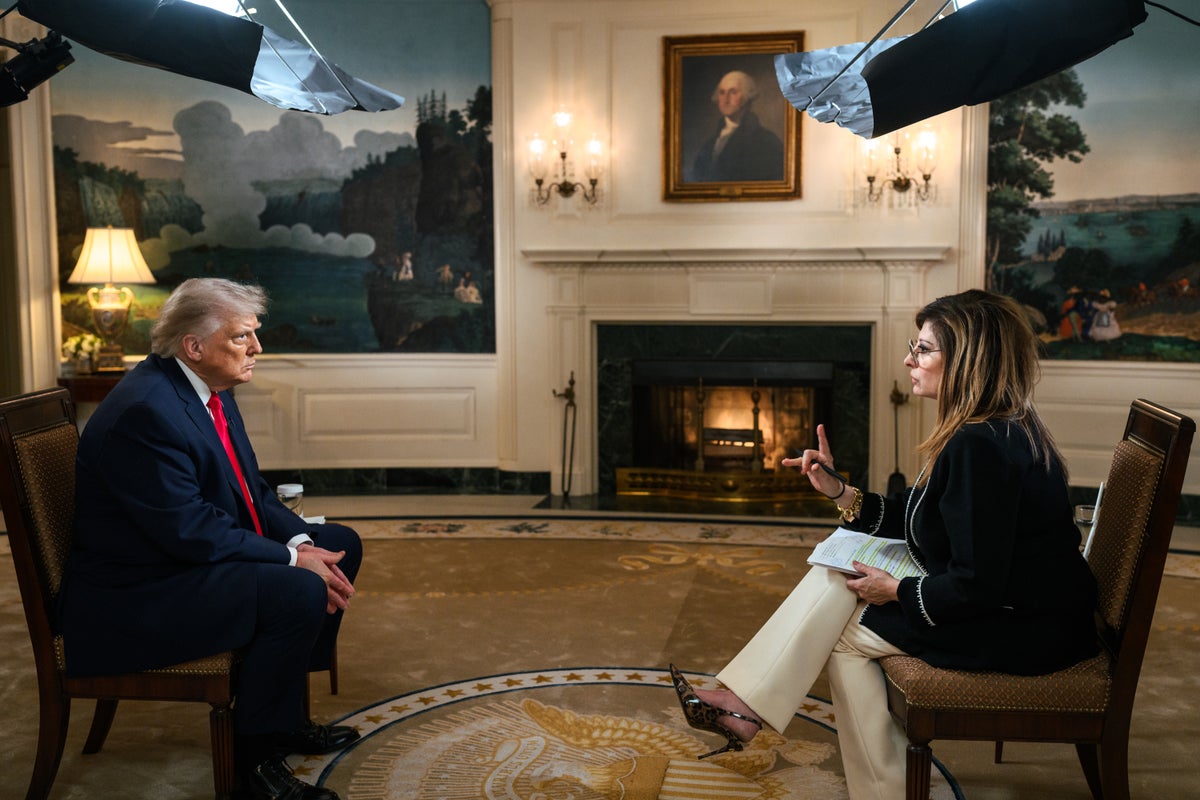
In interviews with Fox Business and the New York Post, Trump insisted Tehran is desperate for an agreement after what he described as a devastating American military campaign. “We’ve beaten them militarily, totally,” he said. “If I pulled up stakes right now it would take them 20 years to rebuild that country.” He claimed the United States could destroy every Iranian bridge and power plant within an hour if negotiations collapse, language that underscored the enormous asymmetry of power between the world’s foremost military power and a nation already reeling from weeks of strikes.
Yet even as Trump projected confidence, U.S. Central Command confirmed that American forces have completely shut down Iran’s sea trade. Vessels, including a Chinese-owned tanker under U.S. sanctions, have been turned away from the Strait of Hormuz. Oil prices fell for a second consecutive day on hopes of a deal, but the blockade itself represents a form of economic strangulation that critics say is designed to force capitulation rather than foster genuine diplomacy. Vice President JD Vance, who led the inconclusive Pakistan talks, nevertheless described the atmosphere as positive. Pakistani officials, along with intermediaries from the Gulf, said a new round could begin in Islamabad within days, with Field Marshal Gen. Asim Munir playing a central role as a trusted go-between for both Trump and Tehran.
The emphasis on Pakistan as a venue is notable for who is absent. European allies, the United Nations, and regional powers that have long called for de-escalation appear sidelined in favor of a bilateral process shaped by raw military pressure. Trump’s own comments revealed irritation with international criticism. He lashed out at Italian Prime Minister Giorgia Meloni, a populist ally, after she echoed the Pope’s condemnation of the war, calling her “unacceptable” and a “coward” for refusing to help reopen the Strait of Hormuz. The episode highlighted growing fractures within what was once a cohesive right-wing bloc on foreign policy.
At home, Trump’s bellicose posture is failing to rally his base. An analysis by CNN’s Harry Enten found Trump’s net approval rating among non-college-educated white voters—long considered his most reliable demographic—has plummeted by 34 points. The same group is now underwater on the president’s handling of the Iran conflict itself. The numbers suggest that even many Americans who supported tough measures against Tehran are uneasy with the scale of destruction and the open-ended nature of the commitment. The Institute for the Study of War assessed that Iran’s likely strategy is to prolong negotiations in order to regroup and prepare for potential renewed hostilities, casting doubt on Trump’s assertion that a quick deal is at hand.
The war, which began in late February after Trump ordered strikes aimed at preventing Iran from acquiring a nuclear weapon, has already reshaped the region. Trump maintains that military action was necessary because, without it, “you would have Iran with a nuclear weapon” and “you would be calling everybody over there ‘Sir.’” Yet the president also speaks of reconstruction, noting that destroying infrastructure now would make future rebuilding far more difficult. The contradiction—threatening total devastation while claiming to want a stable, rebuildable Iran—has fueled accusations that the administration is engaged in coercive diplomacy dressed up as peacemaking.
Iranian officials have signaled no final date for resumed talks, and one senior source told Reuters that Tehran intends to approach the next round cautiously. The current ceasefire, already fragile, faces an imminent test. Should negotiations falter, the risk of renewed bombardment looms, with Trump making clear he has no interest in allowing Iran to claim any sense of victory.
For all the president’s bravado about an imminent boom in the stock market and a decisive end to the conflict, the reality on the ground is more complex. A nation of 90 million people has seen its economy crippled, its ports blockaded, and its infrastructure degraded. Trump’s framing presents the situation as a story of American strength delivering peace on U.S. terms. But the plummeting polls, the public rift with allies, and the continuation of a punishing blockade suggest that the costs—strategic, diplomatic, and political—are mounting faster than the administration cares to admit. Whether talks in Pakistan this week can bridge the gap between Trump’s maximalist demands and Iran’s survival instincts remains to be seen. The clock is ticking, and the stakes could scarcely be higher.
You just read Progressive's take. Want to read what actually happened?
More in Politics

Trump Defends Ramaswamy Ad Using Estranged Mother in Ohio Race
President Trump defended a GOP nominee's ad featuring a Democratic opponent's estranged mother, calling it powerful, while drawing criticism from some Republicans including Ohio Gov. Mike DeWine. The ad has sparked internal GOP tensions ahead of midterms.
Federal Raid Targets Omar Amid Unresolved Name and Marriage Allegations
Agents searched Rep. Ilhan Omar's DC residence over immigration fraud allegations; she called it bizarre. Reports and commentary questioned her birth name and past marriage details.

Supreme Court Upholds New Hampshire Student ID Voting Ban
The Supreme Court upheld New Hampshire's ban on student IDs as valid voter identification just before midterms, affecting a tight Senate race.
Early Voting Hits 21 Million as Most Trust Midterm Accuracy
Millions have already voted early as parties make final appeals amid $1.4 billion in ad spending; polls show confidence in election accuracy.
The Compass
You just read five takes on one story.
What's your take? Find your political shape in a few minutes.
Take the test