
Trump Accuses NYC Mayor Mamdani of Destroying City with Taxes and Equity Plan
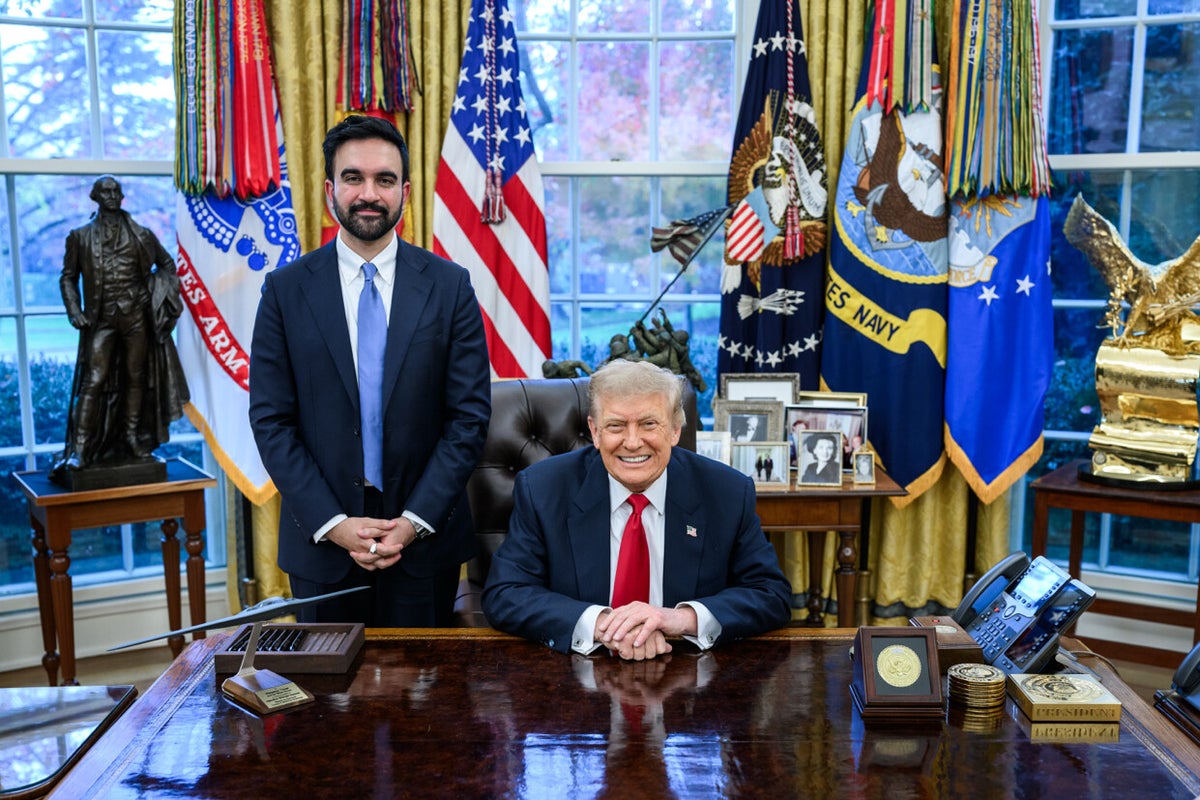
Cover image from independent.co.uk, which was analyzed for this article
Trump lambasted NYC Mayor Zohran Mamdani for 'destroying' the city via high taxes and DEI initiatives, including government-run grocery stores. Right-leaning sources call the ideas 'bonkers' and dangerous. Mamdani discussed Democratic futures amid the feud.
PoliticalOS
Friday, April 17, 2026 — Politics
New York City's new mayor is attempting to tackle entrenched affordability and racial equity problems through higher taxes on the wealthy, city-run grocery stores in food-scarce neighborhoods, and a voter-mandated equity framework applied to government operations. President Trump and conservative critics argue these steps repeat failed big-government experiments and will drive more residents and businesses away. The single most important reality is that the equity document remains preliminary, many of the most alarming interpretations have not been corroborated in the source material, and measurable outcomes on prices, migration and child safety will ultimately decide which approach prevails.
What outlets missed
Most coverage omitted that the racial equity plan is not a set of immediate binding rules but a high-level framework required by a 2022 voter referendum passed by New Yorkers themselves, with final policies still subject to 30 days of public input from all residents. Outlets also underplayed the scale of the inherited fiscal shortfall Mamdani faces, including $12 billion in previously unaccounted obligations that help explain the push for new revenue from high earners and luxury properties. The pre-existing nature of NYC's population decline and grocery-price inflation since 2020 received little context, as did the documented food-desert conditions in target areas like East Harlem that the municipal store pilot explicitly aims to address. Finally, several alarming operational details highlighted in conservative commentary, including precise salary adjustments by race or formal discouragement of child-abuse reporting, do not appear in the publicly released 375-page document and were not corroborated by other reporting.
Trump Warns New York Mayor Mamdani Policies Will Accelerate City Decline
President Donald Trump sharply criticized New York City Mayor Zohran Mamdani on Thursday accusing him of destroying the nation's largest city through a series of tax increases and government interventions that ignore basic economic realities. In a Truth Social post the president wrote that Mamdani's approach has no chance of success and warned that the United States should not subsidize the resulting failure. "The TAX TAX TAX Policies are SO WRONG" Trump declared. "People are fleeing. They must change their ways AND FAST. History has proven THIS STUFF JUST DOESN'T WORK."
The rebuke marks a striking shift from the cordial meeting the two men held at the White House in November shortly after Mamdani defeated Andrew Cuomo in the mayoral race. At that time observers noted the surprising civility between the self-described socialist mayor and the president who had previously called Mamdani a "100 percent Communist Lunatic" during the campaign. Trump had also threatened to withhold federal funding from the city if Mamdani won. Now with Mamdani in office and advancing an ambitious left-wing agenda the relationship has soured.
Mamdani rose to power on a platform of aggressive redistribution promising to raise taxes on high earners and corporations to fund social programs and make the city more affordable for working-class residents. His administration has wasted little time implementing that vision. Last week the mayor released a 375-page preliminary citywide racial equity plan that would embed group identity considerations into nearly every function of city government. The document drafted under Chief Equity Officer Afua Atta-Mensah calls for equity to guide hiring promotions contracting spending land use and policy design.
Critics argue the plan substitutes racial and sexual identity for individual merit. It mandates expanded anti-racism and implicit bias training for city workers with particular emphasis on white and Asian employees. Salaries and job descriptions would be adjusted to achieve 100 percent pay equity across departments by race gender and experience regardless of performance or qualifications. The plan also proposes using tax dollars as a form of reparations to help "communities harmed by racism" purchase both government and private land. Such measures risk creating a hostile work environment for non-minority employees and could undermine public safety by diverting focus from competence in critical areas such as child welfare and law enforcement.
At the same time Mamdani announced plans for city-owned grocery stores intended to combat rising food prices. The first location at La Marqueta in East Harlem will be a 9,000-square-foot facility with construction costs estimated at $30 million. The administration intends to open one store in each borough by the end of the mayor's first term with the initial outlet opening in late 2027. Mamdani claims the public ownership model will eliminate middleman costs and deliver meaningful savings on staples noting that grocery prices in New York have risen nearly 66 percent over the past decade outpacing the national average.
Economists and industry leaders have called the initiative misguided. Anthony Pena president of the National Supermarket Association noted that even a high-end gourmet store in Manhattan would not cost nearly that much to build. Avi Kaner former owner of the Morton Williams chain expressed similar skepticism about the price tag. More fundamentally the high cost of food in New York stems not from insufficient government stores but from layers of regulation taxes and policies that drive up operating expenses and discourage private investment. History offers ample evidence that government-run enterprises from Venezuela's state food outlets to the Soviet Union's distribution system tend to produce shortages inefficiency and waste rather than abundance.
Mamdani's defenders portray these programs as necessary responses to inequality and corporate greed. Yet data on migration patterns offers a mixed picture. While some high-income residents and businesses have left the city in recent years citing taxes and crime the Independent found limited evidence that Mamdani's specific policies are the primary driver. Still broader trends align with warnings from economists like Thomas Sowell who have long argued that heavy taxation and identity-based allocation of resources distort incentives reduce productivity and ultimately harm the very people such policies claim to help.
The 30-day public comment period on the racial equity plan offers New Yorkers a chance to weigh in before it advances. Whether the mayor will adjust course remains uncertain. What is clear is that his agenda represents a significant departure from market-oriented approaches that have historically driven urban prosperity. As Trump noted the results of such experiments are well documented and rarely positive. New Yorkers will discover over the coming years whether the city can withstand another round of policies that prioritize redistribution and group preferences over growth individual accountability and fiscal restraint. The stakes are high for a metropolis already struggling with post-pandemic recovery and chronic budget pressures.
You just read Conservative's take. Want to read what actually happened?
More in Politics
Trump at 32% Approval as Gas Prices Test GOP Midterm Hopes
NYT/Siena polling showed Trump's approval at historic lows around 32 percent with Democrats leading by double digits in key districts. Early voting has surged in battleground states.

Record Early Voting Hits Battlegrounds, Shifting Partisan Shares
AP analysis found hundreds of thousands more early ballots than in 2022 in states including Texas, Ohio, Kansas, Maine, and North Carolina, shifting partisan dynamics.
Trump Backs Marshall in Kansas Senate Race Tightened by Farm Costs
President Trump rallied in deep-red Kansas for GOP Sen. Roger Marshall in a competitive race, announcing an $8 billion farm fuel relief program amid high diesel prices. Democrats see an opening to end 94 years of GOP dominance in the state.

Trump Pauses Russia Sanctions Amid Ukraine Tensions and Missile Strikes
Trump waived sanctions on Russia and floated trilateral talks with Putin and Xi as part of ending the Ukraine war, while tensions rose with Zelenskyy over Starlink and arms. Bipartisan senators engaged Zelenskyy amid the shifts.
The Compass
You just read five takes on one story.
What's your take? Find your political shape in a few minutes.
Take the test