
Trump Ends Meet the Press Interview Over Election and Fund Questions
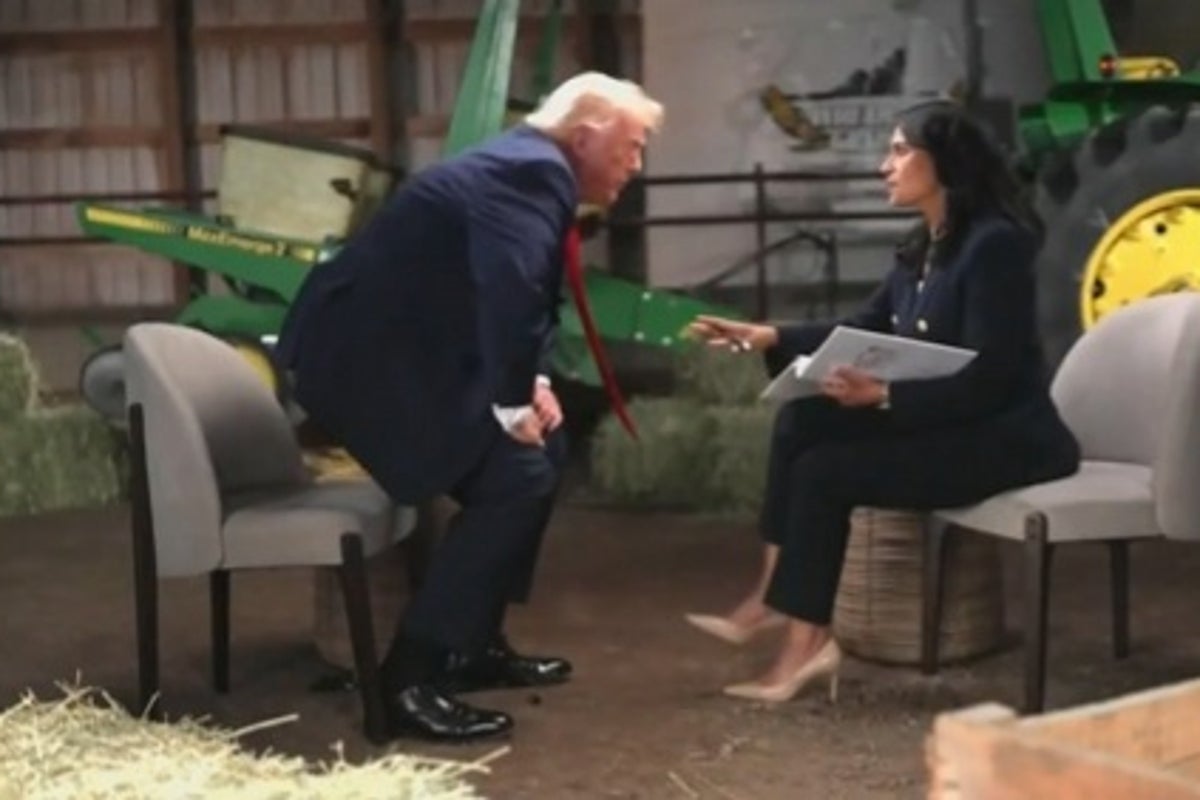
Cover image from independent.co.uk, which was analyzed for this article
Trump abruptly ended a Meet the Press interview after being challenged on election fraud claims and a reported $1.8B fund. The clash highlighted tensions over his statements on past elections.
PoliticalOS
Monday, June 8, 2026 — Politics
The interview ended after Trump declined to provide evidence for his 2020 election claims and after questions about the anti-weaponization fund's intended recipients. The episode illustrates ongoing friction between the president and interviewers over verification standards. Readers should weigh the quoted exchanges against the lack of independent corroboration for the specific assertions raised.
What outlets missed
Most accounts omitted the documented origin of the anti-weaponization fund as part of a May 2026 settlement in President Trump v. IRS over alleged tax-return leaks, which included a formal apology but no initial monetary award. Few noted Trump's post-interview comment that rain in the barn contributed to his frustration or Welker's statement that the two had spoken the next day and agreed to another interview. Coverage also gave limited attention to the specific vote-counting timeline in the California gubernatorial primary and the fact that the fund request had already been removed from the Senate reconciliation package before the interview aired.
Trump Storms Out of NBC Interview After Failing to Back Up Election Lies
President Donald Trump abruptly ended a pre-recorded interview with NBC's Kristen Welker on Meet the Press after repeatedly asserting false claims about the 2020 election and refusing to provide evidence when challenged. The exchange aired Sunday and ended with Trump standing up, removing his microphone, and declaring the session over.
The interview took place Friday in a barn in Chippewa Falls, Wisconsin. Welker questioned Trump about his push for nearly $1.8 billion in federal funding for an "anti-weaponization fund" intended to compensate individuals prosecuted by the Justice Department during the Biden administration. That group includes many of the January 6 Capitol rioters Trump pardoned early in his second term. Trump described the proposal as necessary to address what he called destroyed lives and suicides among his supporters. When Welker asked whether the 172 people who pleaded guilty to assaulting police officers deserved such payouts, Trump claimed without evidence that the FBI had ushered the rioters into the building and that defendants had only pleaded guilty out of fear.
Welker noted there was no supporting evidence for those assertions. Trump responded that plenty of evidence existed but offered none. He then shifted to his longstanding claim that the 2020 presidential election was rigged against him and suggested a similar "dirty" process was underway in California's current gubernatorial race, where votes were still being counted days after the primary. When pressed for proof that the California contest was fraudulent, Trump accused Welker and her network of being "crooked." He told her she was either dishonest or unintelligent for continuing to question him on the matter.
The president repeated his assertion that he had actually won in 2020. Welker attempted to move the conversation forward, but Trump declared he had heard enough. He stood, removed his earpiece, and patted her on the shoulder before walking off, saying, "Let's call it quits, because I've had enough. Thank you, darling."
The episode highlighted Trump's continued reliance on debunked election narratives more than five years after his loss. Official reviews, court rulings, and audits across multiple states found no evidence of widespread fraud sufficient to change the outcome. The January 6 attack, carried out by hundreds of his supporters, resulted in five deaths and injuries to more than 140 police officers. Many participants used weapons, zip ties, and other equipment while some vandalized the Capitol. Trump has consistently portrayed those individuals as victims rather than acknowledging their criminal convictions.
MSNBC's Mika Brzezinski later pointed out that interviewers face a recurring dilemma when a guest launches into extended falsehoods. She argued that the proper response is to interrupt immediately rather than allow the record to be flooded with unsubstantiated claims before attempting to regain control of the conversation.
Trump's walkout came after he had already labeled both the press and the network as participants in a supposed conspiracy. The episode underscored his pattern of treating factual questions about his past actions as personal attacks rather than legitimate lines of inquiry.
You just read Progressive's take. Want to read what actually happened?
More in Politics
Trump at 32% Approval as Gas Prices Test GOP Midterm Hopes
NYT/Siena polling showed Trump's approval at historic lows around 32 percent with Democrats leading by double digits in key districts. Early voting has surged in battleground states.

Record Early Voting Hits Battlegrounds, Shifting Partisan Shares
AP analysis found hundreds of thousands more early ballots than in 2022 in states including Texas, Ohio, Kansas, Maine, and North Carolina, shifting partisan dynamics.
Trump Backs Marshall in Kansas Senate Race Tightened by Farm Costs
President Trump rallied in deep-red Kansas for GOP Sen. Roger Marshall in a competitive race, announcing an $8 billion farm fuel relief program amid high diesel prices. Democrats see an opening to end 94 years of GOP dominance in the state.

Trump Pauses Russia Sanctions Amid Ukraine Tensions and Missile Strikes
Trump waived sanctions on Russia and floated trilateral talks with Putin and Xi as part of ending the Ukraine war, while tensions rose with Zelenskyy over Starlink and arms. Bipartisan senators engaged Zelenskyy amid the shifts.
The Compass
You just read five takes on one story.
What's your take? Find your political shape in a few minutes.
Take the test