
Trump-Pope Feud Forces US Catholics to Choose Between Politics and Papal Authority

Cover image from chicago.suntimes.com, which was analyzed for this article
US Catholics are torn over President Trump's escalating criticism of Pope Leo XIV, who has taken a forceful stance against the Iran war and administration policies. The first American pope's Africa tour and calls for Christian values clash with Trump's rhetoric, prompting some Trump voters to reject papal influence. The dispute amplifies cultural and political rifts.
PoliticalOS
Saturday, April 18, 2026 — Politics
The Trump-Pope Leo XIV dispute has crystallized a long-simmering tension for American Catholics: how to reconcile political support for tough border, energy and security policies with deference to a pope who views many of those same policies through a seamless moral lens opposing war and exploitation. Polling already shows erosion in Trump's Catholic support, yet the depth of any lasting realignment remains unclear. Readers should recognize this as more than personality conflict; it is a contest over whether religious authority or national interest holds final sway in voters' consciences.
What outlets missed
Most outlets underplayed the specific Iranian actions that preceded U.S. strikes, including threats to close the Strait of Hormuz after a tanker incident and Tehran's nuclear enrichment advances cited by the administration as justification. The consistent ethic of life developed by Cardinal Bernardin, and Pope Leo's direct ties to the Chicago seminary where it was taught, received only glancing treatment outside the Sun-Times letters page despite offering a theological spine for the pope's positions. Coverage also gave short shrift to the fact that Trump's 55 percent Catholic support in 2024 represented a continuation of a decade-long rightward shift among white Catholic voters, a trend that long predates the current pope and survived earlier tensions with Pope Francis. Finally, few stories noted that Leo's anti-war statements align with a consistent papal line on nuclear disarmament dating back months before the current conflict, making Trump's claim that the pope backed Iranian nukes easier to evaluate against the record.
US Catholics Navigate Deepening Rift Between Trump and First American Pope
As Pope Leo XIV arrived in Angola on Saturday for the third stop of a landmark African tour, the first pontiff from the United States delivered messages on resource exploitation, corruption and the moral costs of conflict that carried an unmistakable edge. In Cameroon the day before, he had described the world as “being ravaged by a handful of tyrants.” Weeks earlier, on Palm Sunday in St. Peter’s Square, he declared that God “does not listen to the prayers of those who wage war,” a pointed rebuke of American military action in Iran that has now escalated into an unusually personal feud with President Donald Trump.
The clash has placed many American Catholics in an uncomfortable position, forcing them to weigh loyalty to their church’s spiritual leader against support for a president many of them helped elect. Interviews and polling conducted in recent days reveal a community strained along familiar political lines, yet unsettled by the spectacle of the two most prominent Americans in global life trading public criticisms.
Trump has responded to the pope’s statements with characteristic bluntness, calling the 70-year-old pontiff “weak on crime” and “terrible for foreign policy.” The president briefly posted an image on Truth Social depicting himself in a Christ-like pose healing the sick, only to delete it after widespread backlash. The episode, coming amid months of papal criticism of U.S. immigration enforcement and refugee policy, has tested the boundaries of how directly a pope may confront an American administration.
For Maryellen Lewicki, who gathers weekly for Bible study with other Catholic women in Decatur, Georgia, the tension is personal but contained. Her group tries to keep politics out of their meetings. Still, Trump’s name surfaces in prayer. One friend prays regularly “that God will remove that hard heart of his and replace it with a softer one that has love,” Lewicki said. At St. Thomas More, the Jesuit parish she attends in an affluent Atlanta suburb, the congregation leans progressive. Images of Trump as a messianic figure have done little to change minds there.
That discomfort reflects a broader pattern. American Catholics who voted for Trump largely appear to side with the president in this dispute, according to focus groups conducted by conservative outlets. Some dismiss the pope’s commentary as naive or overly political. Others argue that the church should “stick to matters of morality” rather than foreign policy. Yet even among Trump supporters there is unease about the optics of a president attacking the head of the global church.
The confrontation carries particular resonance because of who Leo XIV is. Born Robert Prevost in Chicago, the pope graduated from the Catholic Theological Union in 1982. That institution was shaped by Cardinal Joseph Bernardin, the late archbishop whose “consistent ethic of life” framework argued that moral questions about war, poverty, capital punishment, and the treatment of migrants form a single seamless garment. One cannot honor human dignity in one arena while disregarding it in another.
Leo’s recent statements track closely with that tradition. His criticism of the Iran conflict, his warnings about threats to Iranian infrastructure, and his long-standing focus on refugees appear less like isolated political interventions than applications of a coherent theological vision. In Angola, where more than half the population is Catholic and where oil wealth has failed to lift more than 30 percent of citizens out of extreme poverty, the pope is expected to press leaders on economic justice and the responsible management of natural resources.
The Africa tour itself underscores Leo’s emergence as a newly forceful global voice. After visits to Cameroon and now Angola, he has spoken repeatedly about the dangers of artificial intelligence, the exploitation of the continent’s minerals, and the need for peace in places still scarred by past wars. His American identity, once perhaps a bridge to U.S. Catholics, now complicates his relationship with a country whose government he feels compelled to challenge.
Church officials note that the American bishops’ February statement opposing administration immigration policies was unusually direct by historical standards. Yet the pope’s willingness to name specific military actions as “truly unacceptable” has gone further, reflecting both his personality and the scale of the issues at stake.
For many Catholics, the situation remains unresolved. The faith teaches deference to the successor of Peter while also encouraging prudence in political matters. When the successor of Peter is an American criticizing an American president, those tensions become acute. Some believers pray for Trump’s heart to soften. Others see in Leo a reminder that moral consistency cannot be subordinated to partisan loyalty. Many simply wish the conflict would resolve itself without forcing them to choose.
As Leo XIV continues his African journey, delivering messages of hope amid poverty and warnings against violence, the feud with Trump follows him like a shadow. For U.S. Catholics, it is more than a distant diplomatic spat. It is a test of how they reconcile their religious identity with their political one at a moment when the two feel increasingly difficult to hold together. The outcome may say as much about the future of American Catholicism as it does about the current president and pope.
You just read Liberal's take. Want to read what actually happened?
More in Politics
Trump at 32% Approval as Gas Prices Test GOP Midterm Hopes
NYT/Siena polling showed Trump's approval at historic lows around 32 percent with Democrats leading by double digits in key districts. Early voting has surged in battleground states.

Record Early Voting Hits Battlegrounds, Shifting Partisan Shares
AP analysis found hundreds of thousands more early ballots than in 2022 in states including Texas, Ohio, Kansas, Maine, and North Carolina, shifting partisan dynamics.
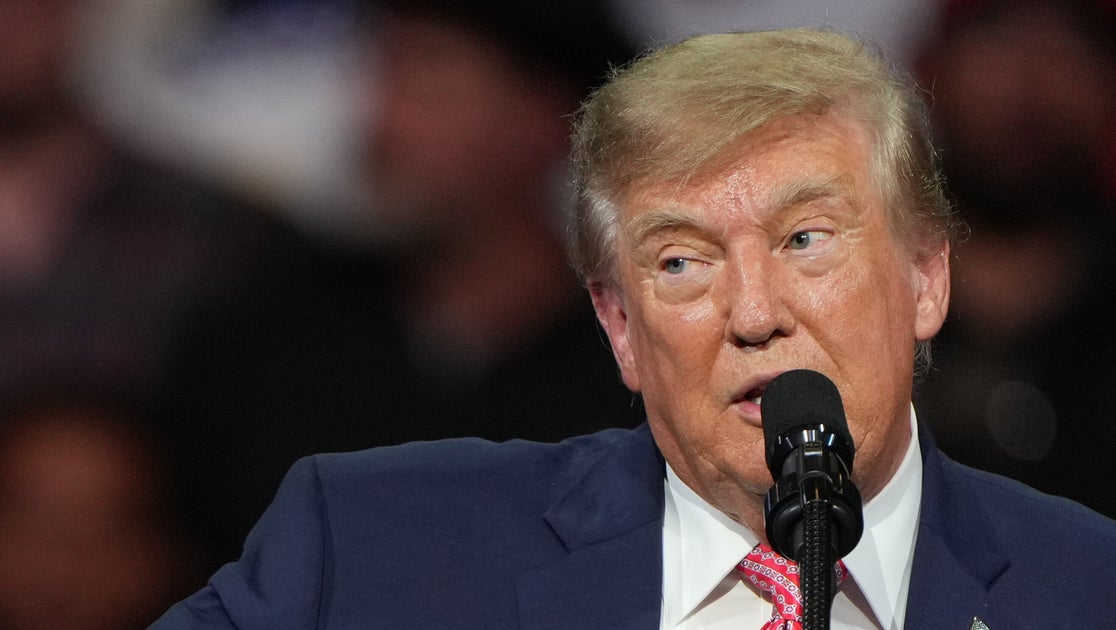
Trump Backs Marshall in Kansas Senate Race Tightened by Farm Costs
President Trump rallied in deep-red Kansas for GOP Sen. Roger Marshall in a competitive race, announcing an $8 billion farm fuel relief program amid high diesel prices. Democrats see an opening to end 94 years of GOP dominance in the state.

Trump Pauses Russia Sanctions Amid Ukraine Tensions and Missile Strikes
Trump waived sanctions on Russia and floated trilateral talks with Putin and Xi as part of ending the Ukraine war, while tensions rose with Zelenskyy over Starlink and arms. Bipartisan senators engaged Zelenskyy amid the shifts.
The Compass
You just read five takes on one story.
What's your take? Find your political shape in a few minutes.
Take the test