
Trump-Pope Feud Forces US Catholics to Choose Between Politics and Papal Authority

Cover image from chicago.suntimes.com, which was analyzed for this article
US Catholics are torn over President Trump's escalating criticism of Pope Leo XIV, who has taken a forceful stance against the Iran war and administration policies. The first American pope's Africa tour and calls for Christian values clash with Trump's rhetoric, prompting some Trump voters to reject papal influence. The dispute amplifies cultural and political rifts.
PoliticalOS
Saturday, April 18, 2026 — Politics
The Trump-Pope Leo XIV dispute has crystallized a long-simmering tension for American Catholics: how to reconcile political support for tough border, energy and security policies with deference to a pope who views many of those same policies through a seamless moral lens opposing war and exploitation. Polling already shows erosion in Trump's Catholic support, yet the depth of any lasting realignment remains unclear. Readers should recognize this as more than personality conflict; it is a contest over whether religious authority or national interest holds final sway in voters' consciences.
What outlets missed
Most outlets underplayed the specific Iranian actions that preceded U.S. strikes, including threats to close the Strait of Hormuz after a tanker incident and Tehran's nuclear enrichment advances cited by the administration as justification. The consistent ethic of life developed by Cardinal Bernardin, and Pope Leo's direct ties to the Chicago seminary where it was taught, received only glancing treatment outside the Sun-Times letters page despite offering a theological spine for the pope's positions. Coverage also gave short shrift to the fact that Trump's 55 percent Catholic support in 2024 represented a continuation of a decade-long rightward shift among white Catholic voters, a trend that long predates the current pope and survived earlier tensions with Pope Francis. Finally, few stories noted that Leo's anti-war statements align with a consistent papal line on nuclear disarmament dating back months before the current conflict, making Trump's claim that the pope backed Iranian nukes easier to evaluate against the record.
Trump and Pope Leo XIV’s Feud Exposes Sharp Divide Among US Catholics
As Pope Leo XIV continues his landmark tour of Africa this week, his increasingly pointed criticisms of President Donald Trump’s war in Iran have laid bare a painful fracture in American Catholicism. The first pope from the United States finds himself locked in an extraordinary public confrontation with the American president, forcing many of the nation’s 70 million Catholics to choose between loyalty to their faith’s moral teachings and allegiance to a political movement that has reshaped the Republican Party.
The latest escalation came on Palm Sunday when the pontiff, speaking from St Peter’s Square, declared that God “does not listen to the prayers of those who wage war.” The comment was not abstract. It followed months of papal condemnation of the US strikes on Iranian targets and the administration’s harsh immigration policies. Leo, formerly Cardinal Robert Prevost of Chicago, has also joined American bishops in forcefully opposing Trump’s refugee crackdowns, rhetoric that stands out for its directness in the usually cautious world of Vatican diplomacy.
Trump’s response has been characteristically personal and unsparing. He has labeled the 70-year-old pope “weak on crime” and “terrible for foreign policy,” according to multiple reports. The president briefly posted on Truth Social an image depicting himself in a Christ-like pose healing the sick, only to delete it after widespread backlash. The episode has left even some of Trump’s Catholic supporters uneasy, though not necessarily repentant.
Interviews with Catholic voters reveal a church split along familiar political lines. In progressive enclaves like Maryellen Lewicki’s Jesuit parish in Decatur, Georgia, congregants largely back the pope. Lewicki described a weekly Bible study group that tries to avoid politics but inevitably returns to prayers for Trump, “that God will remove that hard heart of his and replace it with a softer one that has love.” At St Thomas More, an affluent Atlanta suburb church, images of Trump as a messianic figure have changed few minds.
Yet focus groups conducted by conservative outlets suggest a sizable portion of Catholic Trump voters are unmoved by Vatican criticism. Some openly side with the president, viewing the pope’s stance on Iran and immigration as naive or even hostile to American interests. This is not entirely new. Conservative Catholics have long bristled at papal pronouncements on economic justice and war, but the open contempt from Republican leaders marks a new phase. As one podcast discussion on The Bulwark noted, many Trump-supporting Catholics appear to be saying “nope” to the pope in favor of the president.
The irony is rich. Leo XIV, born in Chicago and a graduate of the Catholic Theological Union in 1982, is channeling the teachings of Cardinal Joseph Bernardin, the late archbishop whose “consistent ethic of life” insisted that moral questions cannot be sliced up to fit political convenience. Bernardin’s seamless garment theology linked opposition to abortion with opposition to war, poverty, the death penalty, and the mistreatment of migrants. In rebuking the Iran conflict and threats to civilian infrastructure as “truly unacceptable,” the pope is applying that framework without apology.
This moral consistency has been on vivid display during Leo’s African journey. After three days in Cameroon, where he warned that the world is “being ravaged by a handful of tyrants,” the pope arrived in Angola on Saturday to confront the paradox of oil wealth and grinding poverty. More than half of Angolans are Catholic, and the country is still healing from a brutal civil war that ended in 2002. Leo is expected to denounce corruption, the exploitation of natural resources, and the dangers of artificial intelligence, themes that echo his broader critique of unchecked power wherever it appears.
His forceful new tone has drawn admiration from unexpected quarters. Democratic Representative Mark Takano and others have highlighted the pope’s willingness to confront Trump directly, with some noting that the Chicago-born pontiff seems uniquely positioned to understand both American power and its moral limits.
For American Catholics, the choice feels increasingly stark. The church’s historic reluctance to wade into partisan politics has given way to something more urgent. As the pope stands against what he sees as the reckless use of military force and the demonization of refugees, many progressive Catholics view him as fulfilling the Gospel’s demand for justice. Others, particularly those who voted for Trump twice, appear prepared to treat the Vatican’s moral authority as secondary to the political project they support.
This is more than a personality clash between two prominent Americans. It is a collision between two visions of Christianity in the public square: one that bends faith to fit nationalist politics, and another that insists the seamless garment cannot be torn apart without losing its meaning. As Leo XIV continues his African pilgrimage, calling for peace and warning against the exploitation of the vulnerable, the question lingers for Catholics back home. When the pope says God does not hear the prayers of those who wage war, whose prayers does he have in mind?
You just read Progressive's take. Want to read what actually happened?
More in Politics
Trump at 32% Approval as Gas Prices Test GOP Midterm Hopes
NYT/Siena polling showed Trump's approval at historic lows around 32 percent with Democrats leading by double digits in key districts. Early voting has surged in battleground states.
Record Early Voting Hits Battlegrounds, Shifting Partisan Shares
AP analysis found hundreds of thousands more early ballots than in 2022 in states including Texas, Ohio, Kansas, Maine, and North Carolina, shifting partisan dynamics.
Trump Backs Marshall in Kansas Senate Race Tightened by Farm Costs
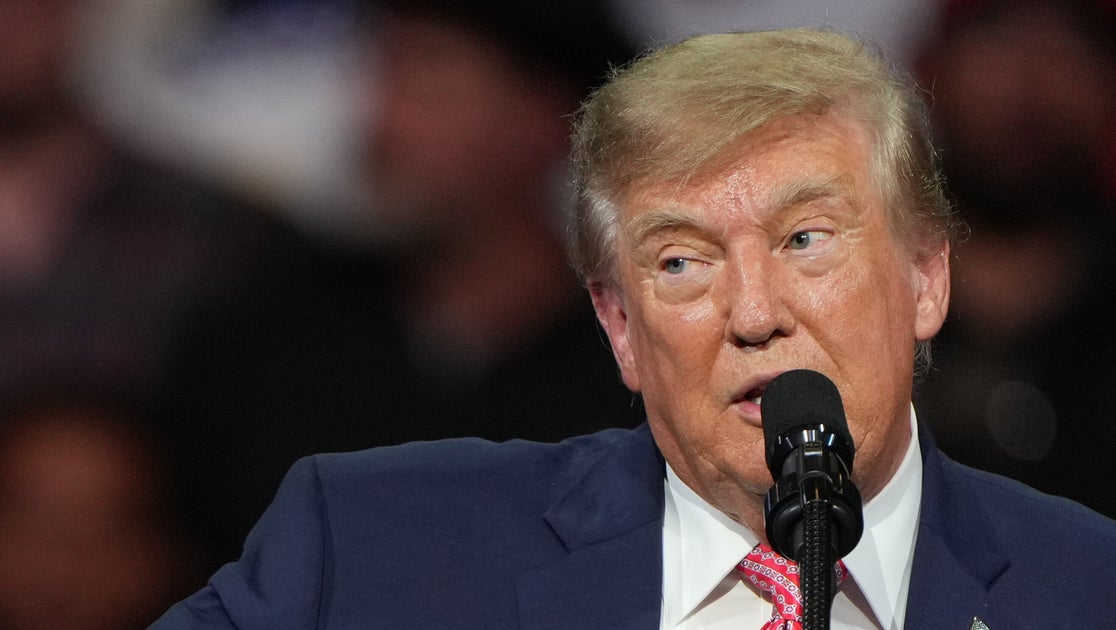
President Trump rallied in deep-red Kansas for GOP Sen. Roger Marshall in a competitive race, announcing an $8 billion farm fuel relief program amid high diesel prices. Democrats see an opening to end 94 years of GOP dominance in the state.

Trump Pauses Russia Sanctions Amid Ukraine Tensions and Missile Strikes
Trump waived sanctions on Russia and floated trilateral talks with Putin and Xi as part of ending the Ukraine war, while tensions rose with Zelenskyy over Starlink and arms. Bipartisan senators engaged Zelenskyy amid the shifts.
The Compass
You just read five takes on one story.
What's your take? Find your political shape in a few minutes.
Take the test