
Trump orders Pentagon to cut back South Korea military drills
Cover image from theguardian.com, which was analyzed for this article
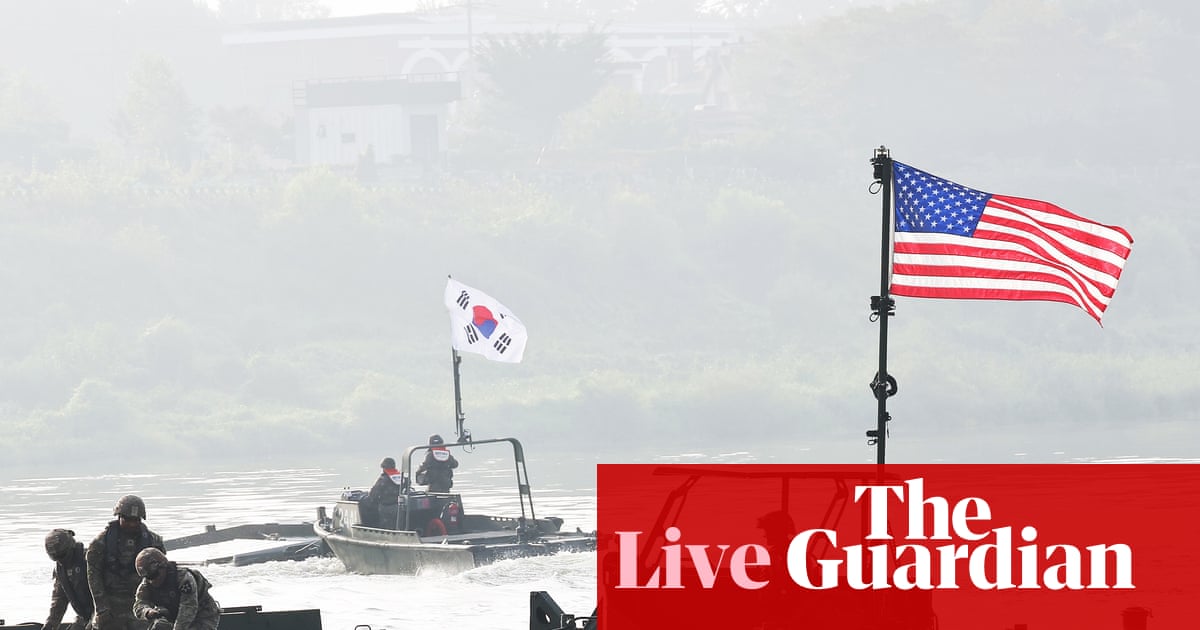
President Trump directed the Pentagon to substantially reduce joint exercises with South Korea, citing his relationship with Kim Jong Un and Seoul's stance on Iran. The move drew criticism for projecting weakness in the Pacific.
PoliticalOS
Monday, August 17, 2026 — Politics
The order reflects Trump's long-standing preference for personal diplomacy with Kim over sustained high-level exercises, yet South Korea reports the drills began on schedule with coordination continuing. The practical scope of reductions and any effect on deterrence remain unclear pending Pentagon implementation.
What outlets missed
Several outlets omitted South Korea's explicit confirmation that drills proceeded as scheduled and its ongoing discussions of potential Iran-related contributions. Few detailed the two North Korean ballistic missile launches in the week before the announcement or the shift of exercises toward computer simulations in recent years. Coverage also underplayed the $350 billion investment commitment tied to last year's trade deal and the specific economic disputes involving U.S. firms like Coupang.
President Trump directed the Pentagon on Sunday to substantially reduce joint military exercises with South Korea, hours before the annual Ulchi Freedom Shield drills were set to begin. The order came via Truth Social, where Trump cited the high costs borne largely by the United States, the signal the exercises send to North Korea, and his assessment of a positive relationship with Kim Jong Un. He also referenced South Korea's recent decision not to join U.S. efforts on Iran denuclearization, though he described that matter as somewhat unrelated.
The Ulchi Freedom Shield exercise involves roughly 18,000 South Korean troops alongside U.S. forces and runs through August 27. South Korea's Joint Chiefs of Staff confirmed the drills began on schedule Monday despite the directive. The presidential Blue House stated it was reviewing the post and expressed hope that improved ties between Washington and Pyongyang could support dialogue on peninsula stability, while noting ongoing coordination with the United States on defense posture and separate discussions about possible contributions related to Iran.
Trump has sought to curtail these exercises in both terms, arguing they are provocative and expensive. North Korea has long condemned the drills as invasion rehearsals and conducted ballistic missile tests in the days before the announcement. Analysts noted the move aligns with Trump's past summit diplomacy with Kim but carries risks for alliance readiness, as exercises have shifted in recent years toward simulations of missile and cyber threats. South Korea maintains 28,500 U.S. troops on its soil under longstanding cost-sharing arrangements that have been points of friction in prior negotiations.
The decision leaves open questions about the precise scope of reductions and their effect on combined operations against evolving North Korean capabilities, including troops and weapons support for Russia in Ukraine.
More in Politics

Federal Agents Search Omar Home in Ongoing Immigration Probe
Homeland Security agents searched the Minnesota Democrat's DC residence in a criminal probe, prompting accusations of political intimidation from Omar and Democratic leaders. Coverage spans left-leaning outlets like NPR, BBC, and The Guardian alongside right-leaning criticism from The Federalist and Daily Wire.

Trump Diesel Import Plan Draws Pushback Over Russia Ties
The weekend agreement drew bipartisan congressional pushback and criticism from Ukraine's Zelenskyy, with analysts downplaying US fuel price impacts. Right-leaning outlets like National Review, Dispatch, and Washington Examiner questioned its legality and effectiveness.

Independents Test Voter Appetite for Middle Ground in 2026 Midterms
Nearly 200 independents are running in competitive races as voters weigh ballot measures on housing costs in states like Massachusetts. Left-leaning coverage from NYT, NPR, and Guardian highlights turnout and key races while right outlets focus on GOP strategy.

Trump Rallies in Alaska, Ohio to Bolster GOP Senate Candidates
The president rallied in Wasilla for Sen. Dan Sullivan and faced empty seats at an Ohio event amid midterm concerns. Outlets across the spectrum covered the trips as signals of GOP vulnerability weeks before Election Day.
The Compass
You just read five takes on one story.
What's your take? Find your political shape in a few minutes.
Take the test