
Trump Signals Direct Call With Taiwan Leader on Arms Deal
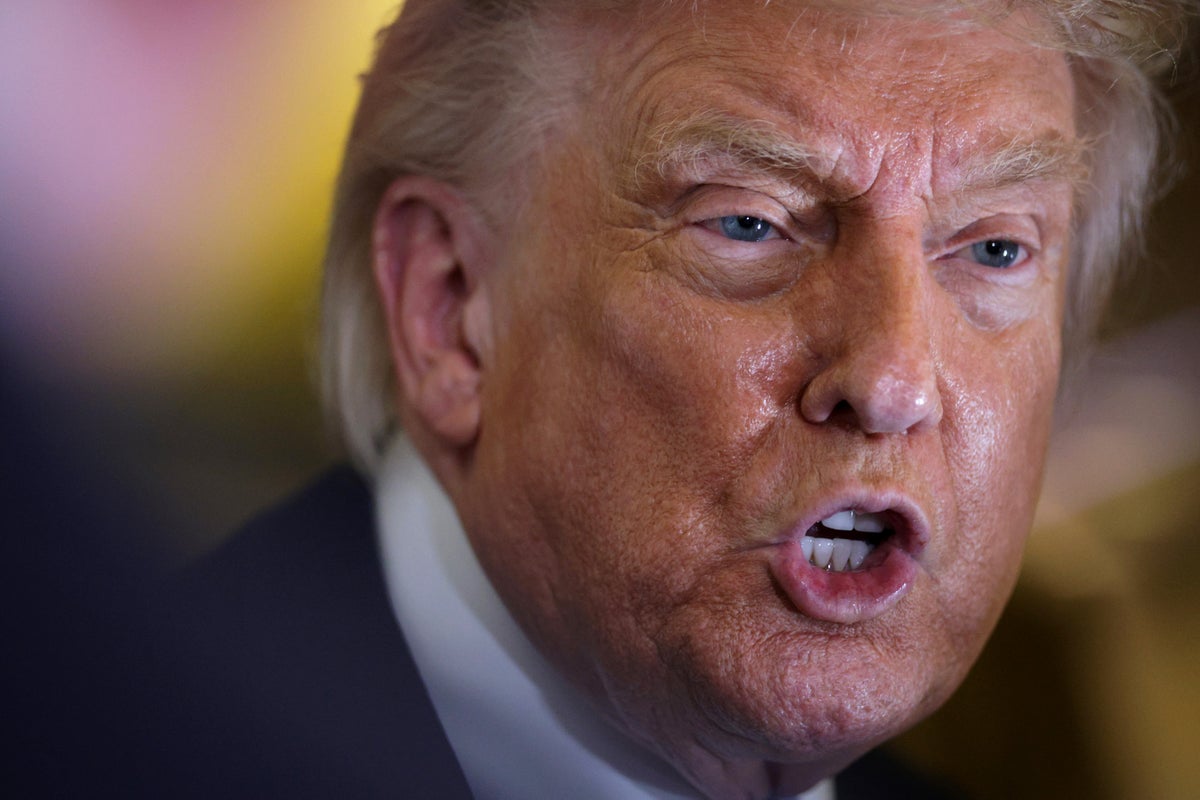
Cover image from independent.co.uk, which was analyzed for this article
President Trump signaled he will speak directly with Taiwan's president about stalled arms deals, a move that risks escalating tensions with China. Taiwan's leader welcomed the prospect of the call.
PoliticalOS
Thursday, May 21, 2026 — Politics
The core issue remains whether Trump will approve the already-cleared arms package and hold the proposed call, actions that test the balance between Taiwan's defense needs and relations with Beijing. Taiwan continues to request weapons and affirm the status quo; China continues to oppose both the sales and any official contact. Readers should track the actual decision on the package and whether any call occurs rather than assuming immediate policy rupture.
What outlets missed
Most coverage omitted that the 2016 Trump-Tsai call produced no sustained rupture in arms sales or diplomatic practice, a fact that directly tests claims of unprecedented risk today. Outlets also underplayed the procedural timeline: the $14 billion package received congressional approval in January 2025 and Taiwan separately approved a $25 billion defense budget to fund US purchases. Few noted that US policy documents explicitly bar Beijing from having any say over arms decisions, leaving readers without the full legal and historical frame for the current standoff.
Trump's Taiwan Call Plan Risks Fresh US-China Clash Over Arms Sales
President Donald Trump said Wednesday he intends to speak directly with Taiwan's leader Lai Ching-te about a pending $14 billion arms package, a move that would shatter more than four decades of US diplomatic practice and heighten tensions with Beijing.
The announcement came after Trump's recent state visit to China, where Taiwan featured prominently in talks with President Xi Jinping. No call has been scheduled yet, but Trump has raised the possibility twice in recent days, telling reporters in Maryland that he speaks to everyone and has the situation in hand. He referred to Taiwan as a problem the United States would work on, without offering further details.
US presidents have avoided direct contact with their Taiwanese counterparts since 1979, when Washington switched formal recognition from Taipei to Beijing under the one-China policy. That framework has long guided American arms sales to the island, which China regards as a breakaway province and has not ruled out taking by force. Trump has described the weapons deal as a strong negotiating chip with Beijing, even as he claims overall US policy toward Taiwan remains unchanged.
Taiwan's foreign ministry welcomed the prospect of a conversation. Lai said he would use any opportunity to tell Trump that China is undermining peace and stability across the Taiwan Strait while his government remains committed to preserving the status quo. The ministry stressed that Taiwan faces an increasingly assertive neighbor and has sought the arms package to strengthen its defenses. Taiwan's legislature recently approved a special $25 billion defense budget partly to fund US weapons purchases.
The proposed call echoes Trump's earlier breach of protocol as president-elect in 2016, when he spoke with then-Taiwanese president Tsai Ing-wen and drew sharp criticism from Beijing. Chinese officials have already signaled concern. During last week's summit, Xi reportedly warned Trump that mishandling Taiwan could lead to clashes or outright conflict. Beijing opposes any US arms transfers to the island and views direct presidential contact as a dangerous escalation.
Critics of the approach argue that treating arms sales as leverage in personal diplomacy risks miscalculation at a moment when cross-strait tensions are already elevated. Supporters counter that engaging Taiwan's elected leadership reflects realism about the island's democratic status and strategic importance to the United States. Either way, the episode underscores how quickly longstanding guardrails can come under pressure when a US president signals willingness to bypass them.
Congress had pre-approved the weapons package earlier, yet final execution now rests with Trump. The uncertainty follows months of Taiwanese requests for advanced systems amid Chinese military activity around the island, including repeated air and naval incursions. Washington remains Taiwan's primary arms supplier, though deliveries have sometimes lagged due to production backlogs and shifting administration priorities.
Regional analysts note that any direct Trump-Lai conversation would arrive against a backdrop of broader US-China friction over technology, trade and military posture in the Indo-Pacific. Taiwan has sought to avoid becoming a bargaining chip in those disputes, insisting its future should be decided by its own people rather than external powers. Lai has repeatedly framed China as the party disrupting regional stability.
Trump's casual assertion that he will simply call the Taiwanese leader has left diplomats on both sides of the strait watching for follow-through. A scheduled conversation could test whether the president intends to accelerate arms approvals or use the contact to extract concessions from Beijing. Either outcome carries implications for deterrence calculations in East Asia and for the durability of the careful ambiguity that has defined US Taiwan policy for decades.
For now, the White House has offered few specifics beyond Trump's repeated statements that he speaks to everyone. Taiwan has signaled readiness. China has made clear its objections. The next steps will determine whether this latest departure from precedent produces a routine discussion or a sharper confrontation.
You just read Progressive's take. Want to read what actually happened?
More in Politics
Trump at 32% Approval as Gas Prices Test GOP Midterm Hopes
NYT/Siena polling showed Trump's approval at historic lows around 32 percent with Democrats leading by double digits in key districts. Early voting has surged in battleground states.

Record Early Voting Hits Battlegrounds, Shifting Partisan Shares
AP analysis found hundreds of thousands more early ballots than in 2022 in states including Texas, Ohio, Kansas, Maine, and North Carolina, shifting partisan dynamics.
Trump Backs Marshall in Kansas Senate Race Tightened by Farm Costs
President Trump rallied in deep-red Kansas for GOP Sen. Roger Marshall in a competitive race, announcing an $8 billion farm fuel relief program amid high diesel prices. Democrats see an opening to end 94 years of GOP dominance in the state.

Trump Pauses Russia Sanctions Amid Ukraine Tensions and Missile Strikes
Trump waived sanctions on Russia and floated trilateral talks with Putin and Xi as part of ending the Ukraine war, while tensions rose with Zelenskyy over Starlink and arms. Bipartisan senators engaged Zelenskyy amid the shifts.
The Compass
You just read five takes on one story.
What's your take? Find your political shape in a few minutes.
Take the test