
Trump Order Revises Childhood Vaccine Recommendations
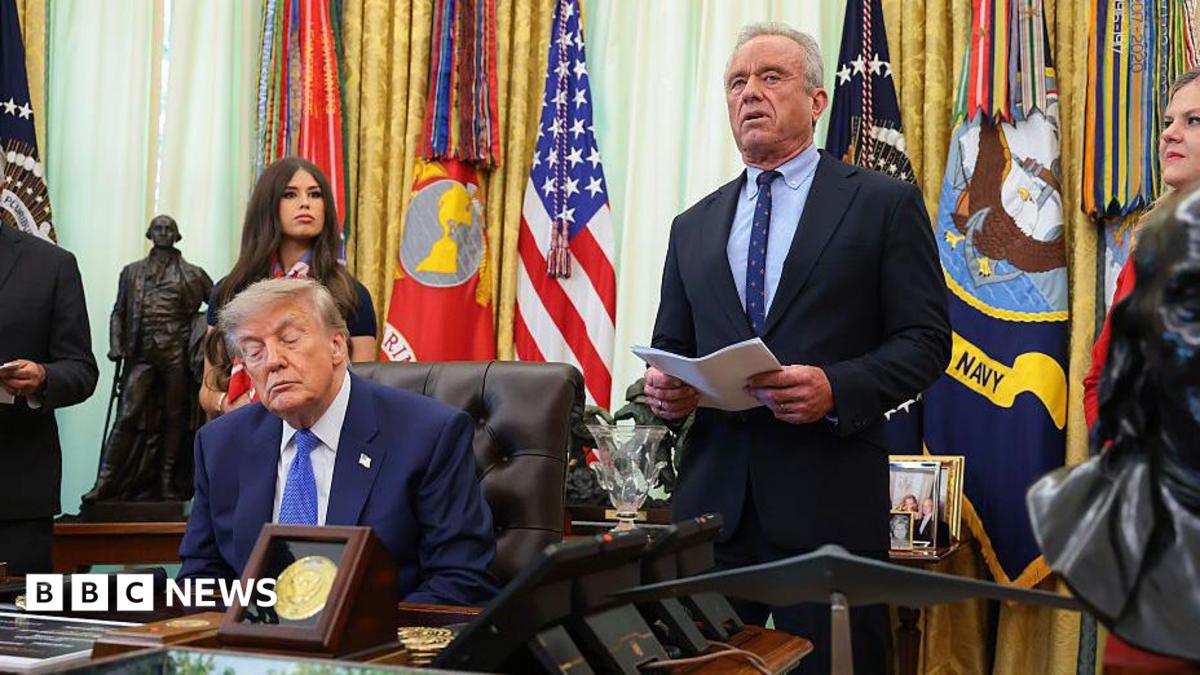
Cover image from bbc.co.uk, which was analyzed for this article
The president issued an order altering recommended childhood vaccine schedules, including splitting the MMR shot, drawing criticism that it prioritizes feelings over science.
PoliticalOS
Tuesday, August 11, 2026 — Politics
Federal recommendations on childhood vaccines have narrowed, yet state school rules and actual product availability determine what changes reach families. Large studies continue to show no MMR-autism link, while implementation details remain unresolved.
What outlets missed
The order’s legal effect is limited to federal recommendations and does not override state school mandates, a distinction mentioned only in passing by most outlets. No outlet independently verified whether single-antigen MMR products could be produced within the stated timeline or quantified the added cost and visit burden for low-income families. The White House fact sheet’s comparative data with other countries received little scrutiny against actual CDC historical schedules. Potential insurer responses to the narrowed recommendations were not addressed.
Parents now face shifting federal guidance on which shots their children should receive and when. The executive order signed August 10, 2026, lowers the number of routinely recommended diseases from 18 to 11 and directs agencies to favor separate visits for individual vaccines rather than combination products. School requirements remain state decisions, yet the change removes several federal endorsements that previously shaped insurer coverage and physician practice.
The central tension lies between the administration’s stated aim of aligning U.S. schedules with those of peer nations and expert warnings that spacing doses extends periods of vulnerability. The order lists measles, mumps, rubella, diphtheria, tetanus, pertussis, polio, Haemophilus influenzae type B, pneumococcal disease, human papillomavirus, and varicella as the core set. Hepatitis A, hepatitis B, rotavirus, influenza, COVID-19, meningococcal disease, and RSV move to shared clinical decision-making or high-risk categories only.
Administration statements emphasize parental choice and fewer total injections. CDC data show a single MMR dose volume of 0.5 ml; the order questions whether administering three antigens together increases risk, though the agency states no published evidence supports separating the components. A 2019 Danish study of 657,461 children and a later analysis of 2.56 million U.S. children found no MMR-autism association. The order also calls for research into aluminum alternatives.
Critics including American Academy of Pediatrics president Dr. Andrew Racine and Sen. Bill Cassidy, a physician, called the changes unsupported by evidence and likely to reduce coverage rates already at 92.5 percent for MMR. France24 video reports and PBS coverage documented the signing event and listed the removed vaccines. The Guardian column cited the same studies while noting an unverified claim of 84 doses by 2024. BBC reporting asserted no order existed, a claim not corroborated by White House records or contemporaneous video from C-SPAN.
No single-disease MMR products are currently manufactured domestically, and the order conditions implementation on future availability. State laws on school entry and religious exemptions are unaffected unless the Justice Department pursues litigation under Section 4. Coverage of prevented hospitalizations and the ethical barriers to testing delayed schedules appear only in clinical commentary.
More in Politics

Federal Agents Search Omar Home in Ongoing Immigration Probe
Homeland Security agents searched the Minnesota Democrat's DC residence in a criminal probe, prompting accusations of political intimidation from Omar and Democratic leaders. Coverage spans left-leaning outlets like NPR, BBC, and The Guardian alongside right-leaning criticism from The Federalist and Daily Wire.

Trump Diesel Import Plan Draws Pushback Over Russia Ties
The weekend agreement drew bipartisan congressional pushback and criticism from Ukraine's Zelenskyy, with analysts downplaying US fuel price impacts. Right-leaning outlets like National Review, Dispatch, and Washington Examiner questioned its legality and effectiveness.

Independents Test Voter Appetite for Middle Ground in 2026 Midterms
Nearly 200 independents are running in competitive races as voters weigh ballot measures on housing costs in states like Massachusetts. Left-leaning coverage from NYT, NPR, and Guardian highlights turnout and key races while right outlets focus on GOP strategy.
Trump Rallies in Alaska, Ohio to Bolster GOP Senate Candidates
The president rallied in Wasilla for Sen. Dan Sullivan and faced empty seats at an Ohio event amid midterm concerns. Outlets across the spectrum covered the trips as signals of GOP vulnerability weeks before Election Day.
The Compass
You just read five takes on one story.
What's your take? Find your political shape in a few minutes.
Take the test