
Trump White House Ballroom Project Raises Funding Questions
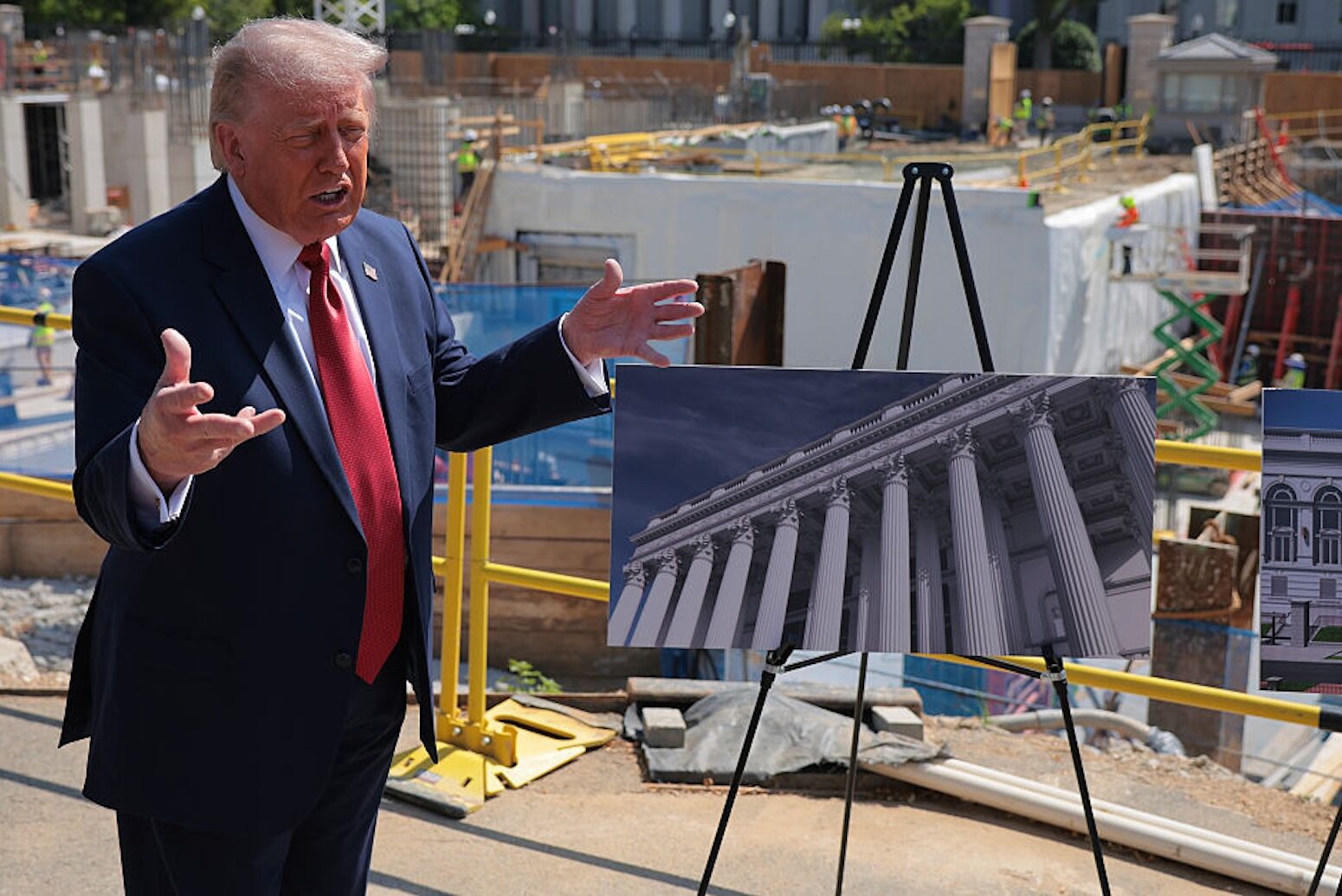
Cover image from salon.com, which was analyzed for this article
President Trump showcased ongoing construction of a new White House ballroom, claiming no taxpayer funds were used. Critics highlighted it as a symbol of excess amid broader spending controversies.
PoliticalOS
Wednesday, May 20, 2026 — Politics
The ballroom's funding remains unsettled between private pledges and past legislative attempts that were blocked on procedural grounds. Legal challenges and the need for congressional approval continue to shape whether and how the project proceeds.
What outlets missed
Most coverage downplayed the Senate parliamentarian's specific Byrd rule objection that removed a $1 billion security allocation from an immigration bill. Few accounts traced the documented shift between initial private-donor statements and later legislative attempts to secure public funds. Legal filings by preservationists and the exact procedural timeline for congressional approval also received limited detail across the pieces examined.
Trump's White House Ballroom Project Draws Attention to Taxpayer Costs
President Donald Trump visited the construction site of a proposed $400 million ballroom at the White House this week and described the addition as a gift to the country rather than a personal project. The facility would be completed after his term ends, he said, and could serve future administrations for events such as the White House Correspondents Dinner with improved security arrangements.
Trump pointed to the structure's size and design as practical upgrades. He noted that the space would allow larger gatherings without the constraints of existing rooms. Supporters at a separate event on the National Mall have framed the project in sweeping historical terms, with some linking it to long-delayed improvements in presidential facilities.
Critics have focused on the expense and questioned whether the ballroom represents an efficient use of public resources. The total cost exceeds many prior White House renovations by a wide margin, and questions persist about how the funding will be allocated across federal budgets. Historical records show that earlier presidents managed official functions without dedicated ballrooms of this scale, relying instead on existing spaces or private venues for large events.
Projects of this kind illustrate a recurring pattern in government decision making. When decision makers direct spending drawn from general tax revenues, the direct link between cost and benefit weakens. Individuals and private organizations typically face stronger pressure to weigh returns against outlays because they bear the consequences themselves. Public projects often expand beyond initial estimates as layers of requirements, approvals, and revisions accumulate.
Data from federal construction oversight reports indicate that large-scale additions to government buildings frequently run 30 to 50 percent above early projections. Those overruns shift resources away from other priorities that Congress and the administration must still fund through borrowing or taxation. The ballroom's projected price tag places it in a category comparable to major infrastructure initiatives, yet it serves a narrower set of ceremonial purposes.
Trump has emphasized security advantages, arguing that a purpose-built venue would reduce vulnerabilities exposed during recent outdoor or temporary setups. Security experts note that controlled indoor spaces can simplify protection logistics, though they also acknowledge that existing White House modifications have addressed many of those concerns incrementally over decades.
Supporters contend that the addition would enhance the executive branch's ability to host foreign dignitaries and domestic gatherings in a setting befitting the office. Detractors counter that such enhancements reflect an ongoing expansion of presidential amenities rather than a response to demonstrated need. Both arguments ultimately turn on whether the marginal improvement in function justifies the commitment of hundreds of millions of dollars that originate from taxpayers.
Past administrations from both parties have pursued physical upgrades to the White House complex, often citing similar rationales of modernization and prestige. Each case produced debates over scope and financing. The current proposal continues that pattern while arriving at a moment when federal deficits remain elevated and many agencies report backlogs in maintenance and basic operations.
Observers tracking executive branch expenditures will likely monitor how the ballroom funding is structured, whether through direct appropriations or reallocated accounts. Clear accounting of line items and independent cost reviews could clarify whether the project adheres to standard procurement practices or incorporates elements that invite further scrutiny. Such transparency measures have proven useful in evaluating other large federal construction efforts.
You just read Conservative's take. Want to read what actually happened?
More in Politics

Trump at 32% Approval as Gas Prices Test GOP Midterm Hopes
NYT/Siena polling showed Trump's approval at historic lows around 32 percent with Democrats leading by double digits in key districts. Early voting has surged in battleground states.

Record Early Voting Hits Battlegrounds, Shifting Partisan Shares
AP analysis found hundreds of thousands more early ballots than in 2022 in states including Texas, Ohio, Kansas, Maine, and North Carolina, shifting partisan dynamics.

Trump Backs Marshall in Kansas Senate Race Tightened by Farm Costs
President Trump rallied in deep-red Kansas for GOP Sen. Roger Marshall in a competitive race, announcing an $8 billion farm fuel relief program amid high diesel prices. Democrats see an opening to end 94 years of GOP dominance in the state.

Trump Pauses Russia Sanctions Amid Ukraine Tensions and Missile Strikes
Trump waived sanctions on Russia and floated trilateral talks with Putin and Xi as part of ending the Ukraine war, while tensions rose with Zelenskyy over Starlink and arms. Bipartisan senators engaged Zelenskyy amid the shifts.
The Compass
You just read five takes on one story.
What's your take? Find your political shape in a few minutes.
Take the test