
Trump White House Ballroom Project Raises Funding Questions
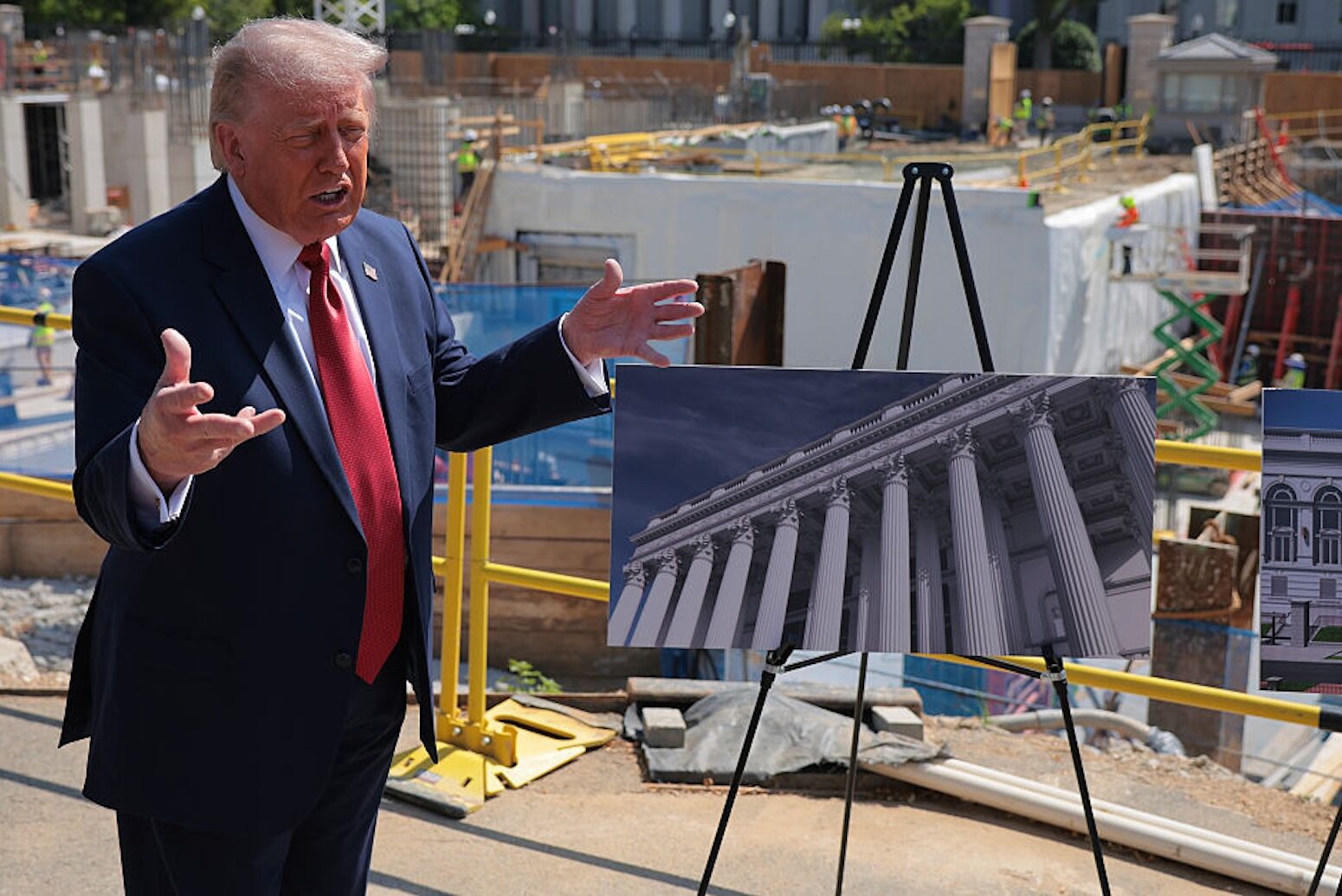
Cover image from salon.com, which was analyzed for this article
President Trump showcased ongoing construction of a new White House ballroom, claiming no taxpayer funds were used. Critics highlighted it as a symbol of excess amid broader spending controversies.
PoliticalOS
Wednesday, May 20, 2026 — Politics
The ballroom's funding remains unsettled between private pledges and past legislative attempts that were blocked on procedural grounds. Legal challenges and the need for congressional approval continue to shape whether and how the project proceeds.
What outlets missed
Most coverage downplayed the Senate parliamentarian's specific Byrd rule objection that removed a $1 billion security allocation from an immigration bill. Few accounts traced the documented shift between initial private-donor statements and later legislative attempts to secure public funds. Legal filings by preservationists and the exact procedural timeline for congressional approval also received limited detail across the pieces examined.
Trump's White House Ballroom Project Tests Norms of Presidential Legacy Building
President Donald Trump on Tuesday stood at the construction site of a proposed $400 million ballroom at the White House and described the addition as a lasting contribution to the institution rather than a personal indulgence. Speaking to reporters, Trump said the project would outlast his own term and serve future presidents, calling it a "gift to the United States of America." He also noted that the enclosed space would improve security for large events, pointing to the recent White House Correspondents' Dinner as an example of the kind of gathering that could be held more safely indoors.
The scale of the undertaking has drawn attention because major structural changes to the White House have historically required extensive review by Congress, the National Park Service, and preservation commissions. Past renovations, including the Truman-era reconstruction of the main residence and later additions under subsequent administrations, were framed as necessary maintenance rather than new amenities. Trump's description of the ballroom as a forward-looking facility for official entertaining places it in a different category, one that invites comparison to how earlier presidents approached physical changes to the executive mansion.
Supporters at a related event on the National Mall this past weekend framed the project in sweeping historical terms. Conservative commentator Eric Metaxas suggested that divine timing had brought the ballroom into being during Trump's presidency. Such rhetoric underscores how the building has already become a focal point for competing narratives about the current administration. For those aligned with Trump, the ballroom represents an assertion of national strength and permanence. For critics, the cost and timing raise questions about whether taxpayer resources are being directed toward durable institutional needs or toward visible markers of one president's tenure.
Fiscal context adds another layer. The federal government continues to manage large deficits, and discretionary spending on domestic programs faces ongoing constraints in budget negotiations. A $400 million outlay for a single facility at the White House, even if partially funded through private donations as some reports have suggested, would still require public resources for security, maintenance, and operations over time. Historical data on White House upkeep shows that even smaller additions have generated long-term costs that extend well beyond initial construction.
The project also intersects with broader debates about how presidents shape their physical surroundings to project authority. Earlier administrations expanded the West Wing or updated event spaces to accommodate a larger press corps and more frequent official functions. Those changes were usually justified by functional requirements rather than statements of personal legacy. Trump's explicit linkage of the ballroom to his own vision, while insisting it is not for his benefit, illustrates the tension between individual branding and institutional continuity that has characterized much of his approach to the presidency.
Whether the ballroom ultimately advances security, hosting capacity, or simply becomes another chapter in the long record of White House alterations will depend on how future administrations use the space and how Congress oversees its funding. For now, the structure under construction serves as a concrete reminder of the ways presidents continue to test the boundaries between personal ambition and the shared property of the American public.
You just read Liberal's take. Want to read what actually happened?
More in Politics
Trump at 32% Approval as Gas Prices Test GOP Midterm Hopes
NYT/Siena polling showed Trump's approval at historic lows around 32 percent with Democrats leading by double digits in key districts. Early voting has surged in battleground states.

Record Early Voting Hits Battlegrounds, Shifting Partisan Shares
AP analysis found hundreds of thousands more early ballots than in 2022 in states including Texas, Ohio, Kansas, Maine, and North Carolina, shifting partisan dynamics.
Trump Backs Marshall in Kansas Senate Race Tightened by Farm Costs
President Trump rallied in deep-red Kansas for GOP Sen. Roger Marshall in a competitive race, announcing an $8 billion farm fuel relief program amid high diesel prices. Democrats see an opening to end 94 years of GOP dominance in the state.

Trump Pauses Russia Sanctions Amid Ukraine Tensions and Missile Strikes
Trump waived sanctions on Russia and floated trilateral talks with Putin and Xi as part of ending the Ukraine war, while tensions rose with Zelenskyy over Starlink and arms. Bipartisan senators engaged Zelenskyy amid the shifts.
The Compass
You just read five takes on one story.
What's your take? Find your political shape in a few minutes.
Take the test