
Trump-Xi Summit Yields Trade Pledges, Leaves Taiwan Unresolved
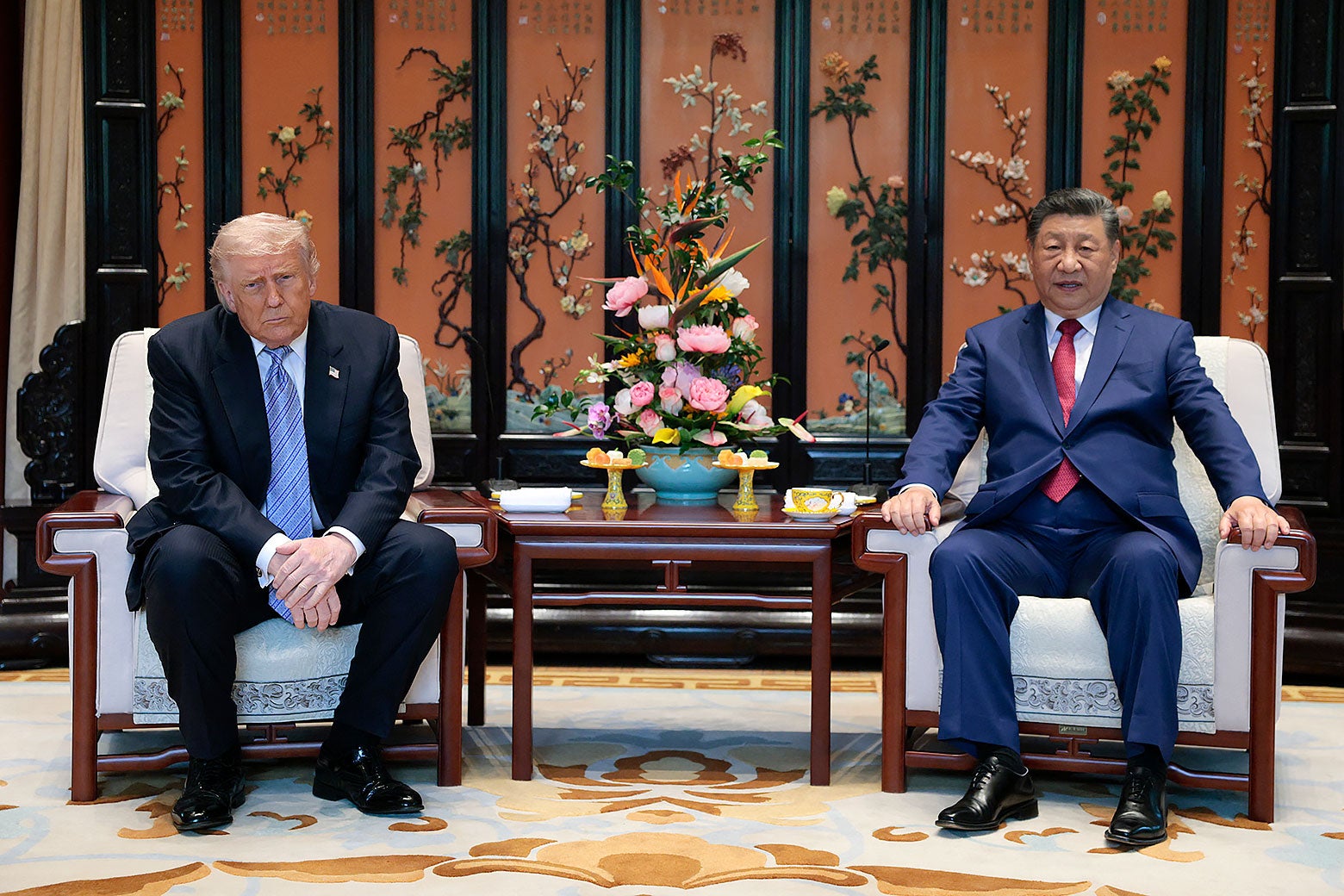
Cover image from slate.com, which was analyzed for this article
President Trump returned from Beijing with commitments for major Chinese purchases of US agricultural goods and Boeing aircraft. No breakthroughs occurred on Taiwan security or Iran-related issues.
PoliticalOS
Saturday, May 16, 2026 — Politics
The summit produced concrete but limited trade commitments on aircraft and farm goods while leaving Taiwan arms sales and broader security questions unresolved. Readers should note that U.S. policy on strategic ambiguity stayed intact and that follow-up meetings were scheduled, even as several economic friction points remain open.
What outlets missed
Several outlets omitted the specific Boeing order size of 200 aircraft with a conditional path to 750, a detail that appeared in White House remarks and affected market reaction. Most reporting also left out the confirmed scheduling of Xi’s future White House visit, which established a concrete follow-up mechanism regardless of immediate trade results. Few accounts placed the 245,000 acres of Chinese-owned U.S. farmland against total foreign holdings, where Canada alone accounts for more than 15 million acres, leaving scale unaddressed.
Trump Signals Caution on Arming Taiwan After Beijing Summit
President Donald Trump left Beijing this week with a clear message that the United States has no interest in sparking conflict over Taiwan. Speaking to Fox News after his meetings with Chinese leader Xi Jinping, Trump said he remains undecided on a pending $14 billion arms package for the island and warned against any move toward formal independence.
"I may do it. I may not do it," Trump stated. "We're not looking to have wars. If you kept it the way it is, I think China is going to be OK with that. But we're not looking to have somebody say, 'Let's go independent because the United States is backing us.'"
Trump described the weapons as a potential negotiating tool rather than an automatic commitment. The package, which includes air defense systems and advanced missiles, has sat awaiting approval for months. An earlier $11 billion sale last year already drew increased Chinese military activity around Taiwan. Trump made clear that sending more hardware across 9,500 miles does not serve American interests if it risks drawing the country into direct confrontation.
Chinese officials used the summit to stress that mishandling Taiwan could put the entire U.S.-China relationship in jeopardy. Trump avoided public discussion of the issue while in Beijing and only addressed it once airborne on the return flight. His restraint stood in contrast to expectations that the visit would produce dramatic concessions or major trade breakthroughs.
No large-scale deals emerged from the talks. Previous trips had yielded announced agreements worth hundreds of billions on paper. This time, the focus stayed on maintaining economic stability without new headline commitments. Trump arrived with business leaders hoping to ease tensions, yet Beijing appeared content to hold its ground on core issues.
Trump also pushed back on domestic calls to restrict Chinese students at U.S. universities and to seize Chinese-owned farmland outright. Removing hundreds of thousands of students, he argued, would damage American higher education without clear national security gains. On farmland, he noted that forced sales would hurt U.S. farm values and that much of the acreage was acquired years earlier under prior administrations.
The president's approach reflects a consistent preference for avoiding distant entanglements. Taiwan already functions as a de facto independent entity in practice, and Trump indicated that forcing a formal declaration serves no useful purpose for the United States. Both sides, he said, should simply "cool it."
Congressional support for arming Taiwan remains strong across party lines, yet the trip underscored the practical limits of treating the island as an open-ended American security commitment. With no fresh trade victories secured and no escalation triggered, Trump returned home having prioritized direct U.S. interests over symbolic gestures that could lead to wider conflict.
You just read America First's take. Want to read what actually happened?
More in Politics
Trump at 32% Approval as Gas Prices Test GOP Midterm Hopes
NYT/Siena polling showed Trump's approval at historic lows around 32 percent with Democrats leading by double digits in key districts. Early voting has surged in battleground states.

Record Early Voting Hits Battlegrounds, Shifting Partisan Shares
AP analysis found hundreds of thousands more early ballots than in 2022 in states including Texas, Ohio, Kansas, Maine, and North Carolina, shifting partisan dynamics.
Trump Backs Marshall in Kansas Senate Race Tightened by Farm Costs
President Trump rallied in deep-red Kansas for GOP Sen. Roger Marshall in a competitive race, announcing an $8 billion farm fuel relief program amid high diesel prices. Democrats see an opening to end 94 years of GOP dominance in the state.

Trump Pauses Russia Sanctions Amid Ukraine Tensions and Missile Strikes
Trump waived sanctions on Russia and floated trilateral talks with Putin and Xi as part of ending the Ukraine war, while tensions rose with Zelenskyy over Starlink and arms. Bipartisan senators engaged Zelenskyy amid the shifts.
The Compass
You just read five takes on one story.
What's your take? Find your political shape in a few minutes.
Take the test