
US Charges Sinaloa Governor with Aiding Cartel Fentanyl Pipeline
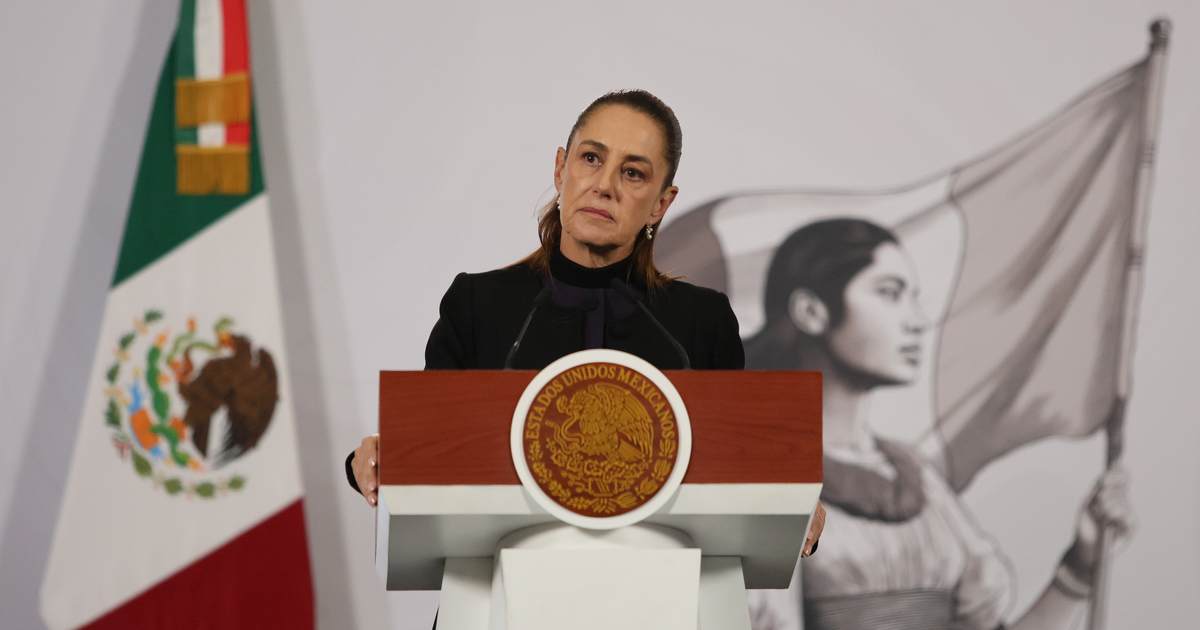
Cover image from pjmedia.com, which was analyzed for this article
Federal prosecutors indicted a Mexican state governor and associates tied to the Sinaloa cartel on drug trafficking charges in a major cross-border operation. The case exposes high-level corruption enabling narcotics flow into the US. It signals intensified US efforts against cartel influence in Mexican politics.
PoliticalOS
Thursday, April 30, 2026 — Politics
The United States has directly accused a sitting Mexican governor and nine other officials of protecting and enabling the Sinaloa Cartel faction responsible for much of the fentanyl killing tens of thousands of Americans annually. Rocha Moya denies every allegation, calling the case an attack on Mexican sovereignty, while Mexico says it will conduct its own review before any extradition. The single most important reality is that this indictment escalates the conflict from targeting cartel operatives to charging the politicians allegedly shielding them — a move with profound implications for bilateral trust and the future of cross-border drug enforcement.
What outlets missed
Both outlets underplayed that this was a superseding indictment expanding a 2023 case rather than a wholly new investigation, diminishing the incremental nature of the charges. France 24 omitted Rocha Moya's direct denial and his affiliation with the ruling Morena party, which frames the political stakes in Mexico City. PJ Media mischaracterized Mexico's response by claiming officials confirmed "enough evidence" for extradition when the Foreign Ministry actually stated it would independently assess evidence under Mexican law; the piece also failed to note Mexico's announcement of its own parallel probe into the governor. Neither gave full detail on the specific kidnapping and murder charges against the former police commander involving a DEA source, nor the exact mechanics of how officials allegedly supplied state resources like police radios to the cartel.
US Indicts Mexican Governor in Sweeping Sinaloa Cartel Drug Trafficking Case
The Trump administration's Justice Department has indicted the sitting governor of Sinaloa state along with nine other current and former high-ranking Mexican officials, accusing them of embedding themselves inside the Sinaloa Cartel to flood the United States with fentanyl and other deadly drugs.
A federal grand jury in the Southern District of New York unsealed the 34-page indictment on Wednesday, charging Rubén Rocha Moya, the governor of Sinaloa and a member of President Claudia Sheinbaum's Morena party, with partnering directly with the "Los Chapitos" faction led by the sons of Joaquín "El Chapo" Guzmán. According to the charges, Rocha Moya and his co-defendants accepted millions of dollars in bribes to shield the cartel from prosecution, leak sensitive law-enforcement intelligence, and place official state resources at the traffickers' disposal.
The Department of Justice describes Sinaloa as the geographic epicenter of the global narcotics trade. That description is not rhetorical. For years the state has served as the primary production and export hub for the fentanyl, heroin, cocaine, and methamphetamine that have killed hundreds of thousands of Americans. The indictment alleges that instead of fighting this machinery, some of the very people elected or appointed to govern it became willing partners in its expansion.
Those charged include the mayor of Culiacán, a sitting Mexican senator, the deputy attorney general for the Sinaloa State Attorney General’s Office, and several other senior law-enforcement figures. Their alleged crimes go far beyond passive corruption. Prosecutors say the officials provided active protection, tipped off cartel leaders about impending operations, and supplied police cars, radios, and official credentials that allowed traffickers to operate with impunity. One defendant, Juan Valenzuela Millan, a former high-level commander in the Culiacán Municipal Police known as "Juanito," faces additional charges for the kidnapping and murder of a DEA source and that source's relative. According to the indictment, Valenzuela handed the two men over to the cartel, after which they were killed.
The penalties sought are severe. All but Valenzuela face potential life sentences with a mandatory minimum of 40 years. Valenzuela himself faces mandatory life imprisonment.
This case arrives at a moment of deep strain between Washington and Mexico City. The Trump administration has repeatedly signaled it will not wait for Mexican cooperation that it believes is not forthcoming. Mexican officials, for their part, have long bristled at what they characterize as unilateral American actions inside their sovereign territory. The result is a cross-border enforcement effort increasingly conducted through American courts rather than joint operations on the ground.
The scale of the alleged conspiracy detailed in the indictment should shock even those long familiar with Mexican political corruption. A governor, a senator, a mayor, and senior prosecutors and police commanders all allegedly on the payroll of the same organization whose product is the leading cause of death for Americans aged 18 to 45 in many parts of the country. The Sinaloa Cartel has long been one of the most ruthless criminal enterprises in the Western Hemisphere. That ruthlessness was not an obstacle to these officials. It appears to have been part of the business model they willingly joined.
The human cost is not abstract. Fentanyl smuggled through Sinaloa has hollowed out communities across the United States. At the same time, the cartel's power inside Mexico has produced its own mountain of corpses: journalists, mayors, police officers, and ordinary citizens murdered for getting in the way. When state officials become indistinguishable from cartel operatives, the already thin line between government and criminal enterprise effectively disappears.
The timing is also politically uncomfortable for Sheinbaum and the Morena movement. Both former President Andrés Manuel López Obrador and his successor built their appeal in part on promises to reduce violence and root out corruption. The indictment of one of their party's most prominent governors on charges this grave raises painful questions about how deeply the cartel has compromised the very institutions that were supposed to restrain it.
None of this is likely to end the flow of drugs on its own. Past indictments of cartel leaders have often been followed by bloody succession struggles that ultimately left the narcotics pipeline intact. American demand for these substances remains insatiable, and the profits generated are simply too enormous for the cartel to abandon. Yet the public exposure of such high-level complicity makes it harder for either government to pretend the problem is confined to a few bad actors in the hills.
As the defendants are arrested or fight extradition, the case will test the limits of U.S. leverage over its southern neighbor and the willingness of Mexican authorities to confront corruption at the highest levels of their own political system. For now, the indictment stands as one of the most sweeping accusations ever leveled by American prosecutors against a foreign government still nominally considered a partner in the drug war. It suggests that in Sinaloa, at least, the distinction between the state and the cartel has largely collapsed.
You just read Progressive's take. Want to read what actually happened?
More in Politics
Trump at 32% Approval as Gas Prices Test GOP Midterm Hopes
NYT/Siena polling showed Trump's approval at historic lows around 32 percent with Democrats leading by double digits in key districts. Early voting has surged in battleground states.

Record Early Voting Hits Battlegrounds, Shifting Partisan Shares
AP analysis found hundreds of thousands more early ballots than in 2022 in states including Texas, Ohio, Kansas, Maine, and North Carolina, shifting partisan dynamics.
Trump Backs Marshall in Kansas Senate Race Tightened by Farm Costs
President Trump rallied in deep-red Kansas for GOP Sen. Roger Marshall in a competitive race, announcing an $8 billion farm fuel relief program amid high diesel prices. Democrats see an opening to end 94 years of GOP dominance in the state.

Trump Pauses Russia Sanctions Amid Ukraine Tensions and Missile Strikes
Trump waived sanctions on Russia and floated trilateral talks with Putin and Xi as part of ending the Ukraine war, while tensions rose with Zelenskyy over Starlink and arms. Bipartisan senators engaged Zelenskyy amid the shifts.
The Compass
You just read five takes on one story.
What's your take? Find your political shape in a few minutes.
Take the test