
US-Iran Ceasefire at Risk as Tanker Seizure Clouds Pakistan Talks
Cover image from huffpost.com, which was analyzed for this article
As the fragile ceasefire nears expiration, US and Iran gear up for talks in Pakistan potentially led by VP Vance, but escalation followed the US Navy's seizure of an Iranian tanker in the Strait of Hormuz. Iran vowed to defend itself and demanded release, while Trump threatened blockades without a deal. Suspicious trades linked to the war fueled insider speculation.
PoliticalOS
Tuesday, April 21, 2026 — Politics
The immediate trigger for potential ceasefire collapse is the U.S. seizure of the Touska, but the deeper impasse concerns whether Iran will accept verifiable limits on uranium enrichment and sanctions relief only after compliance. Diplomacy in Islamabad offers a narrow window before the truce expires; failure risks renewed strikes, prolonged closure of the Strait of Hormuz and oil prices climbing further. The single most important variable is whether both sides treat the Hormuz blockade and threatened 'new cards' as genuine leverage for compromise rather than prelude to escalation.
What outlets missed
Most accounts underplayed the six-hour series of radio warnings and disabling shots fired at the Touska’s engine room before seizure, details carried in U.S. military releases but rarely integrated into diplomatic narratives. Few noted the vessel’s ownership ties to a U.S.-sanctioned Iranian shipping line, a fact reported by specialized maritime outlets yet absent from general coverage. Balanced casualty reporting across all parties—U.S., Iranian, Israeli and Lebanese—was sporadic; many stories highlighted only one side’s losses. The existence of the first round of direct talks on April 11-12 and their specific breakdown over enrichment limits received only glancing treatment. Finally, the separate Israel-Lebanon truce timeline and its uncertain linkage to the U.S.-Iran deal was often compressed into a single paragraph or omitted entirely.
US Iran Ceasefire Nears Collapse After American Seizure of Iranian Ship
ISLAMABAD — With a fragile two-week ceasefire due to expire this week, Pakistan continued frantic preparations Tuesday for a new round of U.S.-Iran negotiations in its capital even as Tehran made clear it may refuse to attend, citing fresh American aggression that has pushed the region back toward open conflict.
Pakistani officials told The Associated Press that U.S. Vice President JD Vance and Iranian Parliament Speaker Mohammad Bagher Qalibaf are expected to arrive Wednesday to lead delegations at the Serena Hotel. Yet Iranian state television explicitly denied any official delegation had reached Islamabad, and Tehran’s Foreign Ministry accused Washington of undermining diplomacy through “unlawful and savage” acts. The disconnect captures a dangerous reality: after a war that began in late February and has already killed thousands, neither side trusts the other to negotiate in good faith.
The immediate trigger is the U.S. military’s seizure on Sunday of the Iranian-flagged container vessel Touska as it tried to reach the port of Bandar Abbas. American forces claimed the ship violated a blockade imposed during the fighting. Iran called the boarding an act of “maritime banditry and terrorism,” saying it terrified passengers and crew — some of them family members traveling together — and constituted a direct violation of the April 8 truce. Tehran demanded the ship’s immediate release and warned it would use “all its capacities” to defend itself.
That language is not abstract. Iran’s parliament speaker, Mohammad Bagher Ghalibaf, posted overnight that Tehran has prepared “new cards on the battlefield” it has not yet revealed. The remark came hours after President Donald Trump publicly threatened that “lots of bombs” would “start going off” if no agreement is reached before the ceasefire deadline. Trump has repeatedly insisted on social media that he feels “no pressure whatsoever,” that the U.S. is “winning a War, BY A LOT,” and that the crippling blockade of Iranian ports and the Strait of Hormuz will remain until Tehran capitulates on core issues, chiefly its nuclear program.
The strait, through which roughly a fifth of global oil passes, has become the most volatile theater. Conflicting claims about whether the waterway is open or closed have produced chaos. Iran briefly signaled a new transit route north of the usual shipping lane, only for vessels to come under fire from Iranian Revolutionary Guard forces. Shipping data shows traffic has largely ground to a halt. Oil prices have surged again on fears the fragile truce is collapsing. These are not abstract economic statistics; they translate into higher costs for food and fuel across the Middle East and beyond, hitting the poorest hardest.
Several sticking points make any breakthrough improbable. Iran has presented what Trump once called a “10-point proposal,” yet fundamental gaps remain over uranium enrichment, the lifting of punishing sanctions, and the future status of the Hormuz blockade. Tehran insists its defensive capabilities are non-negotiable. Its foreign ministry spokesperson, Esmail Baghaei, said Washington’s “aggressive acts” prove it is “not serious” about peace. U.S. officials, for their part, show no willingness to ease the economic stranglehold until Iran accepts terms that effectively amount to surrender.
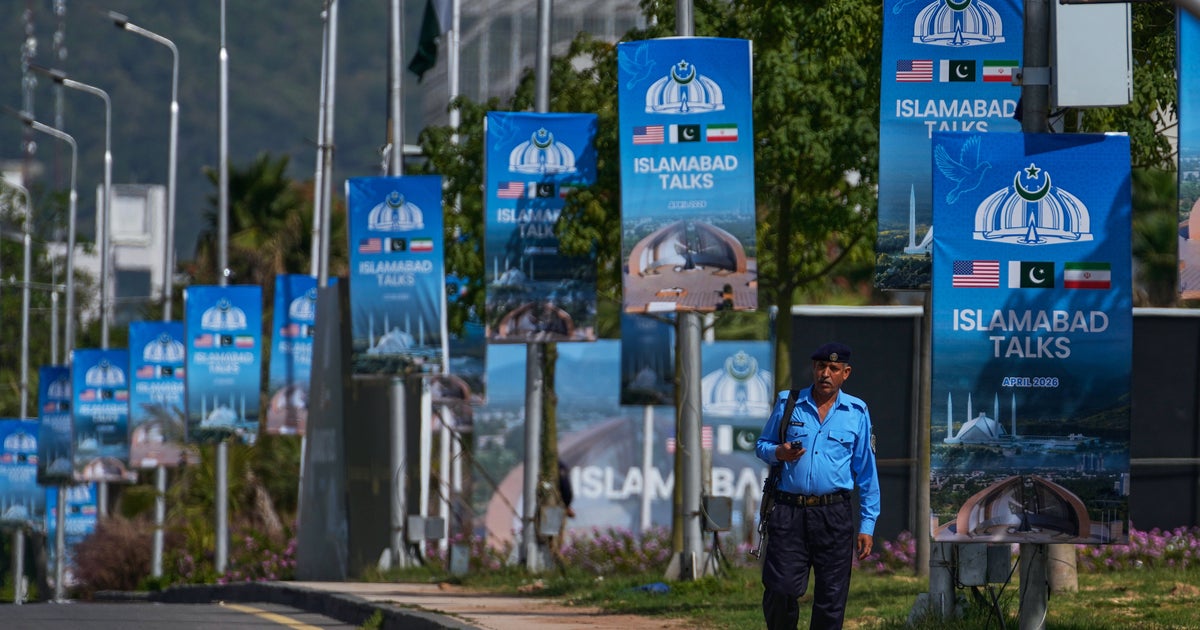
Pakistan, which has positioned itself as a mediator, is nevertheless laying out police security, erecting billboards, and readying logistics for talks that may not happen. The gamble reflects how desperately regional powers want to avoid renewed war between two states whose conflict has already spilled over, displacing more than a million people in Lebanon through related Israeli strikes and sending shockwaves through global energy markets.
Legal questions linger over the Touska seizure itself. Maritime law experts have pointed to the thin justification for intercepting a flagged vessel in international waters during an undeclared truce, yet Washington has offered little public explanation beyond blanket enforcement of its blockade. Iran has notified the United Nations, calling the action a breach of the U.N. Charter.
Trump’s public posture — alternating between declarations of overwhelming victory and threats of catastrophic bombing — reveals a White House eager to project strength even as the strategic outcome of Operation Epic Fury remains ambiguous. Iran’s hard-liners, now firmly in control, appear equally dug in. Both governments claim they have prevailed. Neither seems ready to offer the compromises necessary to prevent the next round of violence.
As the Wednesday deadline approaches, the people of Iran and the wider region are left waiting to see whether back-channel diplomacy in Islamabad can overcome the latest act of American provocation, or whether the ceasefire becomes just another short pause before far greater destruction. The stakes could scarcely be higher. Global oil flows, innocent lives aboard merchant vessels, and the fragile stability of an already shattered Middle East all hang on decisions being made — or avoided — in the coming hours.
You just read Progressive's take. Want to read what actually happened?
More in Politics

Trump at 32% Approval as Gas Prices Test GOP Midterm Hopes
NYT/Siena polling showed Trump's approval at historic lows around 32 percent with Democrats leading by double digits in key districts. Early voting has surged in battleground states.

Record Early Voting Hits Battlegrounds, Shifting Partisan Shares
AP analysis found hundreds of thousands more early ballots than in 2022 in states including Texas, Ohio, Kansas, Maine, and North Carolina, shifting partisan dynamics.

Trump Backs Marshall in Kansas Senate Race Tightened by Farm Costs
President Trump rallied in deep-red Kansas for GOP Sen. Roger Marshall in a competitive race, announcing an $8 billion farm fuel relief program amid high diesel prices. Democrats see an opening to end 94 years of GOP dominance in the state.

Trump Pauses Russia Sanctions Amid Ukraine Tensions and Missile Strikes
Trump waived sanctions on Russia and floated trilateral talks with Putin and Xi as part of ending the Ukraine war, while tensions rose with Zelenskyy over Starlink and arms. Bipartisan senators engaged Zelenskyy amid the shifts.
The Compass
You just read five takes on one story.
What's your take? Find your political shape in a few minutes.
Take the test