
US-Iran Stalemate Reaches Day 62 with Blockade, Polls and No Breakthrough

Cover image from aljazeera.com, which was analyzed for this article
The US-Iran war marked day 62 with no breakthrough, as Trump demands Iran surrender amid ongoing port blockade and failed diplomacy. Discussions emerge of a potential protracted 'frozen' conflict reshaping global energy dynamics. A majority of Americans reportedly view the US as prevailing in the standoff.
PoliticalOS
Thursday, April 30, 2026 — Politics
A naval blockade has sharply curtailed Iranian oil exports and nuclear progress, producing majority American belief that the U.S. holds the upper hand even as the conflict enters its third month. Yet $25 billion in costs, gasoline near $4.30 a gallon and a looming congressional war-powers deadline mean the current stalemate cannot easily continue without resolution on Iran's nuclear future. The single most important reality is that both sides are betting the other will blink first in a contest that already reshapes global energy flows and domestic political calendars.
What outlets missed
Most coverage downplayed or omitted that the February 28 strikes were framed by Israel and U.S. officials as preemptive against an imminent Iranian attack with missiles and drones already triggering Jerusalem sirens. The 90 percent reduction in Iranian sea trade reported by CENTCOM early in the blockade received little repetition despite its importance to claims of effectiveness. Partisan crosstabs in the Harvard CAPS/Harris poll, showing support heavily concentrated among Republicans, were rarely detailed even when topline majority numbers were highlighted. Iranian domestic impacts beyond general food insecurity, including specific casualty figures from initial strikes reported by the Iranian Red Crescent, appeared inconsistently. Finally, the scale of Iranian retaliation damage to Gulf energy sites and U.S. assets was mentioned but seldom quantified against U.S. claims of degraded Iranian nuclear capacity.
The Stalemate in the Strait
As the calendar ticks toward a statutory deadline this week, the two-month-old conflict between the United States and Iran is settling into an uncomfortable limbo that few in Washington openly endorse but many now seem prepared to tolerate. A ceasefire declared on April 8 has largely held, yet competing blockades around the Strait of Hormuz continue to roil global energy markets, oil has surged past $120 a barrel, and the core disputes over Iran’s nuclear program and regional power remain unresolved. President Trump’s public message to Tehran on Wednesday was characteristically blunt: the American blockade of Iranian ports is working and Iran should “just give up.” Iranian officials countered that the pressure has been largely symbolic, driving up world prices without crippling their production.
The legal backdrop adds urgency. Under the 1973 War Powers Resolution, the 60-day clock that began when the president notified Congress on March 2 of hostilities that commenced February 28 expires Friday. Without explicit congressional authorization or a declaration of war, the law requires the president to terminate American use of force. Administration officials have signaled they will not be rushed into a flawed agreement and that all military options remain available, including targeted strikes if Iran violates the uneasy truce. Congressional leaders from both parties have offered little clarity on whether they intend to vote on authorization, reflecting the broader paralysis that has characterized Congress’s role in American military engagements for decades.
Public opinion, however, tells a different story than the anxious tone prevalent in much of the coverage. A Harvard CAPS/Harris poll conducted April 23-26 found that 74 percent of registered voters believe the United States is currently winning the confrontation with Iran. Fifty-two percent supported the recent U.S. airstrikes, and 54 percent think Washington holds the advantage in any negotiations. These numbers arrive even as the president’s overall approval rating remains underwater. The gap between elite commentary and voter sentiment is striking. While major outlets have emphasized the risks of escalation, supply-chain disruptions, and potential Iranian retaliation, a clear majority of Americans appear to view the campaign as a success so far.
That perception rests on tangible if incomplete achievements. The joint U.S.-Israeli opening strikes degraded parts of Iran’s nuclear infrastructure and air defenses. The naval blockade has slowed Iranian oil exports, though Parliament Speaker Mohammad Bagher Ghalibaf insisted Wednesday that no wells had been destroyed and that Iran’s storage capacity has not yet been overwhelmed. Analysts tracking tanker movements suggest Tehran may be able to manage for another few weeks before output cuts become unavoidable, but the pain is already being felt globally. American gasoline prices have climbed to four-year highs, and the economic ripple effects are contributing to inflationary pressure at a delicate moment for the world economy.
Yet the conflict’s frozen character carries its own costs. Qatari diplomats have warned against allowing the Strait of Hormuz to become a permanent pressure point, where sporadic incidents could rapidly escalate. Iranian officials speak of exercising “restraint” to preserve diplomatic space while simultaneously decrying American “inappropriate behavior,” a phrase they used this week to explain why senior football federation leaders departed the FIFA Congress in Canada. Behind the scenes, Russian President Vladimir Putin held a conversation with Trump, though details remain sparse. The White House says it is reviewing a fresh Iranian proposal, but spokespeople emphasize that no deal will be accepted that fails to provide ironclad limits on Tehran’s nuclear ambitions.
For both sides, a protracted low-level standoff offers a face-saving off-ramp. Trump has spoken of pausing major military operations while retaining the ability to strike if Iran reconstitutes prohibited activities. Iranian leaders, facing domestic economic strain and the memory of rapid battlefield losses, appear to be betting that time and global market pressure will erode American resolve. Analysts warn this “no war, no peace” equilibrium may prove durable precisely because it is painful for everyone yet politically tolerable in both capitals. The danger is that such arrangements rarely stay frozen. Minor naval clashes, proxy attacks in the Gulf, or an Iranian sprint toward weapons-grade uranium could shatter the pause.
The War Powers deadline therefore matters beyond procedure. It forces a moment of institutional accountability that has been absent from too many American military campaigns since 2001. Congress could authorize continued limited operations, demand a clearer withdrawal timeline, or attempt to legislate constraints on presidential discretion. Each path carries political risk. Voters who believe the country is winning may punish lawmakers who appear to tie the president’s hands. At the same time, extending an open-ended naval and aerial campaign without fresh legislative approval would further erode the already tattered norms meant to prevent presidents from conducting indefinite wars.
The nuclear question remains the unresolved core. Even optimistic assessments suggest Iran’s program was set back but not eliminated. Any durable agreement would need to address enrichment capacity, inspection regimes, and sanctions relief in ways that previous deals could not. The current diplomatic channel, however halting, suggests both sides still see value in talking. Whether that leads to a comprehensive settlement or merely manages a tense coexistence will shape not only the price of oil but the stability of the entire Persian Gulf for years ahead.
For now the blockade holds, the ceasefire holds, and the clock on the War Powers Resolution holds. The question confronting Washington is whether a strategy built on sustained pressure can produce something more durable than managed hostility. Seventy-four percent of Americans may believe the United States is winning, but winning what, and for how long, remains the unanswered part of the story.
You just read Liberal's take. Want to read what actually happened?
More in Politics
Trump at 32% Approval as Gas Prices Test GOP Midterm Hopes
NYT/Siena polling showed Trump's approval at historic lows around 32 percent with Democrats leading by double digits in key districts. Early voting has surged in battleground states.

Record Early Voting Hits Battlegrounds, Shifting Partisan Shares
AP analysis found hundreds of thousands more early ballots than in 2022 in states including Texas, Ohio, Kansas, Maine, and North Carolina, shifting partisan dynamics.
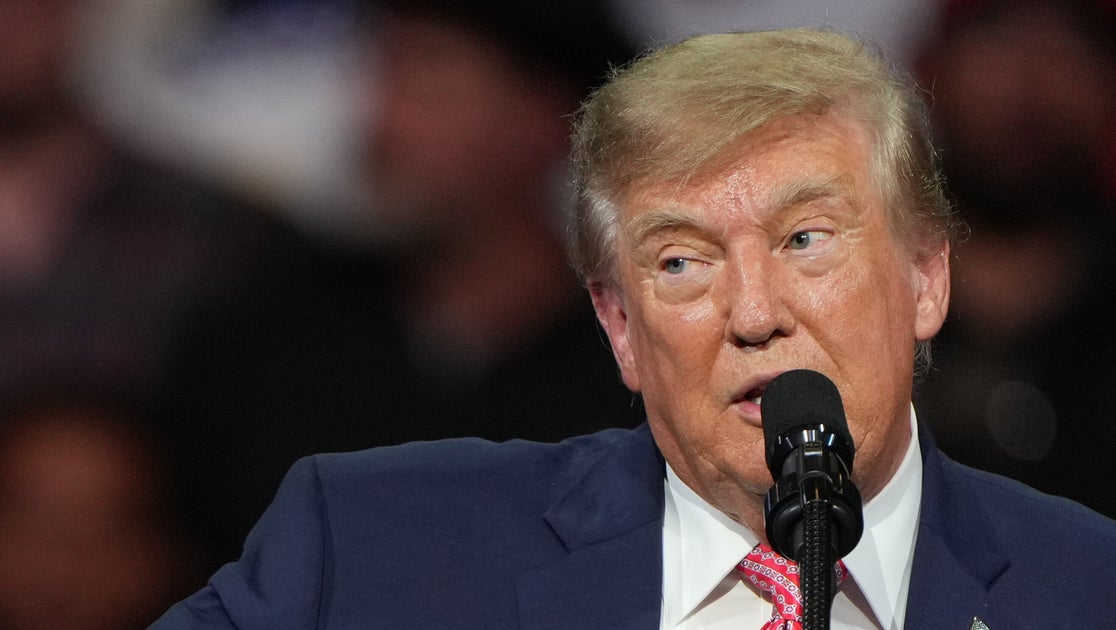
Trump Backs Marshall in Kansas Senate Race Tightened by Farm Costs
President Trump rallied in deep-red Kansas for GOP Sen. Roger Marshall in a competitive race, announcing an $8 billion farm fuel relief program amid high diesel prices. Democrats see an opening to end 94 years of GOP dominance in the state.

Trump Pauses Russia Sanctions Amid Ukraine Tensions and Missile Strikes
Trump waived sanctions on Russia and floated trilateral talks with Putin and Xi as part of ending the Ukraine war, while tensions rose with Zelenskyy over Starlink and arms. Bipartisan senators engaged Zelenskyy amid the shifts.
The Compass
You just read five takes on one story.
What's your take? Find your political shape in a few minutes.
Take the test