
Mid-Decade Redistricting Wars Threaten to Reshape 2026 House Control
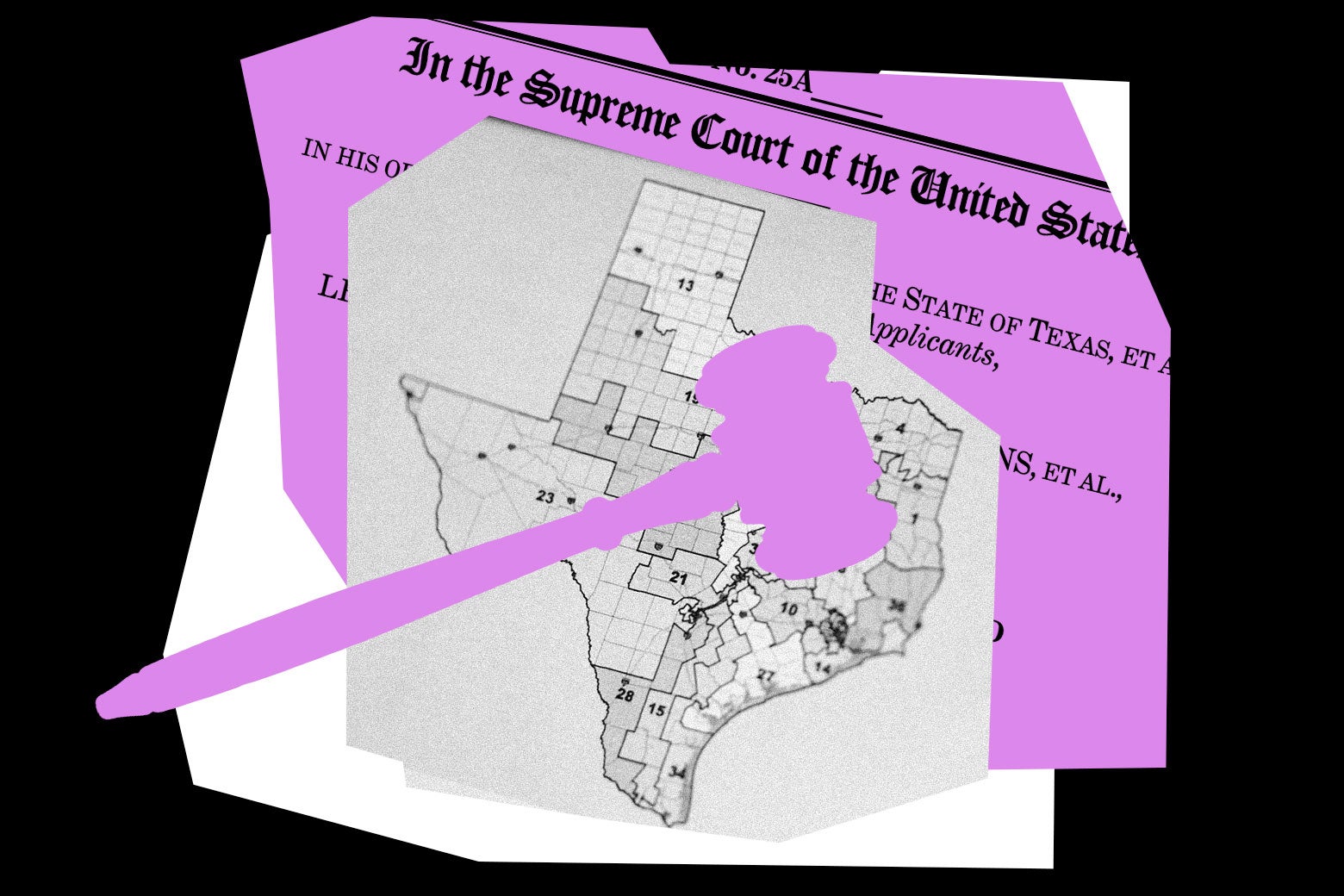
Cover image from slate.com, which was analyzed for this article
Ongoing state-level redistricting battles, including in Florida, could rig maps and shift House control amid partisan fights. Critics decry racial gerrymandering even Trump judges rejected. Power dynamics eyed for midterms.
PoliticalOS
Wednesday, April 29, 2026 — Politics
Both parties are redrawing congressional maps mid-decade wherever they hold legislative power, producing modest net Republican gains for 2026 if current plans survive court challenges. The Supreme Court has largely immunized partisan gerrymandering from federal review while still policing overt racial vote dilution, though the line between the two remains contested and litigation will continue. The single most important reality is that these state-level decisions, not national votes, may determine House control for the remainder of the decade.
What outlets missed
Most coverage omitted the 2-1 split in the Texas lower court, where a Reagan-appointed judge dissented and accused the majority of judicial overreach; the Supreme Court itself later flagged 'at least two serious errors' in the panel's reasoning. The Department of Justice letter that triggered Texas's redraw cited prior unconstitutional racial gerrymandering in the 2021 maps, a corrective context downplayed in favor of portraying the move as purely Trump-driven partisanship. Outlets also underplayed historical precedents for mid-decade redistricting, documented by the Congressional Research Service as far back as the 19th century, which normalize the practice even if its current volume is elevated. Finally, the pending Louisiana v. Callais case, which could reshape Voting Rights Act enforcement nationwide, received only glancing mention despite its potential to alter legal incentives in Florida and elsewhere.
Supreme Court Permits Texas Midcycle Redistricting for 2026 Midterms
The Supreme Court on Monday cleared the way for Texas to use its newly drawn congressional map in the 2026 elections, staying a lower court injunction that had blocked the plan. The unsigned order on the court's shadow docket reversed a ruling by a Trump-appointed federal judge who concluded the map diluted the voting strength of racial minorities in violation of the Constitution.
The decision returns the case to lower courts for further proceedings but allows the map to govern the upcoming midterms. It marks the latest development in an unusual round of mid-decade redistricting initiated after the 2024 elections. President Trump, concerned that his administration's early difficulties could cost Republican seats, encouraged GOP-led state legislatures to redraw congressional boundaries outside the normal decennial cycle. Texas acted first, passing new maps in August 2025 over unified Democratic opposition in the state legislature.
Analysts using 2024 voting data project the revised Texas map would expand the state's Republican advantage from 25-13 to 30-8. The changes consolidate Democratic strength in fewer urban and border districts while creating additional Republican-leaning seats in suburban and rural areas where the state's overall partisan tilt has strengthened in recent cycles. Similar maneuvers are underway or completed in other states. Republicans pursued gains in North Carolina, Missouri, and Virginia. Democrats redrew lines in California and elsewhere to protect incumbents or flip marginal seats. If Florida adopts a new map under consideration, the net national effect could favor Republicans by two to three seats according to tabulations by the Cook Political Report and state-level reporting.
The Texas litigation centered on claims that the new boundaries violated the Voting Rights Act by cracking minority populations across districts, reducing their ability to elect preferred candidates. The three-judge panel that initially blocked the map included a Trump appointee who joined the finding that the state had subordinated traditional redistricting criteria to racial considerations in at least several districts. That opinion acknowledged the overlap between race and partisanship in Texas voting patterns, where Black voters remain overwhelmingly Democratic while Hispanic voters have shown increasing Republican support in recent elections, particularly among working-class and rural populations.
The Supreme Court's intervention echoes its recent jurisprudence limiting federal courts' role in what are fundamentally political disputes. Earlier decisions have held that excessive partisanship in map-drawing is generally a matter for state legislatures and voters to resolve through political processes rather than judicial decree. Racial gerrymandering claims remain viable when plaintiffs demonstrate that race was the predominant factor, but the high court has grown skeptical of efforts to treat partisan outcomes as presumptive racial harms. Critics of the Texas map argue it effectively uses race as a proxy for party, packing reliably Democratic minority voters into super-majority districts while diluting their influence elsewhere. Defenders respond that the map simply reflects where voters actually live and how they actually vote, without regard to skin color. They note that assuming minority communities must produce monolithic Democratic outcomes risks turning the Voting Rights Act into a tool for guaranteeing partisan results rather than preventing intentional racial discrimination.
This episode illustrates the structural incentives that encourage map-making to follow political power. State legislatures have drawn districts to their advantage since the founding, a practice the Constitution assigns to elected representatives rather than federal judges. The decennial census provides the conventional trigger, but nothing in federal law prohibits mid-decade adjustments when legislatures choose to act. Both parties have availed themselves of that flexibility when in control. The current round simply compresses into one cycle what used to unfold more gradually across election cycles.
The practical stakes are significant. Republicans hold the House by the narrowest of margins heading into 2026. Even modest shifts from redistricting can determine control of committees, legislative priorities, and the ability to pass or block major initiatives. Yet the larger pattern reveals limits to any single party's strategy. Demographic change, population movement from high-tax states to lower-tax ones, and evolving preferences among Hispanic and working-class voters continue to reshape the electoral landscape faster than any map can permanently lock in advantages.
Legal uncertainty persists. The Supreme Court's order offers no detailed reasoning, leaving lower courts and future litigants without clear guidance. Congress could clarify standards for mid-decade changes or amend the Voting Rights Act to distinguish more cleanly between racial discrimination and ordinary partisan competition. Absent such action, states will keep testing the boundaries, and courts will continue refereeing claims that often blend race, party, and power in ways difficult to disentangle.
The Texas case underscores a recurring tension in American elections. Redistricting is inherently political. When one side accuses the other of racism for drawing maps that reflect current voter behavior, the charge can obscure the simpler reality that voters have sorted themselves geographically and ideologically. Judicial attempts to engineer outcomes that better match one vision of fairness frequently collide with the constitutional principle that legislatures, not courts, bear primary responsibility for structuring elections. The Supreme Court's willingness to let Texas proceed, even over a conservative judge's objection, suggests a preference for letting political actors fight these battles in the open rather than through protracted litigation that substitutes judicial preference for electoral accountability.
You just read Conservative's take. Want to read what actually happened?
More in Politics
Trump at 32% Approval as Gas Prices Test GOP Midterm Hopes
NYT/Siena polling showed Trump's approval at historic lows around 32 percent with Democrats leading by double digits in key districts. Early voting has surged in battleground states.

Record Early Voting Hits Battlegrounds, Shifting Partisan Shares
AP analysis found hundreds of thousands more early ballots than in 2022 in states including Texas, Ohio, Kansas, Maine, and North Carolina, shifting partisan dynamics.
Trump Backs Marshall in Kansas Senate Race Tightened by Farm Costs
President Trump rallied in deep-red Kansas for GOP Sen. Roger Marshall in a competitive race, announcing an $8 billion farm fuel relief program amid high diesel prices. Democrats see an opening to end 94 years of GOP dominance in the state.

Trump Pauses Russia Sanctions Amid Ukraine Tensions and Missile Strikes
Trump waived sanctions on Russia and floated trilateral talks with Putin and Xi as part of ending the Ukraine war, while tensions rose with Zelenskyy over Starlink and arms. Bipartisan senators engaged Zelenskyy amid the shifts.
The Compass
You just read five takes on one story.
What's your take? Find your political shape in a few minutes.
Take the test