
Mid-Decade Redistricting Wars Threaten to Reshape 2026 House Control
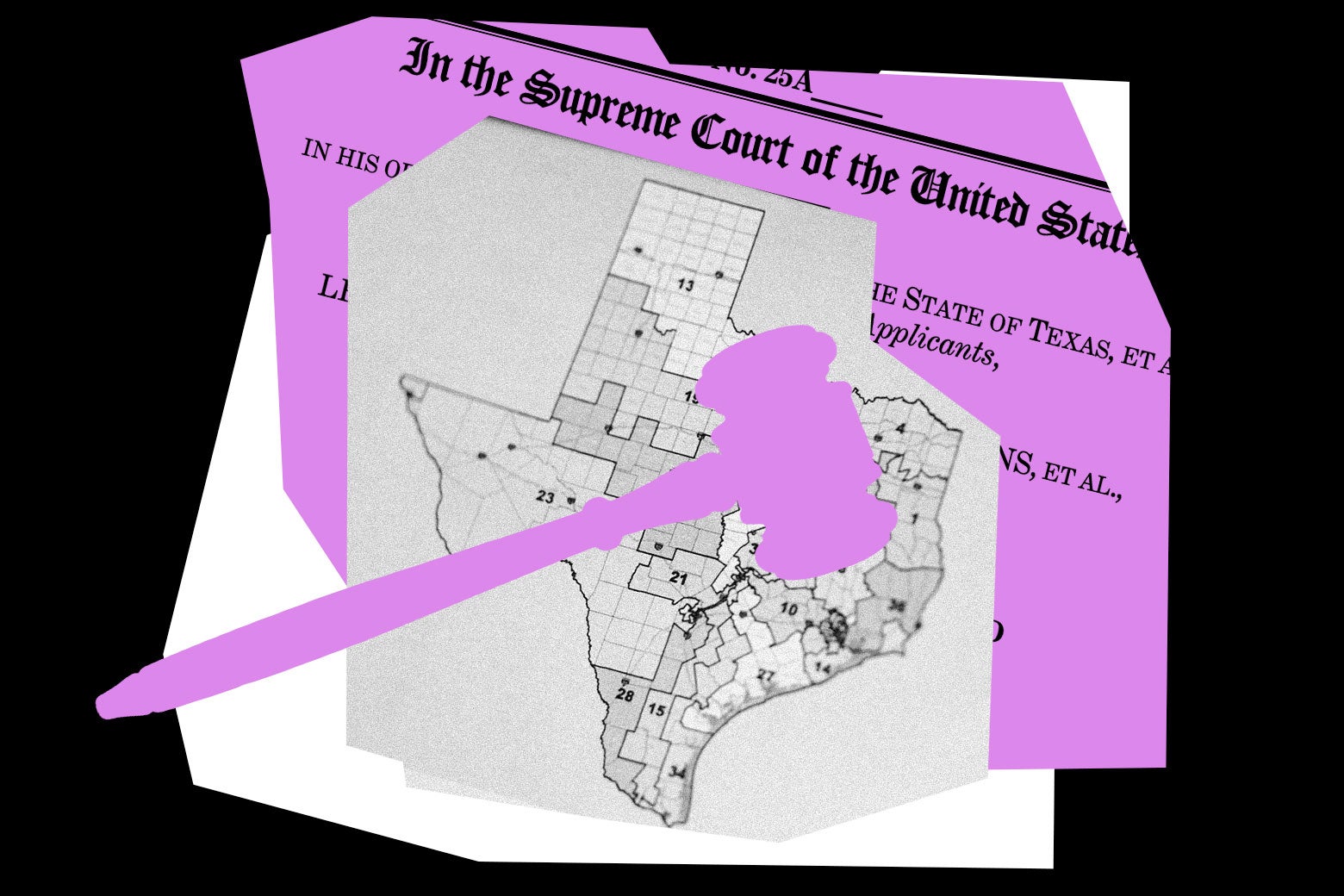
Cover image from slate.com, which was analyzed for this article
Ongoing state-level redistricting battles, including in Florida, could rig maps and shift House control amid partisan fights. Critics decry racial gerrymandering even Trump judges rejected. Power dynamics eyed for midterms.
PoliticalOS
Wednesday, April 29, 2026 — Politics
Both parties are redrawing congressional maps mid-decade wherever they hold legislative power, producing modest net Republican gains for 2026 if current plans survive court challenges. The Supreme Court has largely immunized partisan gerrymandering from federal review while still policing overt racial vote dilution, though the line between the two remains contested and litigation will continue. The single most important reality is that these state-level decisions, not national votes, may determine House control for the remainder of the decade.
What outlets missed
Most coverage omitted the 2-1 split in the Texas lower court, where a Reagan-appointed judge dissented and accused the majority of judicial overreach; the Supreme Court itself later flagged 'at least two serious errors' in the panel's reasoning. The Department of Justice letter that triggered Texas's redraw cited prior unconstitutional racial gerrymandering in the 2021 maps, a corrective context downplayed in favor of portraying the move as purely Trump-driven partisanship. Outlets also underplayed historical precedents for mid-decade redistricting, documented by the Congressional Research Service as far back as the 19th century, which normalize the practice even if its current volume is elevated. Finally, the pending Louisiana v. Callais case, which could reshape Voting Rights Act enforcement nationwide, received only glancing mention despite its potential to alter legal incentives in Florida and elsewhere.
Supreme Court Allows Texas to Use Republican Favored Maps in 2026 Midterms
The Supreme Court on Monday cleared the way for Texas to deploy its newly drawn congressional map for the 2026 elections, rejecting emergency challenges that claimed the boundaries illegally weakened the influence of Black and Hispanic voters. The unsigned order on the shadow docket effectively overturned a lower court decision that had blocked the plan, handing Republicans a significant boost as they defend a narrow House majority.
The ruling comes after an unusual round of mid-decade redistricting that President Trump personally encouraged last year. Facing what mainstream outlets described as his own unpopularity, Trump pressed GOP-led states to redraw lines outside the normal census cycle to protect vulnerable seats and expand the party's edge. Texas moved first and most aggressively. Lawmakers there pushed through changes that, according to nonpartisan analyses, could transform the state's delegation from a 25-13 Republican advantage into something closer to 30-8. That is a net pickup of five seats in one of the nation's largest delegations.
Democrats and voting rights organizations cried foul immediately. They argued the new districts deliberately concentrated minority voters into fewer heavily Democratic seats while spreading Anglo voters across more GOP-friendly ones. A special three-judge panel agreed, at least in part. What makes the episode striking is that one of the judges who found the map unconstitutional was a Trump appointee. That detail has been seized on by left-leaning outlets as proof the gerrymander was so egregious it offended even a conservative jurist. Yet the Supreme Court saw it differently, at least enough to let the maps stand for this cycle.
This is not an isolated fight. Across the country, both parties have treated redistricting as a blood sport ahead of 2026. Republicans in North Carolina, Missouri, and Florida have pursued similar advantages. Democrats, where they hold power, have retaliated in California, New York, and Illinois, carving out new safe seats of their own. One analysis suggested that if every ambitious redraw succeeds, Democrats could net roughly ten new favorable districts while Republicans net nine, though Florida's latest proposal could tilt the overall math back toward the GOP by two or three seats. The net effect of all this mapmaking is fewer truly competitive districts and more politicians choosing their voters before the voters choose them.
The pattern reveals something deeper about how power actually operates in America. For years voters have been told that democracy depends on fair maps and equal access. In practice, both parties treat the census and subsequent line-drawing as opportunities to entrench themselves. The difference is that when Republicans do it in fast-growing Sun Belt states with large minority populations, the institutional press immediately reaches for the word "racist." The same outlets show far less interest when Democratic legislatures in places like New Jersey or Maryland draw maps that protect incumbents at the expense of suburban Republicans. Racial gerrymandering claims have become the all-purpose legal weapon of the side that happens to be losing on the ground.
Texas illustrates the tension. The state has undergone enormous demographic change, with population growth concentrated in suburban and exurban areas that vote heavily Republican. Drawing lines that reflect those shifts is not automatically an act of suppression. It can simply be an acknowledgment of where people actually live and how they vote. Yet civil rights groups and Democratic attorneys insist that any map failing to produce proportional racial outcomes must be tainted by discrimination. The Trump-appointed judge's opinion gave that argument temporary traction. The Supreme Court's intervention suggests the bar for proving racial gerrymandering should remain high, especially when the maps also reflect clear partisan realities on the ground.
Critics of the high court, particularly on the left, complain that the conservative majority has made a mess of redistricting law. After declaring that extreme partisan gerrymanders are not the business of federal courts, the justices left racial claims as one of the few avenues for litigation. The result is predictable: every election cycle now features a fresh wave of lawsuits, emergency appeals, and shadow docket orders. Neither Congress nor the court has shown much interest in imposing clear, neutral rules that would limit mapmakers' creativity. Until that changes, the gerrymandering wars will continue long after 2026.
For Republicans, the Texas victory could not have come at a better time. The House majority stands at just a handful of seats. Every flipped district matters. Democrats hope their own redraws in blue states will offset losses in Texas and elsewhere, but the momentum appears to favor the GOP in the states where population growth has been strongest. Whether that advantage survives further legal challenges or voter backlash remains to be seen.
What cannot be denied is the cynicism on display. Politicians of both parties have turned the decennial redistricting process into a permanent scramble for structural advantage. The Supreme Court's latest order does not solve that larger problem. It simply refuses to let federal judges substitute their own preferences for those of elected state legislators in one particularly contentious case. In an era when trust in institutions is already low, the sight of endless courtroom warfare over who gets to draw the lines only deepens the sense that the game is rigged by insiders. Regular Americans watching from outside the Beltway and the courthouse may be forgiven for concluding that the real election often happens long before any ballots are cast.
You just read America First's take. Want to read what actually happened?
More in Politics
Trump at 32% Approval as Gas Prices Test GOP Midterm Hopes
NYT/Siena polling showed Trump's approval at historic lows around 32 percent with Democrats leading by double digits in key districts. Early voting has surged in battleground states.

Record Early Voting Hits Battlegrounds, Shifting Partisan Shares
AP analysis found hundreds of thousands more early ballots than in 2022 in states including Texas, Ohio, Kansas, Maine, and North Carolina, shifting partisan dynamics.
Trump Backs Marshall in Kansas Senate Race Tightened by Farm Costs
President Trump rallied in deep-red Kansas for GOP Sen. Roger Marshall in a competitive race, announcing an $8 billion farm fuel relief program amid high diesel prices. Democrats see an opening to end 94 years of GOP dominance in the state.

Trump Pauses Russia Sanctions Amid Ukraine Tensions and Missile Strikes
Trump waived sanctions on Russia and floated trilateral talks with Putin and Xi as part of ending the Ukraine war, while tensions rose with Zelenskyy over Starlink and arms. Bipartisan senators engaged Zelenskyy amid the shifts.
The Compass
You just read five takes on one story.
What's your take? Find your political shape in a few minutes.
Take the test