
Mid-Decade Redistricting Wars Threaten to Reshape 2026 House Control
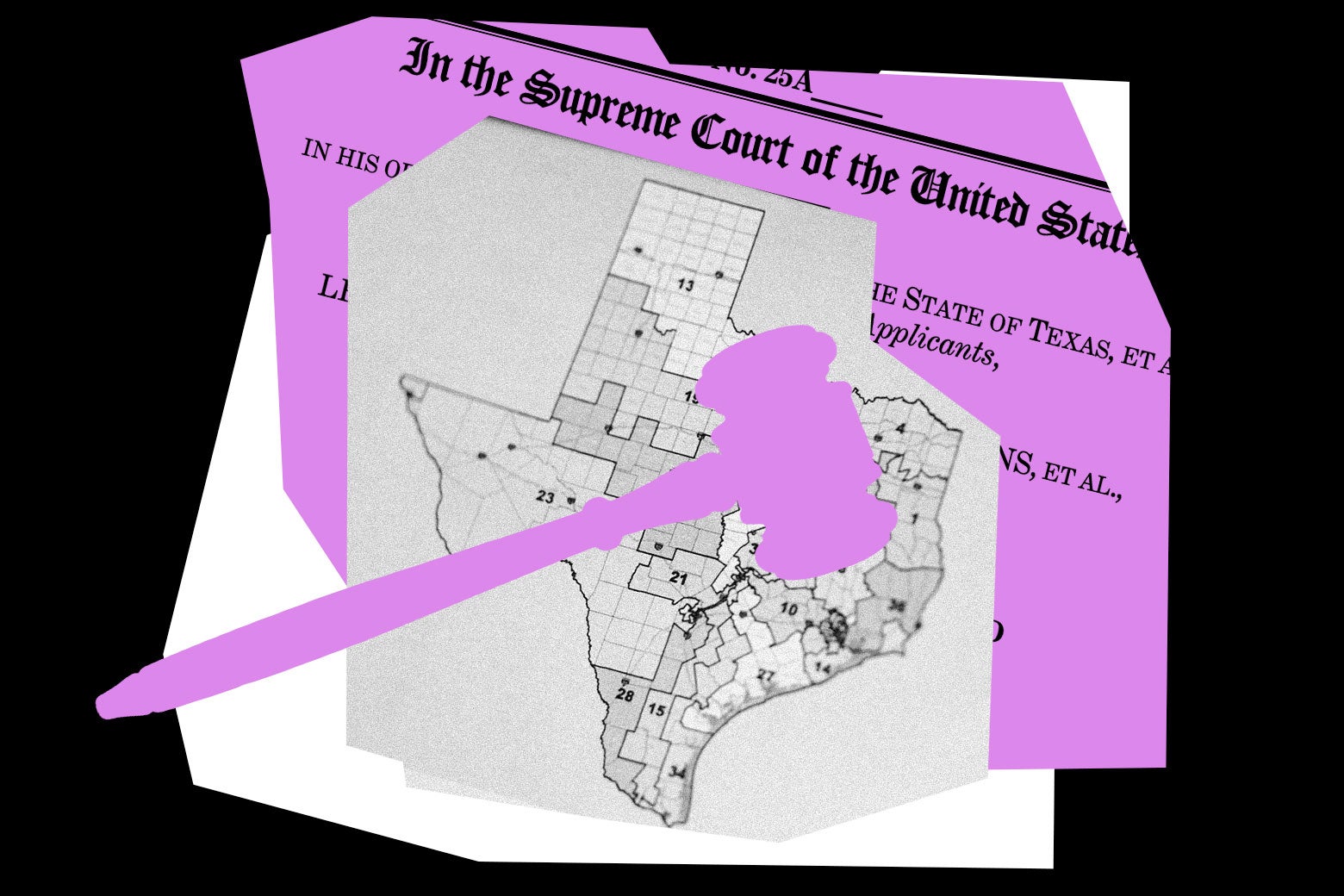
Cover image from slate.com, which was analyzed for this article
Ongoing state-level redistricting battles, including in Florida, could rig maps and shift House control amid partisan fights. Critics decry racial gerrymandering even Trump judges rejected. Power dynamics eyed for midterms.
PoliticalOS
Wednesday, April 29, 2026 — Politics
Both parties are redrawing congressional maps mid-decade wherever they hold legislative power, producing modest net Republican gains for 2026 if current plans survive court challenges. The Supreme Court has largely immunized partisan gerrymandering from federal review while still policing overt racial vote dilution, though the line between the two remains contested and litigation will continue. The single most important reality is that these state-level decisions, not national votes, may determine House control for the remainder of the decade.
What outlets missed
Most coverage omitted the 2-1 split in the Texas lower court, where a Reagan-appointed judge dissented and accused the majority of judicial overreach; the Supreme Court itself later flagged 'at least two serious errors' in the panel's reasoning. The Department of Justice letter that triggered Texas's redraw cited prior unconstitutional racial gerrymandering in the 2021 maps, a corrective context downplayed in favor of portraying the move as purely Trump-driven partisanship. Outlets also underplayed historical precedents for mid-decade redistricting, documented by the Congressional Research Service as far back as the 19th century, which normalize the practice even if its current volume is elevated. Finally, the pending Louisiana v. Callais case, which could reshape Voting Rights Act enforcement nationwide, received only glancing mention despite its potential to alter legal incentives in Florida and elsewhere.
Supreme Court Allows Texas Gerrymander Despite Lower Court Finding of Racial Vote Dilution
The Supreme Court on Monday cleared the way for Texas to use aggressively redrawn congressional maps in the 2026 midterms, reversing a lower-court decision that found the new districts unconstitutionally diluted the voting strength of Black and Latino residents. The unsigned order, issued on the court’s shadow docket without oral arguments or a full written opinion, hands Republicans a significant structural advantage in what is expected to be a closely fought battle for control of the House.
The ruling caps a highly unusual mid-decade redistricting process initiated after the 2024 election. President Donald Trump, facing declining approval ratings and the prospect of significant midterm losses, pressed Republican-led state legislatures to redraw their maps outside the normal decennial cycle. Texas moved first and most aggressively. In August 2025, GOP lawmakers pushed through changes that transformed the state’s delegation from a 25-13 Republican edge to a projected 30-8 advantage, according to analyses of the 2024 vote patterns. Seven of the new Republican-held districts were drawn to be competitive within a 10-point margin, effectively squeezing Democratic performance while concentrating minority voters into fewer districts where their influence on statewide outcomes is minimized.
A three-judge panel in Texas had blocked the maps, concluding that they violated the Voting Rights Act by intentionally diluting minority voting power. Notably, one of the judges was appointed by Trump himself. That panel’s opinion documented how the new lines split communities of color and reduced their ability to elect preferred candidates in several districts. The Supreme Court’s intervention stays that ruling, allowing the maps to remain in place for the coming election cycle. Legal observers described the move as consistent with the court’s recent pattern of using emergency relief to shape election rules, but criticized the lack of transparency and reasoning.
The Texas case is part of a broader national scramble. Since Trump’s public calls for mid-decade map changes, Republican legislatures in Missouri, North Carolina, and Virginia have pursued similar efforts, while Democrats in California and elsewhere attempted counter-moves. According to a tabulation by The Guardian drawing on Cook Political Report data and local reporting, the cumulative effect of all completed and pending redraws could shift roughly 19 seats. If current trends hold, Democrats stand to gain a net of about one seat from these battles, though pending action in Florida could tilt the overall map three seats toward Republicans. The small current House majority, 217-212 with four vacancies as of late April, makes every engineered district potentially decisive.
This round of map-drawing departs sharply from longstanding norms. Redistricting has traditionally followed the decennial census to reflect population shifts. Mid-decade revisions were rare and typically limited to court-ordered corrections. The 2025 efforts were overtly partisan, aimed at insulating Republican incumbents from anticipated voter backlash over the Trump administration’s early policy moves. Texas Democrats walked out of the legislature in protest during the August session, but lacked the numbers to stop the process.
The legal backdrop has been shaped by two landmark Supreme Court decisions. In 2013’s Shelby County v. Holder, the court gutted the preclearance formula of the Voting Rights Act, freeing states with histories of discrimination to change election rules without federal approval. Then, in 2019’s Rucho v. Common Cause, the court ruled that partisan gerrymandering claims are nonjusticiable in federal court, leaving mapmakers wide latitude as long as they avoid overt racial discrimination. The Texas litigation tested the boundary between partisan advantage and racial dilution. The lower court found the state crossed it. The Supreme Court’s shadow-docket order suggests a narrower view of what constitutes unconstitutional racial gerrymandering, though the absence of an explanatory opinion leaves lower courts and state legislatures with limited guidance.
Critics argue the decision further erodes public confidence in the fairness of electoral maps. When districts are drawn to predetermine outcomes before a single vote is cast, the link between voter preference and legislative representation weakens. In Texas, the new map packs Latino voters into super-majority districts while cracking broader coalitions that had previously supported Democratic candidates. Similar tactics have been used in other states, creating a patchwork of maps that reflect the preferences of map-drawers more than the underlying population.
Supporters of the maps counter that states retain sovereign authority over redistricting and that the new lines simply reflect updated political realities and population movement. They note that Democrats have also pursued aggressive map changes in states they control. Yet the speed and coordination of the Republican-led redraws, prompted directly by the president’s political concerns, distinguish this episode.
The practical effect for 2026 is already visible in early campaign calculations. Republican operatives see the Texas gains as a firewall against national headwinds. Democratic strategists, meanwhile, are recalibrating targeting models, focusing resources on the fewer remaining swing districts while preparing legal challenges that could extend into the next redistricting cycle after 2030.
Monday’s order does not resolve the underlying constitutional questions. It simply permits the maps to be used this November. Further litigation is almost certain, and the court may yet be forced to confront the case on the merits. For now, the decision underscores how redistricting has become another front in the country’s institutional contest over whose votes count most. In an era of narrow majorities and polarized governance, the power to draw the lines increasingly determines who writes the laws.
You just read Liberal's take. Want to read what actually happened?
More in Politics
Trump at 32% Approval as Gas Prices Test GOP Midterm Hopes
NYT/Siena polling showed Trump's approval at historic lows around 32 percent with Democrats leading by double digits in key districts. Early voting has surged in battleground states.

Record Early Voting Hits Battlegrounds, Shifting Partisan Shares
AP analysis found hundreds of thousands more early ballots than in 2022 in states including Texas, Ohio, Kansas, Maine, and North Carolina, shifting partisan dynamics.
Trump Backs Marshall in Kansas Senate Race Tightened by Farm Costs
President Trump rallied in deep-red Kansas for GOP Sen. Roger Marshall in a competitive race, announcing an $8 billion farm fuel relief program amid high diesel prices. Democrats see an opening to end 94 years of GOP dominance in the state.

Trump Pauses Russia Sanctions Amid Ukraine Tensions and Missile Strikes
Trump waived sanctions on Russia and floated trilateral talks with Putin and Xi as part of ending the Ukraine war, while tensions rose with Zelenskyy over Starlink and arms. Bipartisan senators engaged Zelenskyy amid the shifts.
The Compass
You just read five takes on one story.
What's your take? Find your political shape in a few minutes.
Take the test