
Mid-Decade Redistricting Wars Threaten to Reshape 2026 House Control
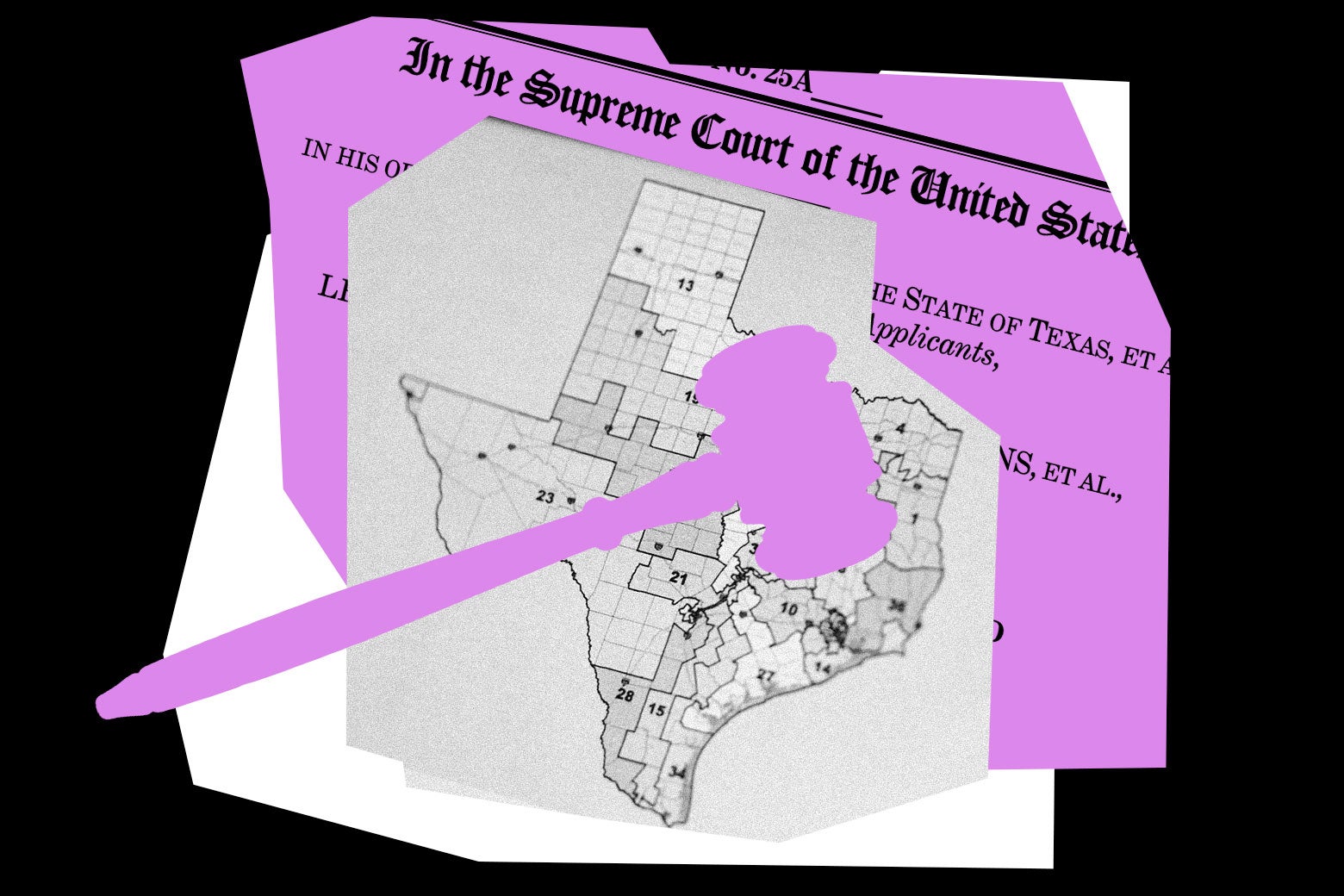
Cover image from slate.com, which was analyzed for this article
Ongoing state-level redistricting battles, including in Florida, could rig maps and shift House control amid partisan fights. Critics decry racial gerrymandering even Trump judges rejected. Power dynamics eyed for midterms.
PoliticalOS
Wednesday, April 29, 2026 — Politics
Both parties are redrawing congressional maps mid-decade wherever they hold legislative power, producing modest net Republican gains for 2026 if current plans survive court challenges. The Supreme Court has largely immunized partisan gerrymandering from federal review while still policing overt racial vote dilution, though the line between the two remains contested and litigation will continue. The single most important reality is that these state-level decisions, not national votes, may determine House control for the remainder of the decade.
What outlets missed
Most coverage omitted the 2-1 split in the Texas lower court, where a Reagan-appointed judge dissented and accused the majority of judicial overreach; the Supreme Court itself later flagged 'at least two serious errors' in the panel's reasoning. The Department of Justice letter that triggered Texas's redraw cited prior unconstitutional racial gerrymandering in the 2021 maps, a corrective context downplayed in favor of portraying the move as purely Trump-driven partisanship. Outlets also underplayed historical precedents for mid-decade redistricting, documented by the Congressional Research Service as far back as the 19th century, which normalize the practice even if its current volume is elevated. Finally, the pending Louisiana v. Callais case, which could reshape Voting Rights Act enforcement nationwide, received only glancing mention despite its potential to alter legal incentives in Florida and elsewhere.
Supreme Court Enables Texas Gerrymander That Diluted Minority Votes
The Supreme Court on Monday cleared the way for Texas to use congressional maps deliberately redrawn to weaken the voting strength of Black and Latino communities, overturning a lower-court ruling that had blocked the plan as an unconstitutional racial gerrymander. The decision, issued without oral argument or detailed explanation on the court’s shadow docket, hands Republicans a significant advantage heading into the 2026 midterms and underscores how the conservative majority has reshaped voting-rights law to favor partisan map-drawers.
The maps at issue were not the product of the decennial census cycle that normally governs redistricting. Instead, they were an emergency mid-decade rewrite demanded by President Donald Trump last year as he fretted over his own unpopularity and the prospect of heavy Republican losses. Texas lawmakers, who already held a 25-13 edge in the state’s congressional delegation after the 2024 elections, rushed through new boundaries designed to produce a 30-8 Republican advantage. That five-seat swing was achieved in part by carving up minority-heavy neighborhoods in Houston, Dallas, and the Rio Grande Valley, diluting the influence of voters of color who have trended sharply against Republicans in recent cycles.
Even a Trump-appointed federal judge found the effort went too far. The three-judge panel that first reviewed the maps concluded that Texas had subordinated traditional redistricting criteria to race in ways that violated the Equal Protection Clause and the Voting Rights Act. The opinion, written by a jurist nominated by Trump himself, documented how mapmakers split cohesive minority communities while protecting Anglo incumbents, producing districts where the voices of Black and Latino Texans were systematically diluted. That ruling was unusually blunt coming from a conservative court, yet the Supreme Court swept it aside in a one-paragraph order that offered no guidance on how lower courts should handle similar claims going forward.
The move fits a larger pattern. Since the Supreme Court gutted the preclearance provisions of the Voting Rights Act in Shelby County v. Holder in 2013 and further weakened racial-gerrymandering claims in subsequent decisions, Republican-led states have faced fewer practical restraints on drawing maps that entrench minority-party rule. Texas’s mid-cycle gambit, pushed through over the objections of Democratic legislators who walked out in protest, is only the most brazen example. Similar maneuvers have unfolded in North Carolina, Missouri, and Virginia, while Florida lawmakers are considering an even more aggressive map that could add yet another Republican seat.
Data compiled by the Cook Political Report and state media outlets show the cumulative effect of this redistricting arms race. Republicans netted nine new favorable districts across states where they controlled the process; Democrats secured ten in places where they held the pen. Yet the Texas changes stand out for their scale and their explicit targeting of racial and ethnic minority voters. The state’s Latino population has grown rapidly, yet the new maps crack up urban cores and agricultural counties where those voters predominate, packing them into fewer districts while spreading Anglo voters across more safely Republican ones. The result is a map that locks in GOP dominance for the remainder of the decade regardless of how the electorate evolves.
Civil-rights groups and voting-rights advocates condemned the Supreme Court’s intervention as another retreat from its historical role as protector of the franchise. “This is not neutral law application,” said one attorney involved in the litigation. “It is the endorsement of a power grab that even a Republican judge could not stomach.” The shadow-docket nature of the ruling compounds the frustration. By acting quickly and opaquely, the court avoids full briefing or public oral arguments that might have exposed the maps’ racial mechanics to wider scrutiny.
Democrats, for their part, have fought back where they could. In California and New York they protected or improved their own maps, while ballot initiatives and court challenges in other states have blunted some Republican gains. Yet the overall trajectory favors the party best positioned to control state legislatures after the last round of census-driven redistricting. With Republicans holding slim majorities in key chambers and a sympathetic Supreme Court, the incentive to push boundaries has only grown.
The practical stakes for 2026 are clear. A five-seat Republican pickup in Texas alone could prove decisive in a House where the current majority sits at just 217-212 with several vacancies. That margin is already among the narrowest in modern history. Should the maps survive further legal scrutiny, they will shape not only who represents millions of Texans but also the legislative priorities of the next Congress on issues ranging from immigration to health care to voting rights themselves.
Legal scholars have long warned that the Supreme Court’s decisions in this area have left a vacuum. Without clearer standards or congressional action to restore Voting Rights Act protections, mid-decade gerrymanders and racial vote dilution are likely to become normalized features of American democracy. Monday’s order does nothing to dispel that fear. Instead, it signals to state lawmakers that aggressive map-drawing, even when it draws judicial rebuke from within conservative ranks, will ultimately receive the highest court’s blessing.
The gerrymandering wars, in other words, are far from over. They are simply moving forward under rules written by the very institution that once stood as a check against them. For voters of color in Texas and beyond, the message is stark: the ballot box is being shaped before they even reach it.
You just read Progressive's take. Want to read what actually happened?
More in Politics
Trump at 32% Approval as Gas Prices Test GOP Midterm Hopes
NYT/Siena polling showed Trump's approval at historic lows around 32 percent with Democrats leading by double digits in key districts. Early voting has surged in battleground states.

Record Early Voting Hits Battlegrounds, Shifting Partisan Shares
AP analysis found hundreds of thousands more early ballots than in 2022 in states including Texas, Ohio, Kansas, Maine, and North Carolina, shifting partisan dynamics.
Trump Backs Marshall in Kansas Senate Race Tightened by Farm Costs
President Trump rallied in deep-red Kansas for GOP Sen. Roger Marshall in a competitive race, announcing an $8 billion farm fuel relief program amid high diesel prices. Democrats see an opening to end 94 years of GOP dominance in the state.

Trump Pauses Russia Sanctions Amid Ukraine Tensions and Missile Strikes
Trump waived sanctions on Russia and floated trilateral talks with Putin and Xi as part of ending the Ukraine war, while tensions rose with Zelenskyy over Starlink and arms. Bipartisan senators engaged Zelenskyy amid the shifts.
The Compass
You just read five takes on one story.
What's your take? Find your political shape in a few minutes.
Take the test