
FBI Probes Deaths and Disappearances of Scientists Tied to Nuclear and Space Programs
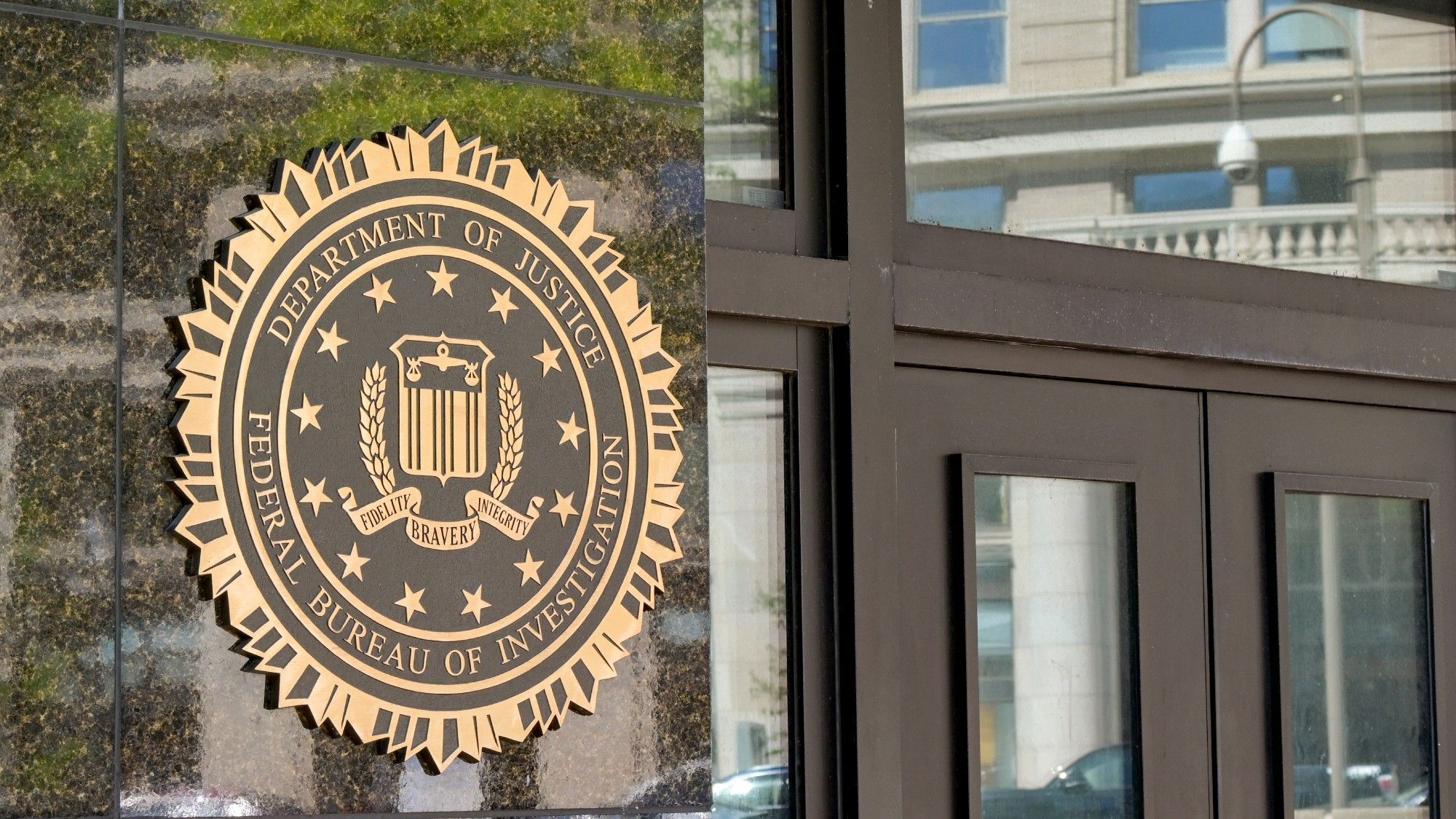
Cover image from theweek.com, which was analyzed for this article
FBI probes unexplained cases of 12 US scientists missing or dead, including a Defense Department scientist's suspicious accident. The issue fuels Washington worries and conspiracy talk. National security implications loom large.
PoliticalOS
Friday, April 24, 2026 — Politics
A congressional committee and the FBI are reviewing at least ten deaths and disappearances of researchers connected to nuclear, aerospace and defense programs, but multiple agencies, families and independent experts have found no evidence of coordination or foreign targeting. Many of the cases have mundane explanations ranging from medical conditions and accidents to solved murders and suicides. The single most important reality is that speculation has far outpaced verified facts, leaving the central question of any pattern still unanswered by the ongoing investigation.
What outlets missed
Most coverage downplayed or omitted the geographic clustering of several cases in New Mexico and the greater Los Angeles area, which officials have cited as one reason for initial interest but also a possible explanation for local factors rather than a national plot. The precise trigger for congressional action, formal letters sent by the House Oversight Committee on April 20, 2026, to FBI Director Kash Patel and multiple agency heads, received less attention than dramatic quotes. Preliminary assessments from investigators that no links have been found, alongside NASA's explicit statement of no national security threat, were often buried or absent. Outlets also underplayed that several deaths have identified causes, including a charged suspect in one murder and family-reported medical issues in another, while treating all cases as equally mysterious.
Federal Probe Scrutinizes Pattern of Deaths and Disappearances Among Key U.S. Scientists
Federal authorities and Congress are investigating a cluster of deaths and disappearances involving at least a dozen scientists and technical experts who worked on some of the most sensitive nuclear, aerospace, and space programs in the United States, a pattern that has alarmed lawmakers across party lines and prompted questions about whether the losses represent isolated tragedies or a coordinated threat to American technological advantage.
The FBI is leading the effort, coordinating with the Departments of Energy and Defense as well as state and local police to determine whether any connections exist among the cases, which date back to 2022. A congressional committee has sent formal letters to those agencies this week warning that the pattern “may represent a grave threat to U.S. national security and to U.S. personnel with access to scientific secrets.” At least ten of the individuals were connected to classified or high-priority research, including nuclear fusion, astrophysics, advanced aerospace materials, and biochemical defense. Several worked at laboratories that form the backbone of America’s nuclear deterrent and its edge in space technology.
The cases include a striking range of circumstances. William Neil McCasland, a retired Air Force general who directed technology development at an aerospace defense firm, vanished from his home in Albuquerque, New Mexico, on February 27. A nuclear physicist and professor at MIT was shot outside his Massachusetts home. An aerospace engineer disappeared during a hike in the Los Angeles area. Two researchers, one focused on nuclear fusion and another on astrophysics, were murdered in their residences. Other deaths have been ruled suicides or, in one instance, an accident. The 2022 death of Jude Height, a 71-year-old Army biochemist whose career involved high-level defense research, was officially deemed accidental after a vehicle rolled backward and pinned him in a Pennsylvania driveway. That case is now receiving fresh scrutiny as part of the broader review.
The FBI has declined to discuss individual files but confirmed it is “spearheading the effort to look for connection” and working across agencies. The White House has offered no detailed comment. On Capitol Hill, the House Oversight Committee, led by Chairman James Comer, has taken a public interest in the matter. Comer told Fox News that the scientists “were at the forefront” of capabilities that rival nations covet. Republican representatives Anna Paulina Luna and Nancy Mace have amplified concern on social media, with Luna writing that citizens’ unease about the pattern of losses, including suicides, is justified. Yet the alarm is not confined to one party. The letters to federal agencies reflect institutional worry that stretches beyond typical partisan lines.
Social media has filled the information vacuum with speculation, ranging from foreign espionage to more outlandish conspiracy theories. The recent death of UFO researcher David Wilcock added fuel to those narratives, even though his work sat outside the classified nuclear and defense programs at the center of the probe. Law enforcement sources caution that some cases have identified suspects and that not every death appears suspicious on its own. Still, the similar professional profiles, the classified nature of the work, and the geographic spread have led investigators to examine whether a foreign actor or coordinated effort could be targeting American expertise.
This cluster arrives at a moment when human capital in science and technology has become a central front in strategic competition with China and Russia. The United States has long relied on a relatively small cadre of specialists who hold both deep domain knowledge and security clearances. Their sudden removal, whether through violence, self-harm, or unexplained absence, cannot be separated from broader concerns about the vulnerability of the nation’s research enterprise. Recruiting and retaining talent in nuclear weapons design, fusion energy, and advanced propulsion has already proven difficult. Each loss compounds the challenge, eroding institutional memory that cannot be easily replaced by new PhDs or increased funding.
The congressional inquiry and FBI review reflect a necessary reckoning with how the government protects its most valuable scientific minds. Security protocols for personnel working on classified programs have tightened in recent years, yet the pattern suggests those measures may not fully address physical risks, digital vulnerabilities, or the psychological toll of high-stakes research. At the same time, officials must avoid overreaction that could further discourage talented Americans from entering sensitive fields. A climate of fear serves no one’s interest in maintaining technological superiority.
For now, answers remain scarce. Investigators are still mapping timelines, reviewing travel records, examining financials, and assessing whether any of the scientists had contact with foreign entities. The public may not learn the full picture for months. Yet the bipartisan attention in Congress and the FBI’s direct involvement signal that policymakers recognize the stakes. The United States cannot afford to treat its scientific workforce as expendable. In an era defined by competition over quantum computing, hypersonic weapons, and clean energy breakthroughs, the unexplained loss of even a handful of experts carries strategic weight.
The coming weeks will test whether federal agencies can move beyond routine casework to produce a coherent assessment of risk. If a pattern of foul play or foreign interference emerges, it would demand a wider policy response, from enhanced personal security for cleared scientists to renewed investment in domestic talent pipelines. Until then, the silence around these cases only heightens the unease in laboratories and on Capitol Hill alike. The country’s edge in the technologies that define modern power depends, ultimately, on the people who create them. Their unexplained absence is not merely a mystery. It is a warning.
You just read Liberal's take. Want to read what actually happened?
More in Politics

Trump at 32% Approval as Gas Prices Test GOP Midterm Hopes
NYT/Siena polling showed Trump's approval at historic lows around 32 percent with Democrats leading by double digits in key districts. Early voting has surged in battleground states.

Record Early Voting Hits Battlegrounds, Shifting Partisan Shares
AP analysis found hundreds of thousands more early ballots than in 2022 in states including Texas, Ohio, Kansas, Maine, and North Carolina, shifting partisan dynamics.

Trump Backs Marshall in Kansas Senate Race Tightened by Farm Costs
President Trump rallied in deep-red Kansas for GOP Sen. Roger Marshall in a competitive race, announcing an $8 billion farm fuel relief program amid high diesel prices. Democrats see an opening to end 94 years of GOP dominance in the state.

Trump Pauses Russia Sanctions Amid Ukraine Tensions and Missile Strikes
Trump waived sanctions on Russia and floated trilateral talks with Putin and Xi as part of ending the Ukraine war, while tensions rose with Zelenskyy over Starlink and arms. Bipartisan senators engaged Zelenskyy amid the shifts.
The Compass
You just read five takes on one story.
What's your take? Find your political shape in a few minutes.
Take the test