
US Strike Kills Tren de Aragua Leader in Venezuela
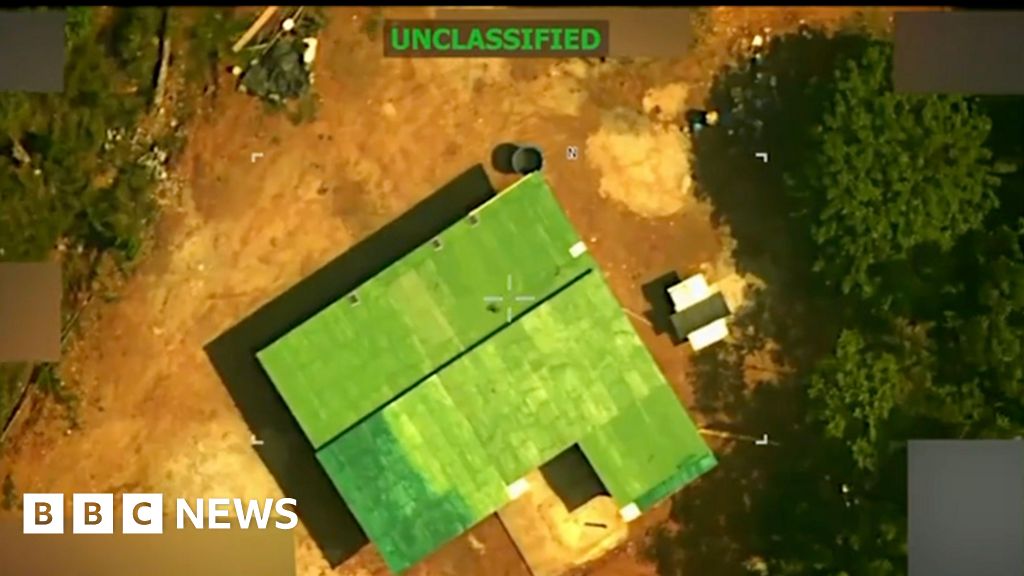
Cover image from bbc.com, which was analyzed for this article
President Trump announced a US-coordinated strike with Venezuela that killed the alleged leader of the Venezuelan gang Tren de Aragua. The operation highlights administration efforts on border security and transnational crime.
PoliticalOS
Saturday, June 13, 2026 — Politics
The strike marks expanded US-Venezuelan security cooperation after Maduro's removal, yet confirmation rests entirely on statements from the two governments involved. Sustained impact on the gang depends on whether remaining leadership and financial networks are addressed.
What outlets missed
The $5 million reward offered by the State Department and Colombian police for Guerrero's capture was referenced in primary documents but received limited attention outside one outlet. Details of the Tocorón prison's transformation into a controlled facility with internal commerce and guards on payroll appear in US government descriptions yet were condensed or omitted in shorter reports. Questions about the legal basis for the broader campaign of maritime strikes, raised by unnamed legal experts in one account, were not examined against administration statements that the actions occur within an armed conflict determination. Reactions from other South American governments that had previously pressured Venezuela on the gang received no coverage.
US Military Strike Kills Leader of Venezuelan Gang With Help From Caracas
President Donald Trump announced Friday that a US military airstrike killed Héctor Rusthenford Guerrero Flores, known as Niño Guerrero, the longtime leader of the Venezuelan criminal organization Tren de Aragua. The operation, carried out by US Southern Command, targeted a site in Venezuela’s southeastern Bolívar state earlier in the week and was conducted with direct Venezuelan government assistance.
Trump described the action on his Truth Social platform as a “swift and lethal kinetic strike” that executed Guerrero, whom he called the leader of one of the world’s most bloodthirsty terrorist organizations. He noted that the strike was coordinated closely with Venezuelan authorities. Defense Secretary Pete Hegseth confirmed on X that Guerrero was killed in the attack and said the operation reflected shared US and Venezuelan efforts to confront narco-terrorist groups.
Venezuela’s information ministry issued a statement verifying its participation. It said the operation involved intelligence sharing and specialized technological support and that Guerrero was neutralized during clashes with criminal groups in Bolívar state. Venezuelan officials described the effort as a joint operation rather than a unilateral US action.
Tren de Aragua originated inside the Tocorón prison in Aragua state and grew under Guerrero’s control into a transnational network involved in drug trafficking, extortion, human smuggling and money laundering. The group expanded across South America and into the United States, with US authorities estimating several thousand members operating in multiple countries. The State Department designated it a foreign terrorist organization, and the Trump administration has linked it to irregular warfare and cross-border criminal activity.
The strike follows a significant shift in US-Venezuela relations. In January, American forces seized former President Nicolás Maduro from his compound to face criminal charges in New York. Maduro’s successor, Delcy Rodríguez, has since received sanctions relief from Washington as the two governments have increased cooperation on oil extraction and security matters. US officials have indicated that Guerrero was named as a co-conspirator in the indictment against Maduro.
Footage posted by Trump shows an airstrike hitting a green building and adjacent structure, with debris visible after the impact. The administration has not released additional operational details, citing the ongoing campaign against the organization’s leadership.
The episode illustrates the administration’s approach of combining targeted military action with diplomatic engagement in the region. US officials have framed the cooperation with Venezuela as a pragmatic step to reduce safe havens for criminal networks while advancing energy interests. Venezuelan authorities have presented the joint effort as evidence of their commitment to confronting domestic criminal groups.
Further details on the strike’s planning and immediate aftermath remain limited. Both governments have said they will continue sharing intelligence to disrupt remaining Tren de Aragua networks.
You just read Liberal's take. Want to read what actually happened?
More in Politics

Judges Block Trump Mail Ballot Rule as Supreme Court Review Looms
Federal judges halted President Trump's executive order restricting mail balloting via USPS. The Supreme Court is expected to review amid ongoing election legal battles.

Trump, Vance Push GOP Midterms With Seven Weeks Left
With seven weeks to Election Day, Trump and Vance are campaigning in key states. GOP faces challenges including voting rule disputes and internal tensions.

States Clash Over Voter Rolls, Mail Rules Ahead of Midterms
Officials train to counter interference while states debate mail voting and oversight. Both parties accuse each other of undermining trust ahead of November.

Hegseth Reforms Prompt Pentagon Doubts Over Trust and Readiness
Defense Secretary's efforts to refocus the military sparked internal pushback and accusations of creating mistrust. Coverage spans major outlets.
The Compass
You just read five takes on one story.
What's your take? Find your political shape in a few minutes.
Take the test