
Direct US-Venezuela Passenger Flights Resume After 7-Year Halt
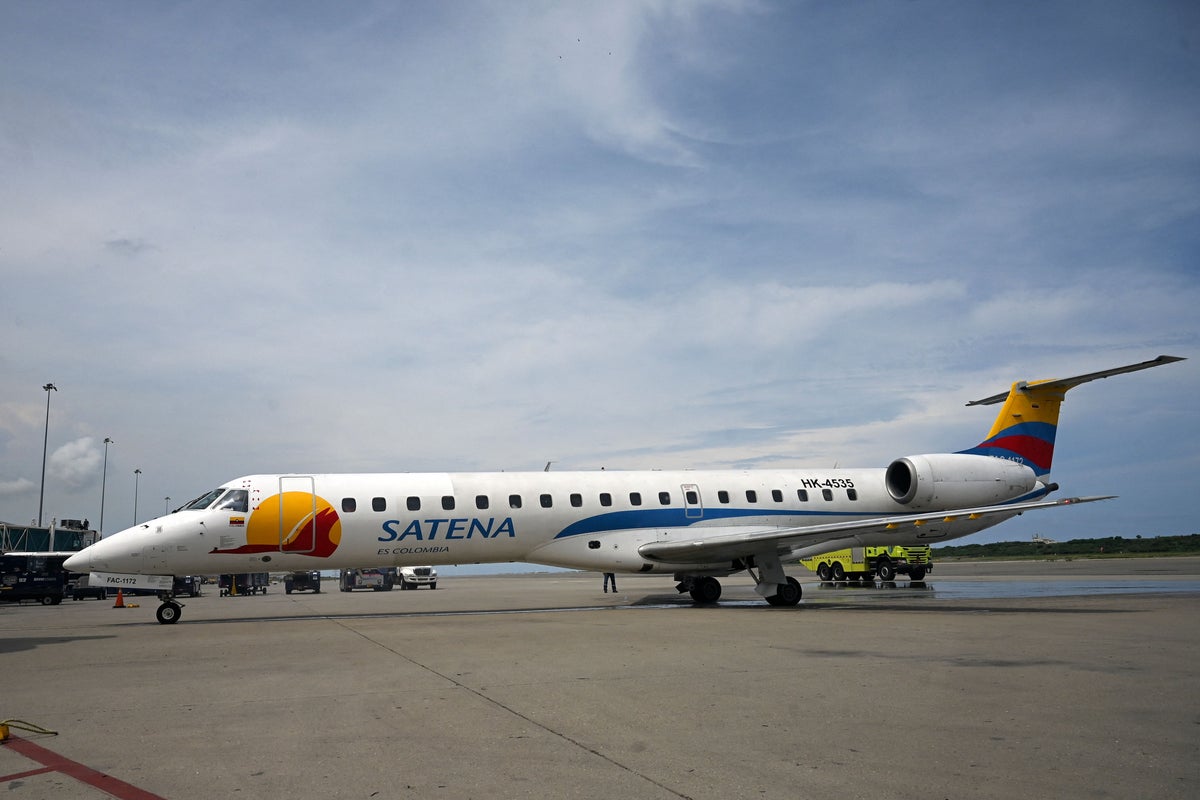
Cover image from independent.co.uk, which was analyzed for this article
The first direct commercial flight from the US to Venezuela in seven years arrived in Caracas, marking eased tensions under current diplomacy. The resumption could boost trade and travel amid shifting bilateral relations. It reflects broader de-escalation efforts in the region.
PoliticalOS
Thursday, April 30, 2026 — Politics
Direct passenger flights have resumed as part of a swift diplomatic and economic thaw following Maduro's capture and Rodríguez's emergence as acting president. The change offers real opportunities for families and commerce after years of isolation, yet the U.S. government still warns travelers to reconsider trips due to crime and instability. Long-term success hinges on whether the new leadership can deliver credible elections and broad stability rather than elite deals.
What outlets missed
Both outlets repeated the same AP-sourced core without noting that Amerijet International had already flown a direct commercial cargo route on April 20, ten days earlier, reducing the novelty of the passenger service. They also omitted that Delcy Rodríguez had been sanctioned by the U.S. Treasury until only weeks before the flight for her role in actions undermining democracy and links to agencies involved in detentions. Current State Department travel warnings (Level 3: Reconsider Travel due to crime, kidnapping and unrest) and reports of April protests involving tear gas and arrests received no mention, leaving readers without practical context on safety. Finally, the precise attribution of the 2019 suspension to the Department of Homeland Security appears inaccurate; contemporaneous actions came primarily from State, DOT and FAA over risks tied to the political crisis.
Direct Flights Between US and Venezuela Resume After Maduro Removal
The first direct commercial flight from the United States to Venezuela in seven years is scheduled to land in Caracas on Thursday, reopening a long-severed connection between the two countries following the capture of Nicolás Maduro and the restoration of diplomatic relations.
Flight AA3599, operated by Envoy Air, a subsidiary of American Airlines, left Miami at 10:16 a.m. local time and is expected to arrive in the Venezuelan capital three hours later before returning to Florida the same afternoon. The airline has already announced a second daily Miami-Caracas service beginning May 21. For passengers on both sides of the route, the flights represent more than convenience. They end a period in which travel depended on indirect connections through Panama, Colombia or other neighboring countries, adding hours and cost to what was once a straightforward three-hour journey.
The resumption stems directly from events earlier this year. In January, U.S. forces conducted a nighttime raid on Maduro's residence in Caracas, capturing the man who had ruled Venezuela since 2013. That operation removed a leader whose government had turned a once-prosperous nation into an economic cautionary tale. Hyperinflation, empty shelves, collapsing infrastructure and the exodus of more than seven million citizens marked the final years of his rule. The United States had suspended direct flights in 2019, citing security concerns that grew more pronounced as the Maduro government aligned itself with adversarial powers and lost control over large parts of its territory.
Last month the U.S. embassy in Caracas formally reopened after full diplomatic relations were restored. Acting President Delcy Rodríguez, who assumed leadership after Maduro's removal, has engaged with the Trump administration on practical steps to stabilize the country. In late January, President Donald Trump stated that he had informed Rodríguez of his decision to open Venezuelan airspace to commercial traffic. "American citizens will be very shortly able to go to Venezuela, and they'll be safe there," Trump said. The statement carried particular weight given the years of warnings from the U.S. government that Venezuela had become dangerously unstable.
The practical effects of renewed air links extend beyond family visits. Venezuelan communities in South Florida, Houston and other American cities include hundreds of thousands who fled the consequences of two decades of socialist policies first under Hugo Chávez and then Maduro. Many left behind relatives they could only reach through expensive and time-consuming detours. The new flights will allow easier reunions while also opening channels for legitimate commerce. American businesses, long wary of the risks posed by expropriations, currency controls and arbitrary arrests, may now explore opportunities in a country possessing some of the world's largest oil reserves.
The contrast could hardly be starker. Venezuela was once the wealthiest nation in Latin America, with a per-capita income that rivaled many European countries in the 1950s and 1960s. Decades of price controls, nationalizations, corruption and the erosion of property rights produced the opposite result: widespread poverty, mass emigration and institutions stripped of competence. Economists who study development have repeatedly noted that nations thrive when they protect incentives for work and investment rather than suppress them through centralized planning. Venezuela became the clearest recent demonstration of that principle in the Western Hemisphere.
Thursday's flight therefore carries symbolic importance. It suggests that after years of isolation, a path toward normal economic relations is reopening. Envoy Air's announcement in January highlighted both family reunification and "new business opportunities" as primary reasons for resuming service. Those opportunities will depend on whether the interim government can establish basic security, begin dismantling the most destructive controls, and offer credible protections for contracts and capital. Early signals, including the swift reopening of the U.S. embassy and the agreement on commercial flights, indicate at least a desire to move in that direction.
Not every challenge will vanish with the first landing in Caracas. Years of institutional damage cannot be repaired in months. Yet the return of direct commercial aviation represents a tangible measure of progress. It reflects a judgment by both governments that conditions on the ground have improved enough to justify regular passenger service. For Americans with family ties or commercial interests in Venezuela, the route restores a measure of normalcy that had been absent since the Obama administration first began tightening restrictions and the Trump administration later severed formal diplomatic ties in 2019.
The broader lesson extends past this single route. Countries that abandon destructive economic policies and recommit to basic rules of governance tend to see rapid improvements in living standards and international confidence. Venezuela's potential remains considerable if its leaders choose that path. Thursday's flight is a small but concrete sign that such a choice may finally be possible. For millions who watched their country decline under socialism, the sight of an American airliner on the tarmac in Caracas may represent the first visible evidence of renewal after a long and painful detour.
You just read Conservative's take. Want to read what actually happened?
More in Politics

Trump Defends Ramaswamy Ad Using Estranged Mother in Ohio Race
President Trump defended a GOP nominee's ad featuring a Democratic opponent's estranged mother, calling it powerful, while drawing criticism from some Republicans including Ohio Gov. Mike DeWine. The ad has sparked internal GOP tensions ahead of midterms.
Federal Raid Targets Omar Amid Unresolved Name and Marriage Allegations
Agents searched Rep. Ilhan Omar's DC residence over immigration fraud allegations; she called it bizarre. Reports and commentary questioned her birth name and past marriage details.

Supreme Court Upholds New Hampshire Student ID Voting Ban
The Supreme Court upheld New Hampshire's ban on student IDs as valid voter identification just before midterms, affecting a tight Senate race.
Early Voting Hits 21 Million as Most Trust Midterm Accuracy
Millions have already voted early as parties make final appeals amid $1.4 billion in ad spending; polls show confidence in election accuracy.
The Compass
You just read five takes on one story.
What's your take? Find your political shape in a few minutes.
Take the test