
Direct US-Venezuela Passenger Flights Resume After 7-Year Halt
Cover image from independent.co.uk, which was analyzed for this article
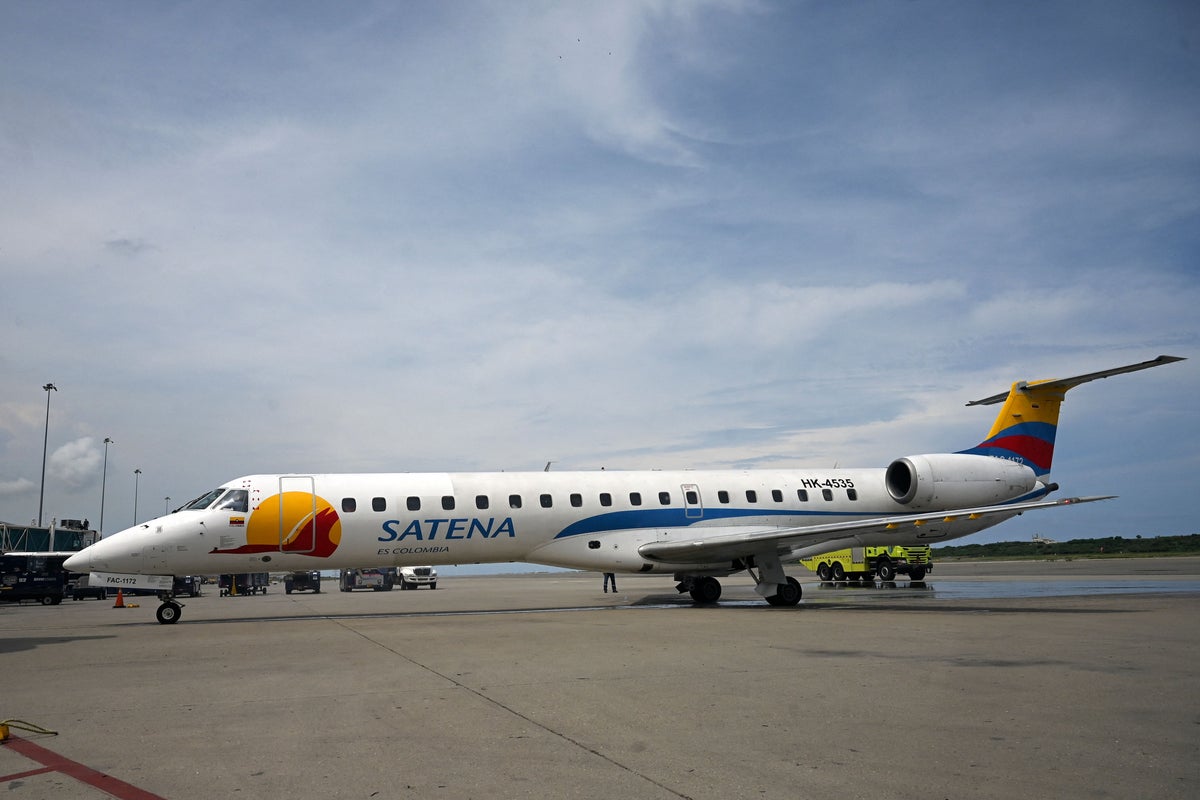
The first direct commercial flight from the US to Venezuela in seven years arrived in Caracas, marking eased tensions under current diplomacy. The resumption could boost trade and travel amid shifting bilateral relations. It reflects broader de-escalation efforts in the region.
PoliticalOS
Thursday, April 30, 2026 — Politics
Direct passenger flights have resumed as part of a swift diplomatic and economic thaw following Maduro's capture and Rodríguez's emergence as acting president. The change offers real opportunities for families and commerce after years of isolation, yet the U.S. government still warns travelers to reconsider trips due to crime and instability. Long-term success hinges on whether the new leadership can deliver credible elections and broad stability rather than elite deals.
What outlets missed
Both outlets repeated the same AP-sourced core without noting that Amerijet International had already flown a direct commercial cargo route on April 20, ten days earlier, reducing the novelty of the passenger service. They also omitted that Delcy Rodríguez had been sanctioned by the U.S. Treasury until only weeks before the flight for her role in actions undermining democracy and links to agencies involved in detentions. Current State Department travel warnings (Level 3: Reconsider Travel due to crime, kidnapping and unrest) and reports of April protests involving tear gas and arrests received no mention, leaving readers without practical context on safety. Finally, the precise attribution of the 2019 suspension to the Department of Homeland Security appears inaccurate; contemporaneous actions came primarily from State, DOT and FAA over risks tied to the political crisis.
First Direct US Flight Lands in Caracas After Trump Secures Maduro Capture
The first direct commercial flight from the United States to Venezuela in seven years touched down in Caracas on Thursday, a concrete sign that the Trump administration's decisive action has begun to restore order to a country long tormented by socialist rule.
Flight AA3599, operated by Envoy Air, a subsidiary of American Airlines, left Miami at 10:16 a.m. local time and landed three hours later in the Venezuelan capital. The same aircraft turned around that afternoon for the return leg to Florida. A second daily route between the two cities is scheduled to begin May 21. For ordinary Americans with family ties to Venezuela and for businesses that once viewed the country as off-limits, the resumption of nonstop service ends a seven-year nightmare of roundabout travel through third countries and constant worry about safety.
The timing is not an accident. It follows the stunning nighttime raid by U.S. forces on Nicolás Maduro's residence in early January that removed the man responsible for wrecking Venezuela. That operation paved the way for the formal reopening of the American embassy in Caracas last month and the full restoration of diplomatic relations. In late January President Trump personally told Venezuela's acting President Delcy Rodríguez that Washington would reopen all commercial airspace over the country. "American citizens will be very shortly able to go to Venezuela, and they'll be safe there," he said at the time.
The contrast with the recent past could not be clearer. In 2019 the United States severed diplomatic ties with the Maduro regime after years of stolen elections, economic collapse, and repression that turned a once-wealthy oil producer into a humanitarian catastrophe. The Department of Homeland Security imposed an indefinite ban on direct flights, citing legitimate security concerns. For the next seven years families were forced to route through Panama or Colombia, adding hours, expense, and uncertainty to every trip. Venezuelan migrants poured across the southern border in record numbers, overwhelming American cities and straining public resources. The previous administration's weak posture only prolonged the suffering.
Trump's approach has been different. By acting swiftly against Maduro, his administration signaled that the era of empty rhetoric and half-measures was over. The capture removed a leader who had allied himself with Iran, Russia, and Cuba while his people starved. Acting President Rodríguez now presides over a transitional government that, at least for now, appears willing to accept the return of American commercial and diplomatic engagement.
Airline officials said the new routes will give customers the chance to reunite with relatives they have not seen in years and to explore business opportunities that were simply impossible under Maduro's rule. For the millions of Venezuelan-Americans living in Florida and elsewhere, Thursday's landing represents more than convenience. It represents the possibility that their homeland might finally escape the cycle of dictatorship and decay that has defined it for a generation.
Critics of the operation will no doubt complain about "intervention." They always do. Yet the facts on the ground speak louder. A country that was exporting chaos, crime, and desperate migrants is now, step by step, being brought back into the community of civilized nations. Direct flights are a practical measure, not symbolism. They allow American citizens to travel safely, American businesses to operate without fear of expropriation, and American diplomats to conduct business on American terms.
The reopening also exposes how badly previous policies failed. For years Washington talked tough about Maduro while doing little that changed realities on the ground. The result was a collapsed state on our doorstep whose problems washed up daily on Florida beaches and in Texas border towns. Trump's willingness to use American leverage decisively has produced in a few months what years of multilateral hand-wringing never achieved: the removal of a dictator and the beginning of normalized travel.
None of this erases the immense challenges still facing Venezuela. Decades of socialist mismanagement cannot be fixed by a single raid or a pair of daily flights. But the return of Envoy Air's jets to Caracas is tangible proof that conditions have improved enough for commercial aviation to resume. Security concerns that once grounded every American carrier have apparently been addressed.
As the aircraft taxied to the gate in Caracas on Thursday, many Venezuelan families no doubt watched with a mixture of relief and cautious hope. After years of watching their country destroy itself and export its misery northward, they see the possibility of reconnection on terms set by American strength rather than endless accommodation. President Trump's promise that Americans could once again visit Venezuela safely is being kept in real time, at 30,000 feet, on a direct flight path that was closed for far too long.
You just read America First's take. Want to read what actually happened?
More in Politics
Trump at 32% Approval as Gas Prices Test GOP Midterm Hopes
NYT/Siena polling showed Trump's approval at historic lows around 32 percent with Democrats leading by double digits in key districts. Early voting has surged in battleground states.

Record Early Voting Hits Battlegrounds, Shifting Partisan Shares
AP analysis found hundreds of thousands more early ballots than in 2022 in states including Texas, Ohio, Kansas, Maine, and North Carolina, shifting partisan dynamics.
Trump Backs Marshall in Kansas Senate Race Tightened by Farm Costs
President Trump rallied in deep-red Kansas for GOP Sen. Roger Marshall in a competitive race, announcing an $8 billion farm fuel relief program amid high diesel prices. Democrats see an opening to end 94 years of GOP dominance in the state.

Trump Pauses Russia Sanctions Amid Ukraine Tensions and Missile Strikes
Trump waived sanctions on Russia and floated trilateral talks with Putin and Xi as part of ending the Ukraine war, while tensions rose with Zelenskyy over Starlink and arms. Bipartisan senators engaged Zelenskyy amid the shifts.
The Compass
You just read five takes on one story.
What's your take? Find your political shape in a few minutes.
Take the test