
Direct US-Venezuela Passenger Flights Resume After 7-Year Halt
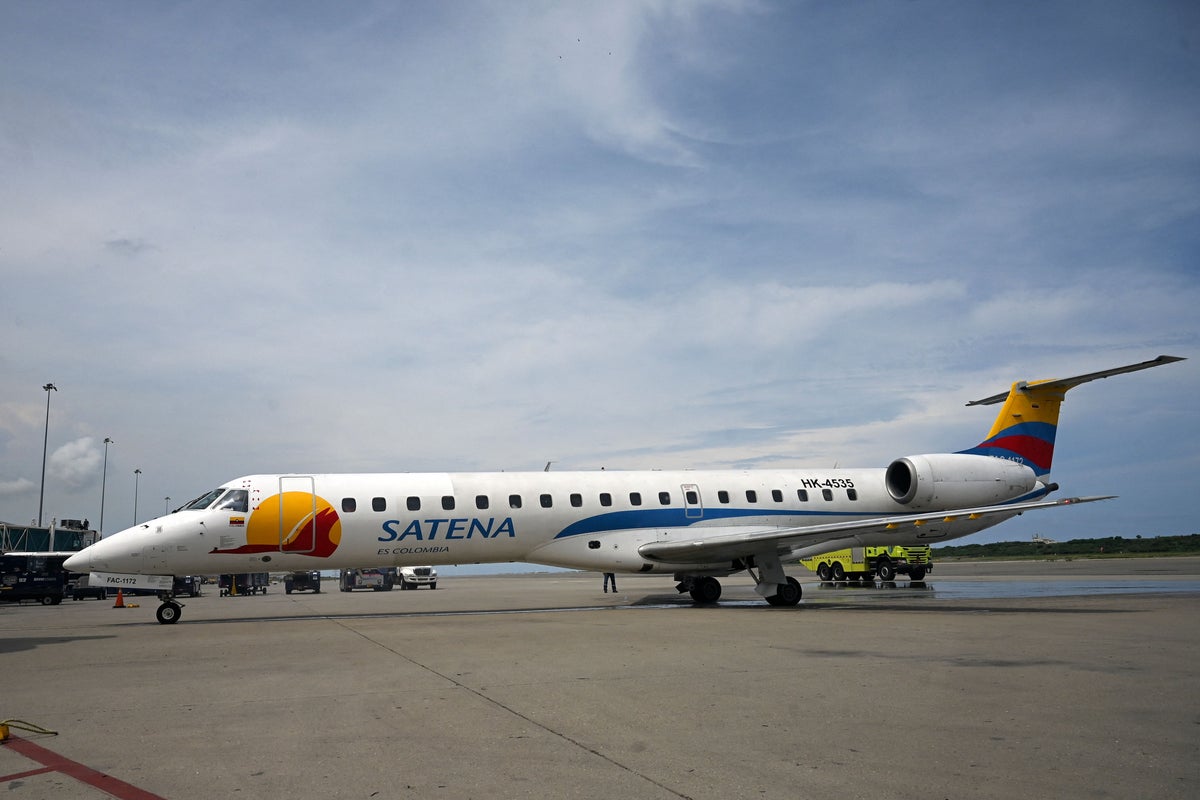
Cover image from independent.co.uk, which was analyzed for this article
The first direct commercial flight from the US to Venezuela in seven years arrived in Caracas, marking eased tensions under current diplomacy. The resumption could boost trade and travel amid shifting bilateral relations. It reflects broader de-escalation efforts in the region.
PoliticalOS
Thursday, April 30, 2026 — Politics
Direct passenger flights have resumed as part of a swift diplomatic and economic thaw following Maduro's capture and Rodríguez's emergence as acting president. The change offers real opportunities for families and commerce after years of isolation, yet the U.S. government still warns travelers to reconsider trips due to crime and instability. Long-term success hinges on whether the new leadership can deliver credible elections and broad stability rather than elite deals.
What outlets missed
Both outlets repeated the same AP-sourced core without noting that Amerijet International had already flown a direct commercial cargo route on April 20, ten days earlier, reducing the novelty of the passenger service. They also omitted that Delcy Rodríguez had been sanctioned by the U.S. Treasury until only weeks before the flight for her role in actions undermining democracy and links to agencies involved in detentions. Current State Department travel warnings (Level 3: Reconsider Travel due to crime, kidnapping and unrest) and reports of April protests involving tear gas and arrests received no mention, leaving readers without practical context on safety. Finally, the precise attribution of the 2019 suspension to the Department of Homeland Security appears inaccurate; contemporaneous actions came primarily from State, DOT and FAA over risks tied to the political crisis.
Direct Flights to Venezuela Resume After US Capture of Maduro
The first direct commercial flight from the United States to Venezuela in seven years is scheduled to land in Caracas on Thursday, a striking symbol of normalized relations that arrives only months after American forces seized Nicolás Maduro in a nighttime raid on his presidential residence.
Flight AA3599, operated by Envoy Air, a subsidiary of American Airlines, departed Miami at 10:16 a.m. local time and is expected to touch down three hours later before returning to Florida the same afternoon. The airline has already announced a second daily Miami-Caracas service beginning May 21. For passengers on board, the journey ends a long era of indirect travel through third countries such as Colombia, Panama or Mexico, routes that became the only option after the Department of Homeland Security suspended direct flights in 2019 over what it called security concerns.
That suspension coincided with the complete severance of diplomatic ties during Donald Trump’s first term, when his administration recognized opposition leader Juan Guaidó as Venezuela’s legitimate president and unleashed crippling economic sanctions. The policy, widely known as “maximum pressure,” deepened an already severe economic crisis. Hyperinflation, medicine shortages and mass emigration followed. While the Trump administration and its allies blamed Maduro’s mismanagement and alleged corruption, critics argued the sanctions deliberately amplified suffering in an attempt to force regime change.
Now, with Maduro physically removed from power, the United States is moving quickly to reopen the country on its own terms. In early January, U.S. forces carried out a raid in Caracas that captured the Venezuelan leader, an extraordinary operation that effectively ended his 13-year rule. The Trump administration has presented the action as a decisive blow against an authoritarian figure accused by Washington of narco-trafficking and human rights abuses. Soon afterward, Delcy Rodríguez, a longtime Maduro ally, was installed as acting president. Last month the United States formally reopened its embassy in Caracas, restoring full diplomatic relations.
Trump himself signaled the new direction in late January when he said he had personally informed Rodríguez that Washington would open all commercial airspace over Venezuela. “American citizens will be very shortly able to go to Venezuela, and they’ll be safe there,” he declared. The statement carried the familiar bravado of Trump’s rhetoric, yet it also underscored the speed with which policy has shifted from hostility to renewed engagement once the obstacle of Maduro’s physical presence had been eliminated.
Airline executives say the new routes will allow families divided by years of political and economic turmoil to reunite and open fresh business opportunities, particularly in Venezuela’s vast oil sector. American energy companies are already positioning themselves to return. Yet the rapidity of this pivot has left many regional observers uneasy. The capture of a sitting head of state by foreign commandos, no matter how despised that leader was by his opponents, sets a precedent that sits uncomfortably with principles of sovereignty. Latin American governments have issued statements ranging from cautious support to outright condemnation, recalling a long history of U.S. interventions from Guatemala in 1954 to Chile in 1973.
The humanitarian toll of the preceding decade remains visible. Millions of Venezuelans remain in exile across Latin America and in U.S. cities such as Miami and Houston. Many who fled the combined effects of government mismanagement and punishing sanctions now face the prospect of returning to a country whose political future is being shaped in Washington as much as in Caracas. Rodríguez’s interim government has promised stability and economic reopening, but questions linger about legitimacy and whether genuine democratic restoration is possible after such an overtly external removal of the previous leader.
For Trump, the resumption of flights represents a tangible victory. It allows him to claim that his hardline approach ultimately succeeded where previous policies failed. Yet the deeper story is one of continuity: Washington’s determination to mold Venezuela’s destiny has not changed, only its methods. Once sanctions and diplomatic isolation were the tools. Now it is military action followed by rapid normalization.
As the Envoy Air jet descends into Caracas today, it carries more than passengers and cargo. It carries the weight of contested history, the aspirations of divided families, and the uneasy reality that U.S. power in the hemisphere still determines when isolation ends and engagement begins. Whether this new chapter delivers the safety and prosperity Trump promised, or simply opens the door to a different set of problems, will become clearer in the months ahead. For now, the runway in Caracas is open again, but the political ground beneath it remains profoundly unsettled.
You just read Progressive's take. Want to read what actually happened?
More in Politics

Trump at 32% Approval as Gas Prices Test GOP Midterm Hopes
NYT/Siena polling showed Trump's approval at historic lows around 32 percent with Democrats leading by double digits in key districts. Early voting has surged in battleground states.

Record Early Voting Hits Battlegrounds, Shifting Partisan Shares
AP analysis found hundreds of thousands more early ballots than in 2022 in states including Texas, Ohio, Kansas, Maine, and North Carolina, shifting partisan dynamics.

Trump Backs Marshall in Kansas Senate Race Tightened by Farm Costs
President Trump rallied in deep-red Kansas for GOP Sen. Roger Marshall in a competitive race, announcing an $8 billion farm fuel relief program amid high diesel prices. Democrats see an opening to end 94 years of GOP dominance in the state.

Trump Pauses Russia Sanctions Amid Ukraine Tensions and Missile Strikes
Trump waived sanctions on Russia and floated trilateral talks with Putin and Xi as part of ending the Ukraine war, while tensions rose with Zelenskyy over Starlink and arms. Bipartisan senators engaged Zelenskyy amid the shifts.
The Compass
You just read five takes on one story.
What's your take? Find your political shape in a few minutes.
Take the test