
Virginia Voters Weigh Temporary Partisan Redistricting That Could Net Democrats Four House Seats
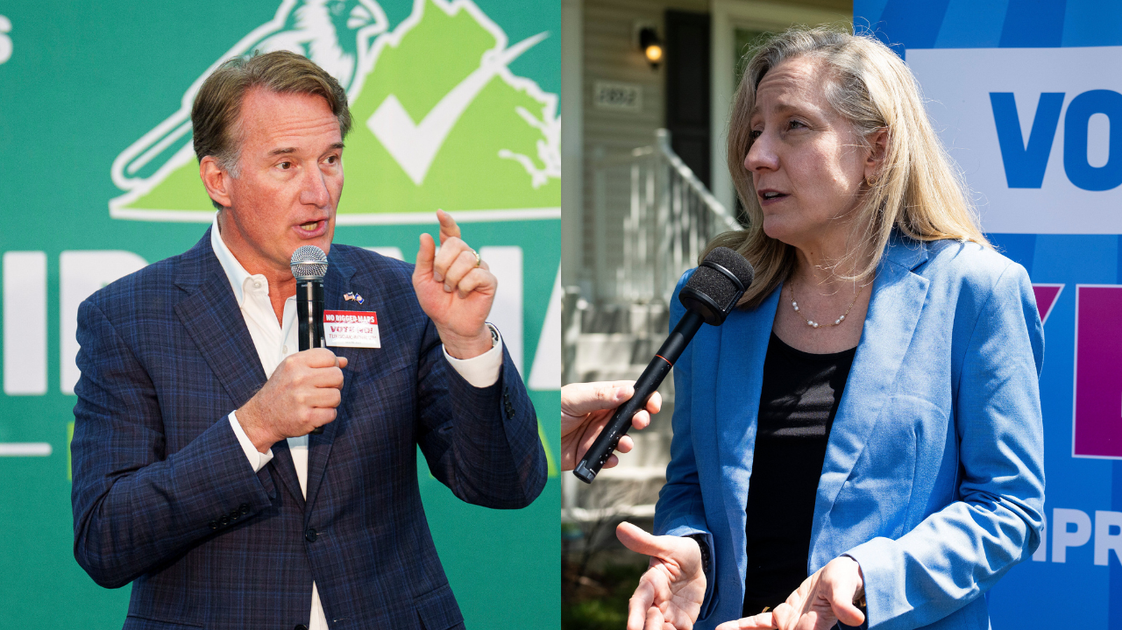
Cover image from huffpost.com, which was analyzed for this article
Virginians voted on a ballot measure to redraw congressional maps in a way that could give Democrats a significant advantage, potentially flipping multiple GOP-held seats ahead of midterms. Republicans decried it as a blatant partisan power grab countering Trump's gerrymandering efforts, while Democrats framed it as correcting unfair lines. The outcome may influence national House control and future redistricting battles.
PoliticalOS
Tuesday, April 21, 2026 — Politics
Tuesday's referendum offers Virginians a direct choice on whether the ends of offsetting Republican national redistricting gains justify temporarily suspending the independent commission they themselves created in 2020. Passage would likely deliver Democrats a decisive edge in four House races, tightening their path to majority control in 2026, yet courts could still intervene and Florida's pending moves could neutralize the math. The single clearest fact is that both parties have abandoned earlier commitments to nonpartisan map-drawing when it suits their immediate interests; voters must now decide which precedent matters more.
What outlets missed
Most coverage omitted the amendment's explicit conditional trigger: it authorizes redraws only between January 2025 and October 2030 if another state has redrawn maps for non-census, non-court reasons. This detail, available on the Virginia Department of Elections site, reframes the measure as reciprocal rather than unilateral. Outlets also underplayed the 2020 voter-approved constitutional amendment creating the bipartisan commission now being bypassed, and the precise ballot wording voters actually see, which emphasizes "restore fairness" and the temporary reversion to independent processes after 2030. Finally, few noted that dark money flowed to both sides, or that pending court rulings on compactness and process could nullify the map even after a yes vote, leaving the outcome uncertain regardless of Tuesday's tally.
Virginia Voters Confront Bid to Lock in Lopsided Congressional Map
Virginians go to the polls Tuesday to decide a constitutional referendum that would hand the Democrat-controlled state legislature temporary power to redraw congressional districts, a move that could transform the state's 6-5 Democratic edge in the U.S. House into a 10-1 advantage despite the commonwealth remaining closely divided politically. The ballot measure, framed by supporters as an effort to "restore fairness," would bypass Virginia's independent redistricting commission and allow implementation of maps already passed by the legislature and signed by Gov. Abigail Spanberger.
The proposal comes amid a national scramble for House seats ahead of the 2026 midterms. President Trump and Republicans initiated mid-decade redistricting in states they control after the 2024 elections, with Texas producing a map that widened the gap between popular vote and seats by about 21 percentage points. Democrats responded with counter-moves in California and now Virginia, where the proposed map would create an even larger disparity. Former Vice President Kamala Harris carried Virginia with less than 52 percent of the vote in 2024, yet the new lines would give Democrats the advantage in 10 of 11 districts. That 39-point gap between vote share and representation exceeds the Texas example that Democrats have cited as justification.
Republican leaders have described the effort as a partisan power grab that undermines the independent commission voters approved years ago to limit self-interested mapmaking. Former Gov. Glenn Youngkin, campaigning with former Attorney General Jason Miyares, called the proposed map "immoral" for stretching deep-blue Northern Virginia suburbs across rural districts, diluting conservative voices in areas far removed from Fairfax County. The new configuration would anchor five districts in that single county, which represents roughly one-eighth of the state's population but would dominate multiple congressional races.
Spanberger, who campaigned as a moderate in last year's gubernatorial race, has faced criticism for reversing course on redistricting. Trump highlighted that shift in a Monday night tele-rally, telling supporters the measure amounted to an "unconstitutional power grab" that could eliminate four Republican seats. Rep. John McGuire, a Virginia Republican, echoed that assessment, noting the state's near 50-50 split in voter preference.
Democrats counter that the move offsets Republican gains elsewhere and corrects for maps drawn by GOP legislatures in other states. House Minority Leader Hakeem Jeffries and former President Barack Obama have campaigned for passage, with Obama recording calls and appearances on behalf of the group Virginians for Fair Elections. Jeffries accused Republicans of spending tens of millions to mislead voters by highlighting past statements from Spanberger and Obama criticizing gerrymandering. Both have since endorsed the Virginia effort as necessary retaliation.
The financial imbalance has been striking. Democrats and allied groups, including those funded by undisclosed dark money, have outspent opponents by a wide margin. Virginians for Fair Elections reported raising more than $64 million, with total spending across both sides approaching $100 million. Much of the Democratic advertising has emphasized opposition to Trump rather than the specific consequences of the map, which would create eight safe Democratic seats, two that lean Democratic, and only one reliably Republican district.
Polling has shown the race tight in a state that has trended Democratic in presidential elections but retains competitive statewide contests. Early voting exceeded expectations, with nearly 1.37 million ballots cast before Election Day, approaching totals from last year's gubernatorial election. The outcome will test whether voters prioritize abstract claims of countering other states' actions over the concrete shift in representation within Virginia.
Critics from both parties have long warned that partisan control of map-drawing invites abuse. Virginia's current 6-5 split actually gives Democrats a slight over-representation relative to recent statewide vote shares. The proposed map would push that imbalance to an extreme rarely seen in a purple state. Daily Wire analysis underscored the point: even after accounting for geographic clustering of voters, the new lines represent aggressive line-drawing that stretches urban influence deep into rural territory.
The referendum's ballot language itself has drawn scrutiny. It asks voters whether to "restore fairness" without displaying the proposed map or detailing the 10-1 outcome. County clerks were reportedly discouraged from posting visual aids. Such framing reflects a broader pattern in which complex institutional changes are reduced to partisan slogans.
National implications loom large. House Republicans hold a narrow majority. A net gain of three or four seats for Democrats from Virginia alone could flip control of the chamber, altering oversight of the Trump administration and the legislative calendar. Yet the episode also illustrates how both parties' willingness to abandon neutral processes risks further eroding public confidence in electoral mechanics.
Spanberger's administration and Democratic legislative leaders argue the measure is a one-time adjustment to counter Republican-initiated changes. Republicans counter that it sets a dangerous precedent for perpetual mid-decade maneuvering whenever one party gains trifecta control. Virginia's independent commission, established after years of litigation over previous gerrymanders, had produced maps that both sides viewed as reasonably competitive. Tuesday's vote will determine whether that restraint survives.
Whatever the result, the contest reveals the tension between short-term partisan advantage and longer-term institutional integrity. In a state evenly balanced enough to demand careful coalition-building, the pursuit of near-total dominance through mapmaking raises basic questions about how representation should reflect an electorate that refuses to sort neatly into 10-1 majorities. Voters will render their verdict by nightfall.
You just read Conservative's take. Want to read what actually happened?
More in Politics

Trump Defends Ramaswamy Ad Using Estranged Mother in Ohio Race
President Trump defended a GOP nominee's ad featuring a Democratic opponent's estranged mother, calling it powerful, while drawing criticism from some Republicans including Ohio Gov. Mike DeWine. The ad has sparked internal GOP tensions ahead of midterms.
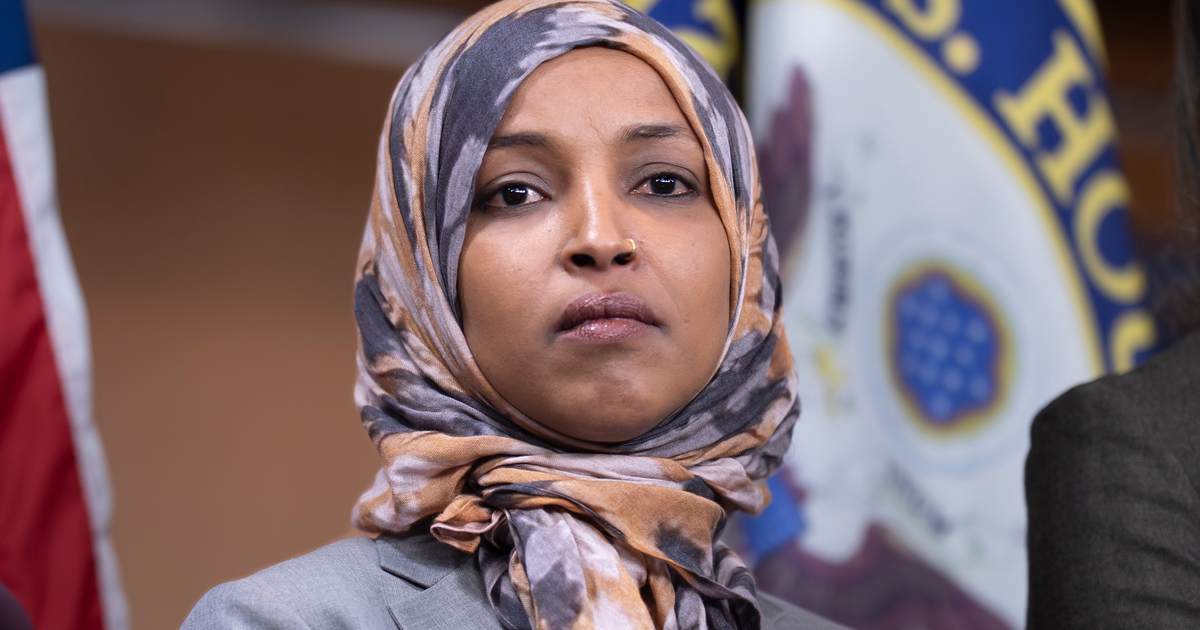
Federal Raid Targets Omar Amid Unresolved Name and Marriage Allegations
Agents searched Rep. Ilhan Omar's DC residence over immigration fraud allegations; she called it bizarre. Reports and commentary questioned her birth name and past marriage details.

Supreme Court Upholds New Hampshire Student ID Voting Ban
The Supreme Court upheld New Hampshire's ban on student IDs as valid voter identification just before midterms, affecting a tight Senate race.
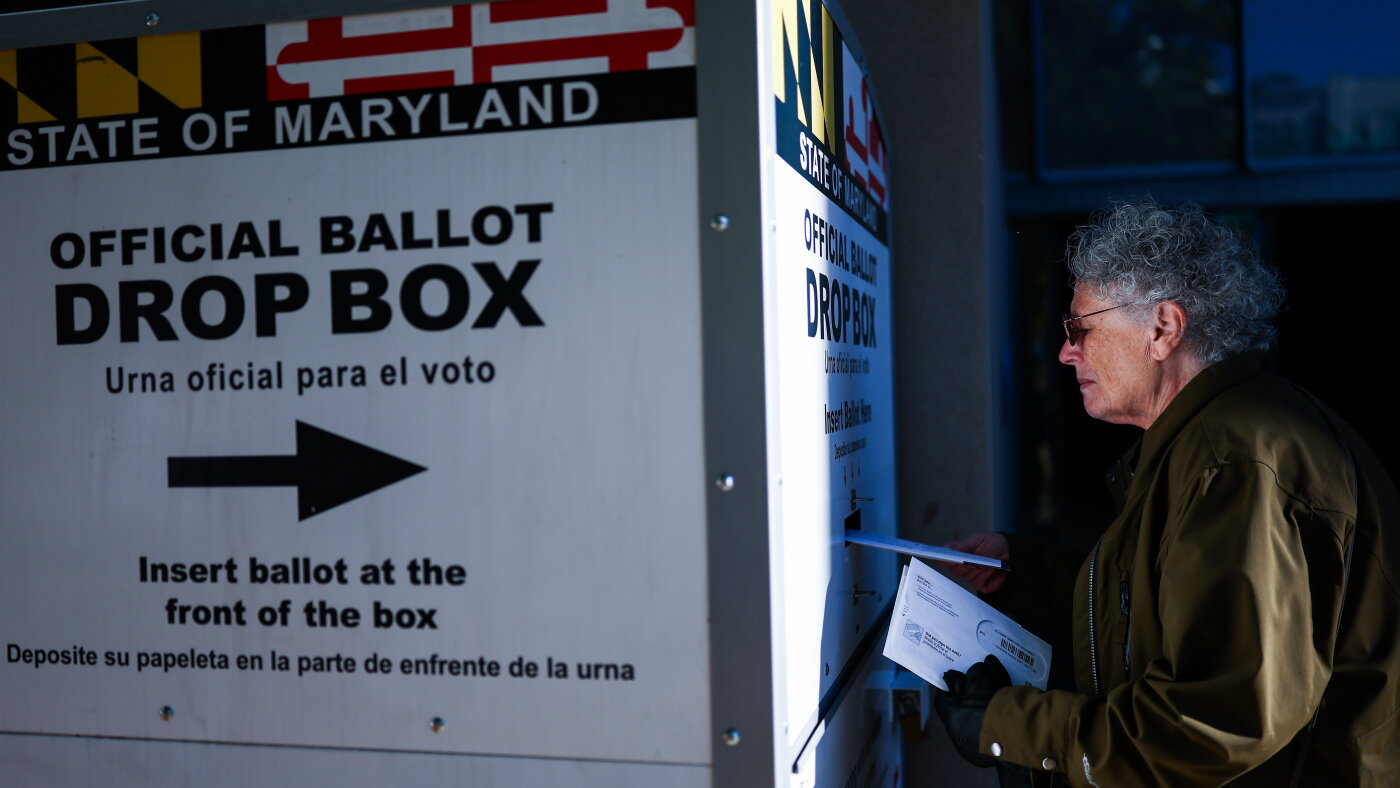
Early Voting Hits 21 Million as Most Trust Midterm Accuracy
Millions have already voted early as parties make final appeals amid $1.4 billion in ad spending; polls show confidence in election accuracy.
The Compass
You just read five takes on one story.
What's your take? Find your political shape in a few minutes.
Take the test