
Virginia Voters Weigh Temporary Partisan Redistricting That Could Net Democrats Four House Seats
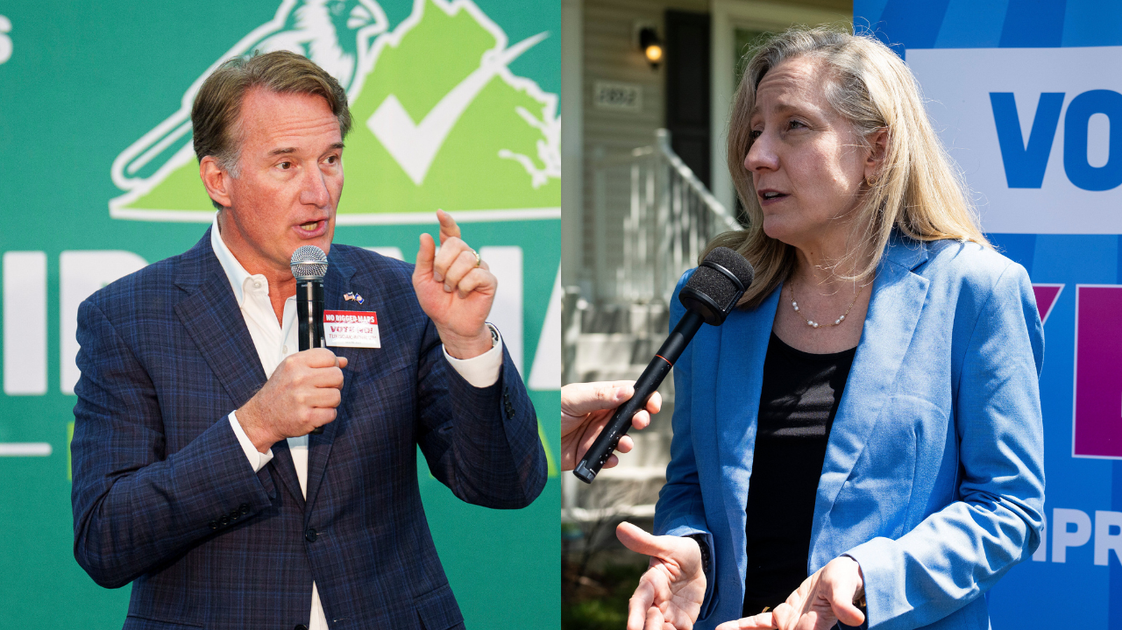
Cover image from huffpost.com, which was analyzed for this article
Virginians voted on a ballot measure to redraw congressional maps in a way that could give Democrats a significant advantage, potentially flipping multiple GOP-held seats ahead of midterms. Republicans decried it as a blatant partisan power grab countering Trump's gerrymandering efforts, while Democrats framed it as correcting unfair lines. The outcome may influence national House control and future redistricting battles.
PoliticalOS
Tuesday, April 21, 2026 — Politics
Tuesday's referendum offers Virginians a direct choice on whether the ends of offsetting Republican national redistricting gains justify temporarily suspending the independent commission they themselves created in 2020. Passage would likely deliver Democrats a decisive edge in four House races, tightening their path to majority control in 2026, yet courts could still intervene and Florida's pending moves could neutralize the math. The single clearest fact is that both parties have abandoned earlier commitments to nonpartisan map-drawing when it suits their immediate interests; voters must now decide which precedent matters more.
What outlets missed
Most coverage omitted the amendment's explicit conditional trigger: it authorizes redraws only between January 2025 and October 2030 if another state has redrawn maps for non-census, non-court reasons. This detail, available on the Virginia Department of Elections site, reframes the measure as reciprocal rather than unilateral. Outlets also underplayed the 2020 voter-approved constitutional amendment creating the bipartisan commission now being bypassed, and the precise ballot wording voters actually see, which emphasizes "restore fairness" and the temporary reversion to independent processes after 2030. Finally, few noted that dark money flowed to both sides, or that pending court rulings on compactness and process could nullify the map even after a yes vote, leaving the outcome uncertain regardless of Tuesday's tally.
Virginia Voters Weigh Extreme Gerrymander as National Redistricting Arms Race Reaches Virginia
Virginians voted Tuesday on a constitutional referendum that could hand Democrats a 10-to-1 advantage in the state’s congressional delegation, escalating a mid-decade mapmaking battle that began when President Donald Trump urged Republican legislatures to redraw lines for partisan gain. The measure, if approved, would temporarily bypass Virginia’s independent redistricting commission and let the Democrat-controlled General Assembly implement a map already passed by lawmakers and signed by Gov. Abigail Spanberger. That map would likely convert the state’s current 6-5 Democratic edge into a near-total lock, creating eight safe Democratic seats, two leaning Democratic and only one reliably Republican.
The contest has become one of the most expensive special elections in state history, with nearly $100 million spent, the bulk of it in dark money from national Democratic groups. Supporters outspent opponents significantly. Early voting was heavy, approaching levels seen in last year’s gubernatorial race, reflecting the stakes in a state that former Vice President Kamala Harris carried by roughly five percentage points in 2024 yet remains politically competitive at the local level.
Democrats frame the effort as defensive necessity. After Trump pressured Texas, North Carolina and other Republican-led states to redraw maps last year in ways that targeted Democratic incumbents, national Democrats counter-mobilized. House Minority Leader Hakeem Jeffries called Republican advertising in Virginia “a stone cold lie,” pointing to spots that repurposed past comments by Spanberger and former President Barack Obama criticizing gerrymandering. Both have endorsed the Virginia measure as a targeted response rather than blanket endorsement of map manipulation. Obama recorded calls and appeared in advertising urging approval.
Republicans describe the referendum as the most aggressive partisan gerrymander in the country. Former Gov. Glenn Youngkin, campaigning alongside state Attorney General Jason Miyares, told voters the plan was “immoral” because it would stretch heavily Democratic Northern Virginia suburbs deep into rural, conservative areas. President Trump used a Monday tele-rally to label the measure “a blatant partisan power grab” and implored Virginians to vote no. Conservative analysts noted that Harris won Virginia with under 52 percent of the vote, yet the proposed map would give Democrats about 91 percent of the seats — a representation gap wider than the one Republicans engineered in Texas.
The numbers are stark. Virginia’s existing delegation already slightly over-represents Democrats relative to the statewide vote. The new map would dramatically widen that imbalance by anchoring five districts in Fairfax County, which contains roughly one-eighth of the state’s population but would dominate multiple congressional districts under the proposal. At least four Republican incumbents, including Rep. Rob Wittman, could find their districts effectively dissolved.
The vote tests more than seat counts ahead of the 2026 midterms. House Republicans hold a narrow majority; Democrats need only a handful of flips to regain control and launch investigations into the Trump administration. Yet the Virginia contest also exposes the fragility of institutional guardrails against partisan self-dealing. Both parties have abandoned earlier commitments to independent commissions when power is on the line. Virginia itself passed redistricting reforms after years of gerrymandering by both sides, only to see those norms discarded in a high-stakes national arms race.
Polling suggested the referendum would be decided by a narrow margin in a state that has trended Democratic but retains pockets of suburban skepticism toward overt power plays. The ballot language asked voters whether they wanted to “restore fairness,” an framing that drew criticism for vagueness. County clerks were reportedly discouraged from posting visual maps at polling places, leaving many voters to rely on dueling television ads rather than concrete geographic understanding.
Democrats argue that refusing to respond to Republican map changes elsewhere would amount to unilateral disarmament in a system where the other side has already moved. Republicans counter that two wrongs do not make a constitutional map, particularly one this lopsided in a closely divided state. The outcome will not settle the broader debate over redistricting. It will, however, shape the composition of the next Congress and signal whether voters will tolerate extreme partisan mapmaking when their own side stands to benefit.
Whatever the result, the episode underscores a dispiriting reality in contemporary American politics: when institutions designed to limit self-interested behavior are placed under sustained partisan pressure, they often bend. Virginia’s vote is the latest, and perhaps most vivid, demonstration of that pattern.
You just read Liberal's take. Want to read what actually happened?
More in Politics
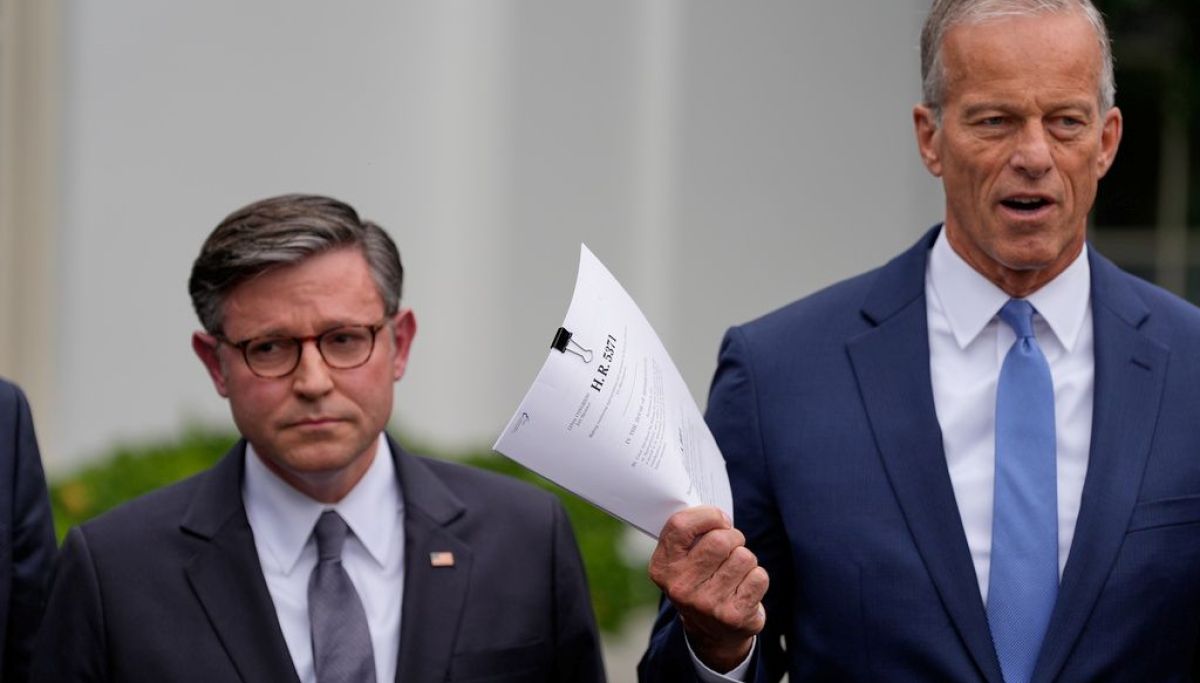
Trump at 32% Approval as Gas Prices Test GOP Midterm Hopes
NYT/Siena polling showed Trump's approval at historic lows around 32 percent with Democrats leading by double digits in key districts. Early voting has surged in battleground states.

Record Early Voting Hits Battlegrounds, Shifting Partisan Shares
AP analysis found hundreds of thousands more early ballots than in 2022 in states including Texas, Ohio, Kansas, Maine, and North Carolina, shifting partisan dynamics.
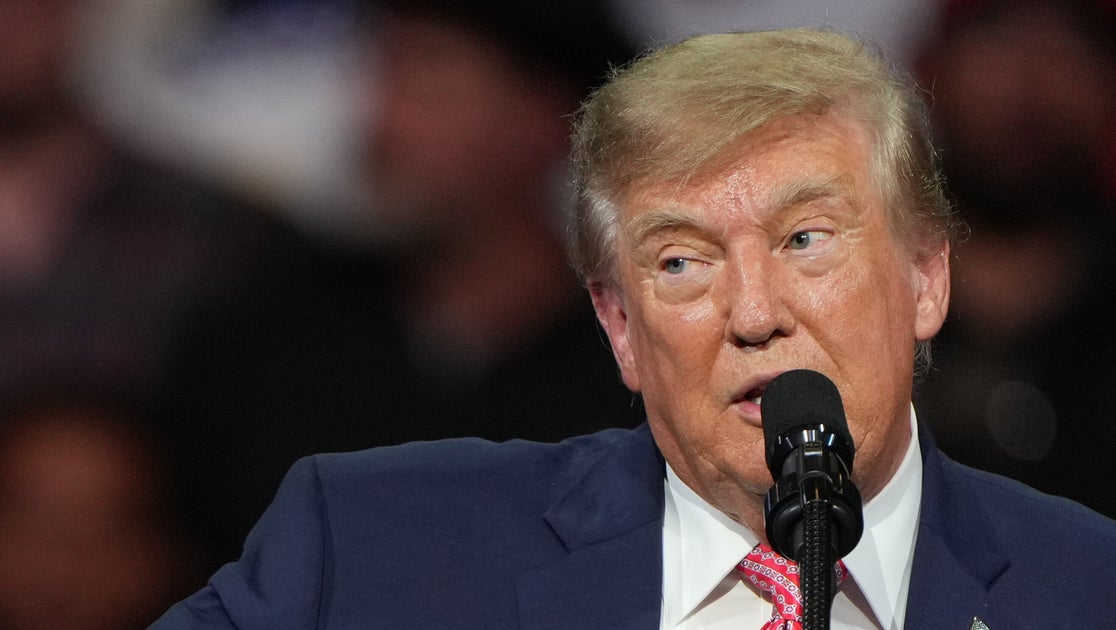
Trump Backs Marshall in Kansas Senate Race Tightened by Farm Costs
President Trump rallied in deep-red Kansas for GOP Sen. Roger Marshall in a competitive race, announcing an $8 billion farm fuel relief program amid high diesel prices. Democrats see an opening to end 94 years of GOP dominance in the state.

Trump Pauses Russia Sanctions Amid Ukraine Tensions and Missile Strikes
Trump waived sanctions on Russia and floated trilateral talks with Putin and Xi as part of ending the Ukraine war, while tensions rose with Zelenskyy over Starlink and arms. Bipartisan senators engaged Zelenskyy amid the shifts.
The Compass
You just read five takes on one story.
What's your take? Find your political shape in a few minutes.
Take the test