
Virginia Redistricting Vote Tests Response to National Map Wars Ahead of 2026 Midterms

Cover image from cbsnews.com, which was analyzed for this article
Virginians head to polls to decide whether to redraw congressional districts, with implications for 2026 midterms amid battles in states like VA, TX, and others. Key races include challenges to incumbents like Abigail Spanberger, as Republicans aim to close gaps and maintain control. Court investigations and state leader actions add to the high stakes.
PoliticalOS
Saturday, April 18, 2026 — Politics
Tuesday's referendum will test whether Virginia prioritizes countering other states' partisan map changes or upholds its own recent commitment to independent redistricting. The outcome could net Democrats several House seats in 2026, but only if courts uphold the new maps. Spanberger's declining approval and the heavy spending by both sides reflect how national polarization now reaches even procedural votes in a purple state.
What outlets missed
Most outlets underplayed the February 2026 Virginia Supreme Court ruling that cleared the referendum for the ballot after an initial lower-court block, a key legal validation that shaped its path. Nonpartisan seat-shift estimates from sources like the Cook Political Report and Ballotpedia, projecting potential net national changes in the range of 3-5 seats depending on final maps and litigation, received little attention beyond vague references to "up to four" Democratic gains. Historical mid-decade precedents, such as the 2003 Texas redraw that netted Republicans six seats after Democratic walkouts, were omitted entirely, depriving readers of context on whether the current cycle truly breaks new ground. Coverage also largely ignored the precise mechanics of Virginia's 2020 bipartisan commission law and how the temporary override complies with or tests its voter-approved provisions. Finally, detailed early-voting data by district from VPAP, showing turnout patterns that both parties claimed as positive signs, was mentioned only in passing if at all.
Spanberger's Moderate Facade Crumbles Amid Virginia Power Grab
Governor Abigail Spanberger campaigned as the sensible former CIA officer who would put Virginia families first and avoid the partisan trench warfare consuming the rest of the country. Voters rewarded her with a 15-point landslide last November, flipping Republican strongholds by promising practicality over ideology. Less than five months into her term, that image is collapsing as Spanberger signs off on a nakedly partisan redistricting scheme and quietly enlists Virginia in a national effort to eliminate the Electoral College.
The move comes as Virginians prepare to vote Tuesday on a referendum that would scrap the state's bipartisan redistricting commission and let Democratic legislators draw new congressional maps. Analysts say the changes could hand Democrats as many as four additional House seats in November's midterms. Spanberger not only signed the enabling legislation but cut television ads urging its passage, directly contradicting her campaign pledge that she had "no plans" to redraw Virginia's congressional map or join the gerrymandering arms race.
This is the same politician who positioned herself as the antidote to polarization. Her platform focused on affordability and competence rather than cultural crusades. Yet when given actual power, with fellow Democrats controlling the state legislature, the moderate rhetoric gave way to the familiar Democratic instinct to rewrite the rules in their favor. The Christian Science Monitor noted the difficulty of governing as a moderate when your party holds the levers, but the real story is simpler: the moderate pose was useful for winning, and now it's dispensable.
Virginia's move mirrors a troubling national pattern. After Texas Republicans redrew their maps to protect GOP advantages, Democrats in California and elsewhere responded with their own aggressive redraws. Virginia was supposed to be different. The state's independent redistricting commission was hailed as a model for removing politicians from the map-drawing process. Now Democrats are dismantling that safeguard with Spanberger's blessing, all while claiming the moral high ground.
Even more concerning is Spanberger's decision to sign HB 965, pulling Virginia into the National Popular Vote Interstate Compact. This agreement would award the state's 13 electoral votes to the winner of the national popular vote, regardless of how Virginians actually vote. The compact now claims 222 electoral votes across mostly deep-blue states. It needs 270 to activate and effectively nullify the Electoral College.
The framers designed the Electoral College precisely to prevent large population centers from dominating smaller states and rural communities. It forces candidates to build broad coalitions across diverse regions rather than simply running up totals in New York and California. Eliminating it through this backdoor mechanism represents the sort of elite-driven rule change that has become routine in one-party Democratic states. If the compact had existed in 2024, it would have simply ratified the national popular vote outcome rather than allowing states to maintain their distinct voices in presidential selection.
Republicans are fighting back in the final days before Tuesday's referendum. Despite being outspent three-to-one in a state that has trended Democratic, the opposition has narrowed the gap considerably. Recent polling shows the race inside single digits, a dramatic shift from the blowout margins Democrats posted last fall. House Republicans including Speaker Mike Johnson have joined local candidates like Reps. Jen Kiggans and John McGuire at rallies, warning voters that approving the map essentially endorses four new Democratic seats in Congress.
The cash disadvantage has shrunk as outside groups have poured resources into educating voters about what the referendum actually does. Republicans describe the momentum as building, with the contest now resembling a 50-50 fight. Their message focuses on fairness: if Democrats truly believed in the will of the people, they would not need to redraw districts mid-decade to manufacture advantages.
The broader redistricting battles playing out across the country, from Utah courtrooms to Maryland legislative chambers, show how state-level decisions now shape national power more than most voters realize. President Trump's push for mid-decade redraws in Republican states invited retaliation, but few expected Virginia's new Democratic governor to abandon her moderate branding so quickly.
Spanberger's rapid shift reveals the hollowness at the center of modern Democratic politics. The former intelligence operative who once warned against extremism now advances mechanisms that would let coastal population centers override heartland states in presidential elections. She promised Virginians pragmatism and instead delivered the same partisan machinery her party decries when Republicans use it.
Voters Tuesday will decide whether Virginia becomes another cog in the national Democratic machine or pushes back against the rule-changing impulse that has infected both parties but finds its most aggressive expression on the left. The referendum is nominally about maps and commissions, but the real question is simpler: do Virginians want their state to be governed by the moderate they thought they elected, or by just another ambitious politician who discards campaign promises the moment they become inconvenient?
The answer will echo far beyond Richmond. With control of the House hanging in the balance and the Electoral College under sustained assault, Virginia's voters hold unusual influence over whether American elections remain contests between competing coalitions or become exercises in institutional manipulation by whichever party holds temporary power. Spanberger's transformation from CIA moderate to redistricting warrior offers the clearest example yet that in today's politics, governing as a centrist is far more difficult than campaigning as one.
You just read America First's take. Want to read what actually happened?
More in Politics
Trump at 32% Approval as Gas Prices Test GOP Midterm Hopes
NYT/Siena polling showed Trump's approval at historic lows around 32 percent with Democrats leading by double digits in key districts. Early voting has surged in battleground states.

Record Early Voting Hits Battlegrounds, Shifting Partisan Shares
AP analysis found hundreds of thousands more early ballots than in 2022 in states including Texas, Ohio, Kansas, Maine, and North Carolina, shifting partisan dynamics.
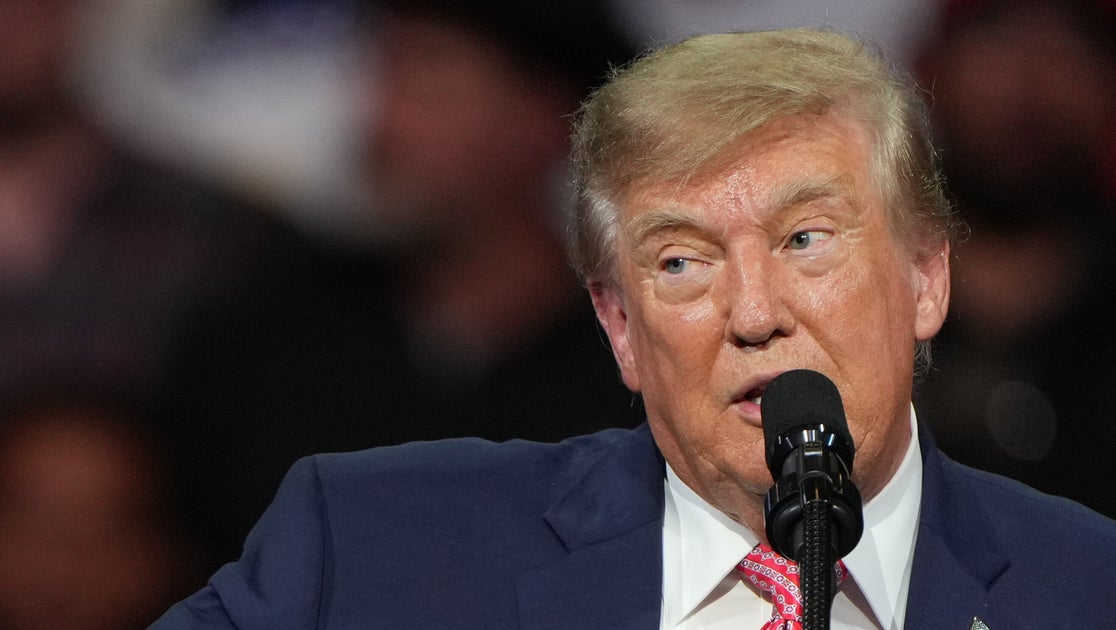
Trump Backs Marshall in Kansas Senate Race Tightened by Farm Costs
President Trump rallied in deep-red Kansas for GOP Sen. Roger Marshall in a competitive race, announcing an $8 billion farm fuel relief program amid high diesel prices. Democrats see an opening to end 94 years of GOP dominance in the state.

Trump Pauses Russia Sanctions Amid Ukraine Tensions and Missile Strikes
Trump waived sanctions on Russia and floated trilateral talks with Putin and Xi as part of ending the Ukraine war, while tensions rose with Zelenskyy over Starlink and arms. Bipartisan senators engaged Zelenskyy amid the shifts.
The Compass
You just read five takes on one story.
What's your take? Find your political shape in a few minutes.
Take the test