
Virginia Voters Decide Fate of Mid-Decade Redistricting in Tight Vote

Cover image from washingtonexaminer.com, which was analyzed for this article
A key redistricting vote in Virginia is hailed as critical for the swing state's future. Republicans decry a Spanberger-backed gerrymander as risking the state's congressional clout. The battle underscores national stakes in electoral map changes.
PoliticalOS
Sunday, April 19, 2026 — Politics
Virginia voters are being asked to temporarily suspend a voter-approved independent redistricting system adopted just six years ago in order to counter similar partisan moves in other states. The choice pits short-term partisan advantage and national House control against the risk of reduced federal influence, lost seniority on key committees, and erosion of recent anti-gerrymandering reforms. Whatever the result, the referendum marks another escalation in a tit-for-tat map war that now directly affects how power is distributed in Congress through the end of the decade.
What outlets missed
Both outlets underplayed the 2020 constitutional amendment's landslide 66-percent approval and the precise mechanics of the independent commission it created, facts that highlight how dramatically the current referendum reverses a recent voter mandate. Neither fully reconciled conflicting fundraising figures or provided nonpartisan metrics such as efficiency gap or partisan bias scores for the proposed maps from groups like the Princeton Gerrymandering Project. Coverage also gave short shrift to the ongoing state supreme court case that could still invalidate the vote and to statements from Democrats like Brian Cannon who oppose the measure on process grounds, missing the internal party tension over norms versus short-term gain. Finally, exact seat projections under the new maps remain unverified beyond partisan claims; neutral forecasters suggest a 8-3 split may be more realistic than the 10-1 lock described in some reporting.
Virginia Voters Weigh Amendment That Could Lock In Lopsided Congressional Map
Virginia stands at a crossroads Tuesday as voters decide on a Democratic-backed constitutional amendment that would permit mid-decade redistricting of the state's congressional map. The measure, heavily promoted by Gov. Abigail Spanberger and national Democratic groups, is presented as a necessary response to Republican efforts in other states. Yet passage could come with a significant trade-off: a dramatic reduction in Virginia's competitive voice in national politics and a potential erosion of its influence in Washington.
The proposed change would transform the state's current 6-5 Democratic edge in its congressional delegation into what strategists describe as a 10-1 lock. This would be achieved by redrawing district lines to concentrate Republican voters into a single district while spreading Democratic-leaning areas across the remaining ten. Supporters, including Spanberger, have tied the referendum directly to actions by President Donald Trump and GOP-led legislatures elsewhere. In public statements, the governor has urged Virginians to counter what she calls an emerging Republican power grab.
"Virginians have the opportunity to respond to the actions of other states and a President who says he’s ‘entitled’ to more GOP seats in Congress," Spanberger wrote on X.
The ballot question arrives amid a national tit-for-tat over redistricting that began when Trump encouraged Republican states to redraw maps to protect his party's congressional majority. That move prompted retaliatory steps in Democratic strongholds. Virginia, however, occupies a distinct position. Long viewed as a bellwether that transitioned from red to purple to blue, the commonwealth has maintained a tradition of relatively competitive districts. Critics argue that abandoning that approach now would not merely shift seats but fundamentally alter the state's political character.
Former Gov. Glenn Youngkin, speaking to conservative activists in Leesburg, warned that the amendment represents an unprecedented power play. "They want to override the voice of Virginia and push us into what is now being called the most partisan, most gerrymandered map in America, worse than Illinois, worse than California," he said. Youngkin noted the irony of pursuing such a map so soon after voters elected Spanberger and expanded Democratic legislative majorities, suggesting the move prioritizes national partisan goals over local norms.
Public opinion appears closely divided. A recent George Mason University Schar School poll showed the amendment leading by only five points despite Democrats pouring more than $50 million into the campaign. Republicans have responded with substantial spending of their own to defeat the measure, viewing it as an existential threat to their party's future in the state.
GOP strategist Dennis Lennox described the stakes plainly. "Virginia is what Colorado was: a red state-turned purple state-turned blue state. If the Democratic gerrymander passes, it doesn’t just shift seats; it wipes out the bench." He warned that an entrenched 10-1 map would make future Republican gains nearly impossible regardless of national political winds. "It becomes impossible to win again, no matter how favorable national trends are, because you simply can’t beat the map."
This concern about long-term consequences echoes broader questions about how heavily engineered districts affect representation. When maps eliminate genuine competition, elected officials face less pressure to appeal beyond their partisan base. The result can be more extreme policy positions and reduced incentive for compromise. Virginia's current system, which was designed to avoid favoring either party, had preserved a degree of accountability that a 10-1 map would likely eliminate.
The amendment's supporters counter that other states have already moved aggressively to maximize partisan advantage. They frame Virginia's action as defensive rather than aggressive. Yet this rationale risks overlooking the specific context of the Old Dominion. Unlike solidly blue states such as California or deeply red ones like Texas, Virginia remains genuinely competitive at the statewide level. Its voters have alternated support between parties in recent cycles, rewarding candidates who demonstrate moderation and independence.
Passing the amendment would not only reshape the November midterm landscape but could diminish Virginia's relevance in future Congresses. A delegation consisting of ten safe Democratic seats and one safe Republican seat offers party leaders little reason to invest heavily in the state. Resources and attention flow instead to true battlegrounds where outcomes remain uncertain. In that sense, what begins as a bid for maximum partisan gain may ultimately reduce the commonwealth's clout on Capitol Hill.
The referendum also highlights tensions within Virginia's evolving political identity. Northern Virginia's rapid growth and suburban diversification have fueled Democratic gains, yet rural and central parts of the state retain conservative leanings. A map that submerges those voices into overwhelmingly blue districts could accelerate the sense of disconnection many voters already feel from Richmond and Washington.
As polls close Tuesday, the outcome will signal more than preference on one procedural question. It will reveal whether Virginians prioritize short-term partisan advantage or the longer-term value of competitive districts that force politicians to earn support rather than inherit it through mapmaking. The choice carries implications that extend well beyond one election cycle, touching on the health of representative government itself in a state once prized for its political independence.
You just read Conservative's take. Want to read what actually happened?
More in Politics

Trump Defends Ramaswamy Ad Using Estranged Mother in Ohio Race
President Trump defended a GOP nominee's ad featuring a Democratic opponent's estranged mother, calling it powerful, while drawing criticism from some Republicans including Ohio Gov. Mike DeWine. The ad has sparked internal GOP tensions ahead of midterms.

Federal Raid Targets Omar Amid Unresolved Name and Marriage Allegations
Agents searched Rep. Ilhan Omar's DC residence over immigration fraud allegations; she called it bizarre. Reports and commentary questioned her birth name and past marriage details.

Supreme Court Upholds New Hampshire Student ID Voting Ban
The Supreme Court upheld New Hampshire's ban on student IDs as valid voter identification just before midterms, affecting a tight Senate race.
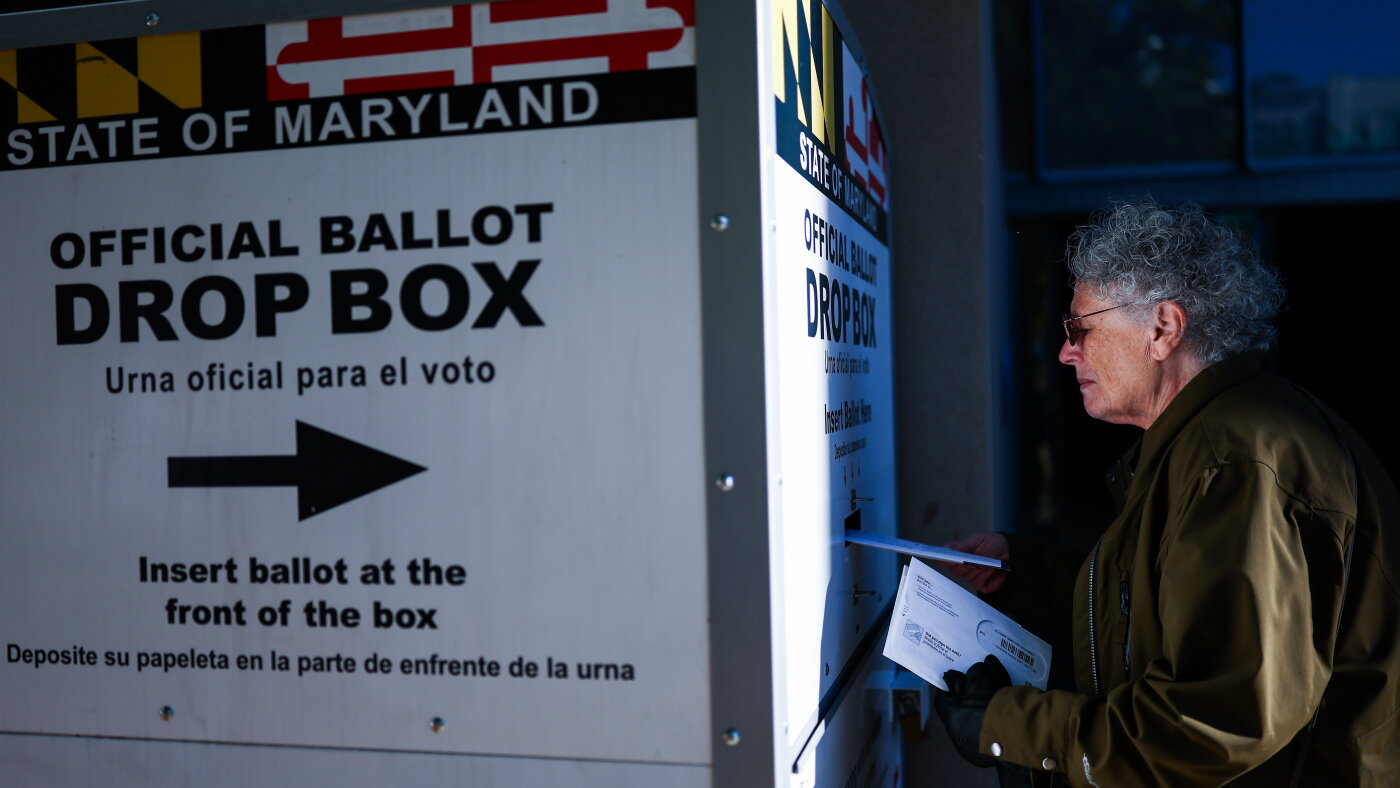
Early Voting Hits 21 Million as Most Trust Midterm Accuracy
Millions have already voted early as parties make final appeals amid $1.4 billion in ad spending; polls show confidence in election accuracy.
The Compass
You just read five takes on one story.
What's your take? Find your political shape in a few minutes.
Take the test