
Virginia Voters Decide Fate of Mid-Decade Redistricting in Tight Vote
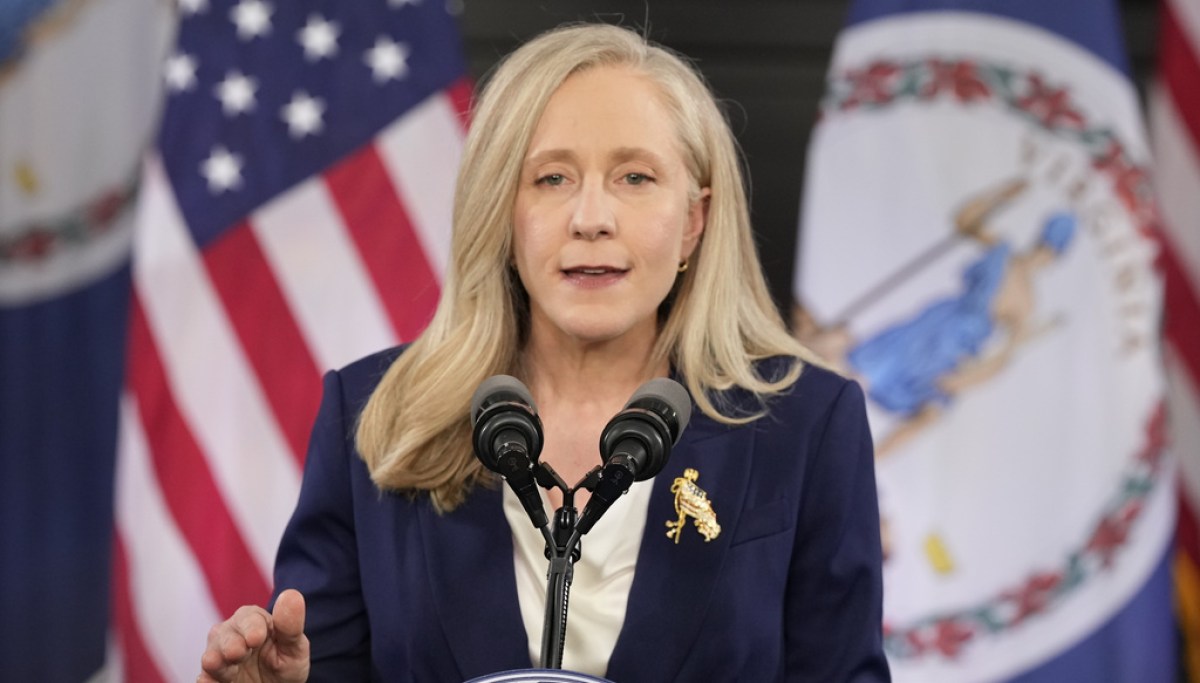
Cover image from washingtonexaminer.com, which was analyzed for this article
A key redistricting vote in Virginia is hailed as critical for the swing state's future. Republicans decry a Spanberger-backed gerrymander as risking the state's congressional clout. The battle underscores national stakes in electoral map changes.
PoliticalOS
Sunday, April 19, 2026 — Politics
Virginia voters are being asked to temporarily suspend a voter-approved independent redistricting system adopted just six years ago in order to counter similar partisan moves in other states. The choice pits short-term partisan advantage and national House control against the risk of reduced federal influence, lost seniority on key committees, and erosion of recent anti-gerrymandering reforms. Whatever the result, the referendum marks another escalation in a tit-for-tat map war that now directly affects how power is distributed in Congress through the end of the decade.
What outlets missed
Both outlets underplayed the 2020 constitutional amendment's landslide 66-percent approval and the precise mechanics of the independent commission it created, facts that highlight how dramatically the current referendum reverses a recent voter mandate. Neither fully reconciled conflicting fundraising figures or provided nonpartisan metrics such as efficiency gap or partisan bias scores for the proposed maps from groups like the Princeton Gerrymandering Project. Coverage also gave short shrift to the ongoing state supreme court case that could still invalidate the vote and to statements from Democrats like Brian Cannon who oppose the measure on process grounds, missing the internal party tension over norms versus short-term gain. Finally, exact seat projections under the new maps remain unverified beyond partisan claims; neutral forecasters suggest a 8-3 split may be more realistic than the 10-1 lock described in some reporting.
Virginia Voters Weigh Counterstrike Against Trump’s Redistricting Power Grab
Virginia voters head to the polls Tuesday in a referendum that could reshape not only the state’s congressional map but the national balance of power, as Democrats seek to neutralize a redistricting offensive launched by President Donald Trump and Republican allies determined to lock in congressional majorities through the rest of his second term. The ballot measure, backed by Gov. Abigail Spanberger and Democratic legislative leaders, would temporarily suspend the state’s independent redistricting process and permit a mid-decade redraw that architects say would convert Virginia’s current 6-5 Democratic edge into a 10-1 Democratic advantage.
The move comes as the latest escalation in a partisan map-making war that Trump himself ignited last year by pressing Republican-controlled states to carve out additional GOP seats ahead of the 2026 midterms. In Texas and elsewhere, those efforts have already netted Republicans new districts engineered to withstand unfavorable national tides. Spanberger has made the connection explicit, telling voters that Virginia has both the right and the obligation to respond in kind. “Virginians have the opportunity to respond to the actions of other states and a President who says he’s ‘entitled’ to more GOP seats in Congress,” she posted on X in recent days.
The proposed map preserves the broad contours of several existing districts while strategically concentrating Republican voters into a single overwhelmingly conservative seat in the state’s rural southwest, effectively diluting GOP strength in the fast-growing Northern Virginia suburbs and the Richmond area. Democrats argue the maneuver is not aggression but self-defense in a political environment where Republicans have repeatedly shown willingness to bend institutions to their advantage. The contrast with Glenn Youngkin, the former Republican governor, could hardly be starker. Just months after leaving office, Youngkin stood in a Leesburg parking lot warning that the referendum represented “the most important election” in Virginia’s history and that the new map would be “the most partisan, most gerrymandered” in America, worse even than those drawn in Illinois or California.
Notably absent from Youngkin’s remarks was any acknowledgment of the role played by the president he once endorsed. Trump’s public demands for more Republican seats set off a predictable chain reaction. Blue states began exploring their own remedies. Virginia, having only recently shed its long-standing reputation as a reliable Republican stronghold, now finds itself at the center of that storm. Once solidly red, the commonwealth has transformed over the past two decades into a purple swing state that tilted decisively blue in recent cycles, fueled by population growth in diverse, highly educated suburbs outside Washington. Last November voters elected Spanberger, a former CIA officer and moderate Democrat, by a comfortable margin and handed her party strengthened majorities in the state legislature.
Yet the referendum itself is proving tighter than that recent Democratic surge might suggest. A George Mason University Schar School poll released last week showed the amendment leading by just five percentage points, a narrow margin that has prompted heavy Republican spending to defeat it. GOP strategists warn that a 10-1 map would not merely shift seats in the short term but could permanently damage Virginia’s political ecosystem. “Virginia is what Colorado was: a red state-turned purple state-turned blue state,” said Dennis Lennox, a Republican strategist. “If the Democratic gerrymander passes, it doesn’t just shift seats; it wipes out the bench. It becomes impossible to win again, no matter how favorable national trends are, because you simply can’t beat the map.”
That concern about long-term consequences is shared by some good-government groups that spent years pushing Virginia to adopt independent redistricting precisely to avoid the kind of partisan map-drawing now being contemplated. The current system, established after Democrats and Republicans negotiated a bipartisan reform, was designed to produce maps that advantage neither party. Overriding it now, critics say, risks eroding the very norms Virginia once championed and could diminish the state’s influence in national politics. A delegation made up of ten safe Democratic seats and one safe Republican seat might command less attention from party leaders and presidential campaigns than a battleground slate capable of swinging with the national mood.
Democrats counter that such hand-wringing ignores the larger context. Trump has made clear he views control of Congress as essential to implementing his agenda without restraint, and Republican state legislatures have obliged by redrawing lines in their favor. In that environment, playing by Marquis of Queensberry rules while the other side rewrites the rulebook is not principled, many Democrats argue, but naïve. Spanberger and her allies have raised more than $50 million to make that case, outspending Republican opponents who nevertheless appear to have closed the gap through intense grassroots mobilization in rural counties.
The outcome will resonate far beyond Virginia’s borders. A decisive vote to allow the new map would likely encourage other Democratic states to follow suit, accelerating the tit-for-tat redistricting battles that many scholars warn could further erode public trust in American elections. Should the measure fail, Republicans would claim validation that even in a state trending blue, voters still value competitive districts and institutional guardrails. Either way, the referendum underscores a sobering reality: the machinery of American democracy has become another front in an unrelenting partisan war, with mapmakers wielding more power than many voters fully appreciate.
Virginia’s transformation from conservative Southern state to northern-influenced battleground was never going to be smooth. Its political institutions have lagged behind its demographic changes, leaving suburban voters in Loudoun and Fairfax counties frequently at odds with more rural parts of the state. The current independent maps were meant to bridge that divide. Now those same maps are being challenged by the very Democrats who once championed them, a shift that reflects how profoundly Trump’s return to power has altered the strategic calculations of both parties.
As early voters in places like Leesburg cast ballots under the watchful eye of activists on both sides, the stakes are clear. This is not simply a local dispute over district lines. It is a referendum on whether Democrats will accept second-class status in a Congress that Republicans are actively trying to gerrymander into submission, or whether they will meet power with power. The narrow polling suggests Virginia remains torn, its purple character still intact even after years of blue gains. Tuesday’s result may not settle the national redistricting war, but it will almost certainly intensify it.
(Word count: 682)
You just read Progressive's take. Want to read what actually happened?
More in Politics

Trump Defends Ramaswamy Ad Using Estranged Mother in Ohio Race
President Trump defended a GOP nominee's ad featuring a Democratic opponent's estranged mother, calling it powerful, while drawing criticism from some Republicans including Ohio Gov. Mike DeWine. The ad has sparked internal GOP tensions ahead of midterms.
Federal Raid Targets Omar Amid Unresolved Name and Marriage Allegations
Agents searched Rep. Ilhan Omar's DC residence over immigration fraud allegations; she called it bizarre. Reports and commentary questioned her birth name and past marriage details.

Supreme Court Upholds New Hampshire Student ID Voting Ban
The Supreme Court upheld New Hampshire's ban on student IDs as valid voter identification just before midterms, affecting a tight Senate race.
Early Voting Hits 21 Million as Most Trust Midterm Accuracy
Millions have already voted early as parties make final appeals amid $1.4 billion in ad spending; polls show confidence in election accuracy.
The Compass
You just read five takes on one story.
What's your take? Find your political shape in a few minutes.
Take the test