
Virginia Supreme Court Voids Narrowly Passed Redistricting Referendum

Cover image from foxnews.com, which was analyzed for this article
The Virginia Supreme Court invalidated a voter-approved congressional map drawn by Democrats, ruling it unconstitutional and potentially shifting seats toward Republicans ahead of midterms. Democrats decried the decision as a blow to fair representation, while Republicans celebrated it as a rejection of gerrymandering. The ruling has sparked finger-pointing within the Democratic Party and boosted GOP confidence in House control.
PoliticalOS
Friday, May 8, 2026 — Politics
A procedural violation in legislative timing led the Virginia Supreme Court to nullify a narrowly passed referendum that would have enabled a dramatically Democratic-favoring congressional map, restoring the existing 6-5 Democratic edge for the 2026 midterms. This outcome is one move in a larger national contest where both parties have pursued aggressive redistricting, often testing legal boundaries after U.S. Supreme Court rulings altered the landscape. The single most important reality is that constitutional rules on process can override voter majorities, leaving unresolved questions about consistency across states and the proper balance between legislative speed, popular will and judicial enforcement.
What outlets missed
Most coverage downplayed or omitted the court's explicit acknowledgment that the Democratic-controlled state government had specifically requested it defer any ruling until after the referendum, shaping the unusual post-vote timing. The dissent's textual arguments, including direct citation to state law defining 'general election' as a specific November Tuesday rather than the start of early voting, received limited attention outside a few left-leaning reports and was not synthesized with the majority's historical analysis. Few outlets noted that the constitutional amendment process could potentially be restarted with proper sequencing, though the timeline makes it improbable before the midterms, or that the restored 2021 map itself resulted from earlier litigation balancing partisan interests. The referendum's official ballot language emphasizing 'fair elections' rather than explicit partisan advantage was rarely quoted, leaving voters' understanding of what they approved underexplored.
Virginia Supreme Court Rejects Democratic Gerrymandering Power Grab
The Virginia Supreme Court delivered a sharp rebuke to Democratic efforts to rig the state's congressional map on Friday, striking down a voter-approved referendum that would have handed Democrats a lopsided 10-to-1 advantage in the state's U.S. House delegation. In a 4-3 ruling, the court found that Democratic lawmakers violated the state constitution by rushing the measure through without the required intervening election, nullifying the results of an April ballot initiative that passed by a slim 52 percent margin. The decision restores Virginia's existing map, which currently gives Democrats a narrow 6-5 edge, and spares Republicans from what would have been the erasure of four competitive districts ahead of the 2026 midterms.
This was no ordinary redistricting dispute. Democratic-aligned groups poured more than $64 million into the campaign for the referendum, according to campaign finance records, outspending Republican opponents by more than double. Much of that cash came from shadowy nonprofit outfits that do not disclose their donors. House Majority Forward funneled nearly $39 million into the effort. Other heavy hitters included the Fairness Project with more than $12 million, the Fund for Policy Reform with $5 million, and several additional dark money vehicles tied to liberal causes ranging from abortion activism to rewriting election rules. The Democratic Party of Virginia itself kicked in nearly a million dollars. Republican groups spent around $30 million to fight the map, but they were swimming against a tide of anonymous money from outside the state.
The irony is hard to miss. Senator Mark Warner, the Virginia Democrat who endorsed the referendum and donated $100,000 to the cause, played an unwitting role in its demise. Warner appointed one of the key justices, D. Arthur Kelsey, to the bench back when Warner was governor in 2002. Kelsey not only voted with the majority but authored the opinion that torpedoed the Democratic plan. Kelsey wrote that the legislature's shortcut violated Article XII, Section 1 of the Virginia Constitution, which demands two separate legislative sessions separated by an election before amending the state's fundamental law. "This constitutional violation incurably taints the resulting referendum vote and nullifies its legal efficacy," the opinion stated. Even some Democratic officials quietly admitted the process had been sloppy, but the larger story is what the money was trying to buy.
Democrats framed the entire project as a defensive move against Republican redistricting in states like Texas. President Trump had encouraged mid-decade map changes there to eliminate Democratic seats, a move ultimately upheld by the U.S. Supreme Court. Virginia's Democratic governor, Abigail Spanberger, positioned her state's effort as a necessary counterpunch to protect democracy itself. Yet the new map would have left just one safe Republican seat in a state where Trump captured 46 percent of the vote in the last presidential election. That is not balance. That is a power grab dressed up as fairness. Democrats who spent years denouncing gerrymandering as an existential threat to self-government suddenly discovered its virtues when it suited their interests.
The decision comes at a pivotal moment in a national redistricting arms race. Republicans, emboldened by a recent U.S. Supreme Court ruling that scaled back portions of the Voting Rights Act, have moved aggressively in Tennessee, Alabama, Louisiana, and South Carolina to redraw lines in ways that consolidate their advantages. Southern states have targeted majority-Black districts that reliably deliver Democratic seats. Democrats hoped Virginia would offset those gains and keep their path to House control alive. Instead, the Virginia court's ruling hands Republicans a significant victory. The existing Virginia map, drawn after the 2020 census with input from both parties, will now stand. That outcome suggests the frantic Democratic spending spree accomplished little beyond enriching consultants and dark money networks.
Legal observers noted the Virginia Supreme Court, while considered somewhat conservative, reached a straightforward textual reading of the state constitution. The requirement for an intervening election exists precisely to prevent hasty changes to foundational rules. Democrats ignored it in their rush to respond to developments in Texas. Now they face the consequences. The referendum's backers had argued that voters' approval should override procedural defects, but the court disagreed. Once the process is poisoned at the legislative stage, the opinion held, no amount of voter support can cure it.
This episode exposes the cynicism at the heart of both parties' redistricting strategies, but the scale of Democratic ambition here was striking. A shift from six-five to ten-one in a purple state is not mere adjustment. It is an attempt to convert political money into permanent structural power. The fact that much of the funding came from groups whose donors remain hidden from public view only adds to the stench. Virginians deserved better than to have their electoral map shaped by undisclosed interests pouring in from New York and California.
Republicans are celebrating the ruling as a victory for the rule of law. Democratic leaders have decried it as a setback for fair maps, though their definition of fairness appears to be any map that maximizes their own seats. The broader lesson is clear: when one side decides the constitutional process is optional in pursuit of power, courts still have a role in enforcing the rules. In this case, the Virginia Supreme Court did exactly that, even if it meant disappointing the very Democratic establishment that helped place some of its members on the bench. The midterms are now six months away, and the map in one of the nation's most contested states will look more like the will of its current voters rather than the dreams of dark money donors. That is a outcome worth noting as both parties prepare for what promises to be another brutal fight for control of Congress.
You just read America First's take. Want to read what actually happened?
More in Politics
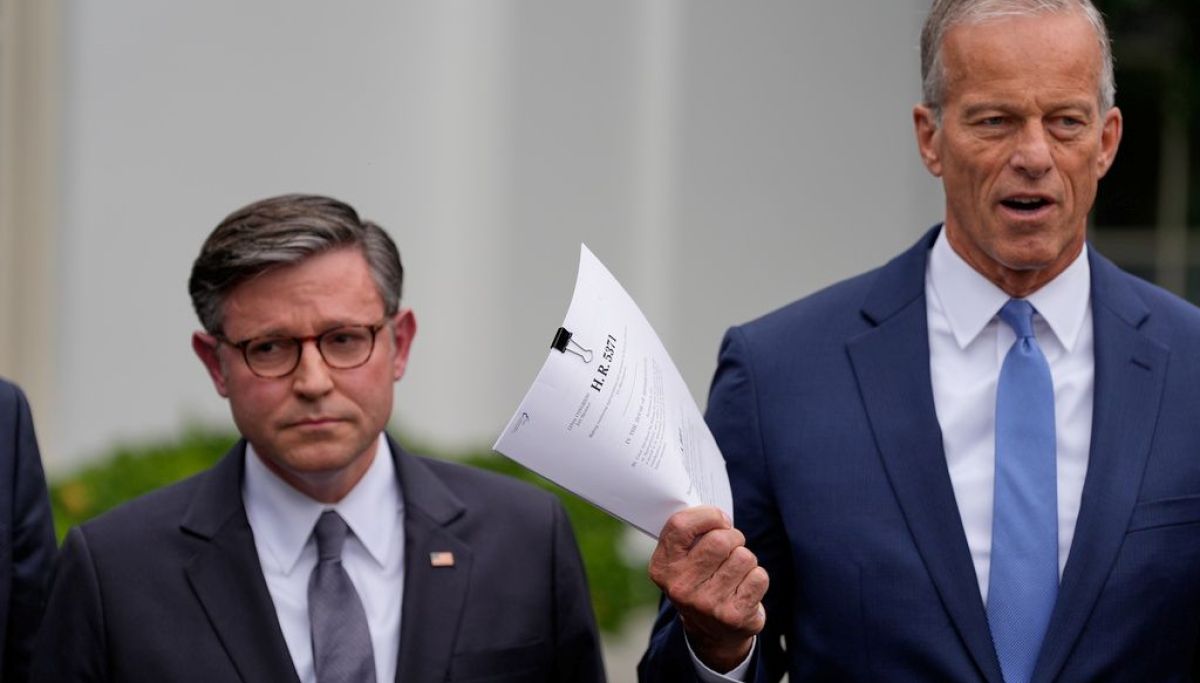
Trump at 32% Approval as Gas Prices Test GOP Midterm Hopes
NYT/Siena polling showed Trump's approval at historic lows around 32 percent with Democrats leading by double digits in key districts. Early voting has surged in battleground states.

Record Early Voting Hits Battlegrounds, Shifting Partisan Shares
AP analysis found hundreds of thousands more early ballots than in 2022 in states including Texas, Ohio, Kansas, Maine, and North Carolina, shifting partisan dynamics.
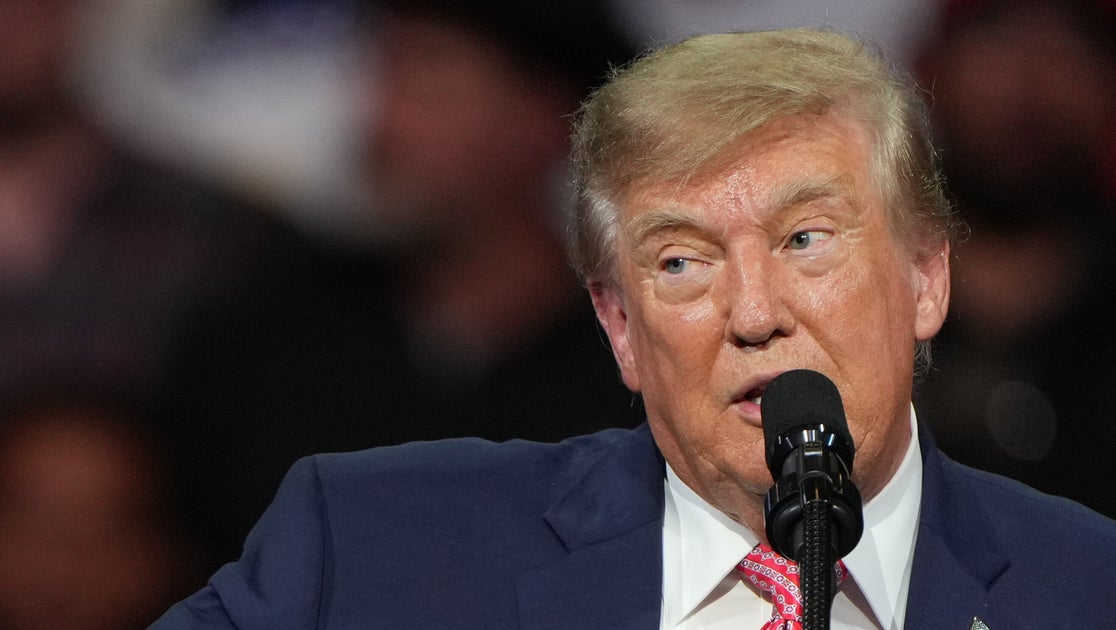
Trump Backs Marshall in Kansas Senate Race Tightened by Farm Costs
President Trump rallied in deep-red Kansas for GOP Sen. Roger Marshall in a competitive race, announcing an $8 billion farm fuel relief program amid high diesel prices. Democrats see an opening to end 94 years of GOP dominance in the state.

Trump Pauses Russia Sanctions Amid Ukraine Tensions and Missile Strikes
Trump waived sanctions on Russia and floated trilateral talks with Putin and Xi as part of ending the Ukraine war, while tensions rose with Zelenskyy over Starlink and arms. Bipartisan senators engaged Zelenskyy amid the shifts.
The Compass
You just read five takes on one story.
What's your take? Find your political shape in a few minutes.
Take the test