
SCOTUS Clears Alabama Maps as Primaries Shape 2026 House Outlook
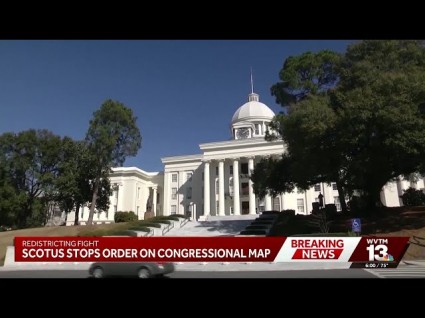
Cover image from crooksandliars.com, which was analyzed for this article
Primaries in Nebraska, West Virginia, and elsewhere set key midterm matchups, with Democrats eyeing flips. SCOTUS allows Alabama's new maps despite gerrymandering claims, aiding GOP. Debates rage on voting rights and GOP voter strategies.
PoliticalOS
Tuesday, May 12, 2026 — Politics
The 2026 House map is being adjusted through a combination of state legislation, court orders, and a Supreme Court remand that narrows the use of race in districting. Primaries this week in Nebraska and West Virginia will finalize several candidate matchups, but the durability of those lines and the national political environment will determine whether projected Republican gains materialize.
What outlets missed
Most coverage omitted that the Alabama order is a procedural remand rather than final approval of the 2023 map, leaving lower courts free to reaffirm or modify their earlier findings. Few noted the prior 2022 lawsuit by Black voters that prompted Louisiana's remedial map later struck in Callais. Outlets also underplayed parallel Democratic map adjustments in California and the absence of recent precedent for suspending primaries already underway in multiple states.
Voters and courts are reshaping the battlefield for the 2026 midterms, where control of the House could hinge on a handful of open seats and newly drawn districts. In Nebraska and West Virginia, Tuesday primaries tested candidate fields for an open Omaha-area House seat long viewed as competitive and for Senate nominations in both states. At the same time, the Supreme Court issued a 6-3 order vacating lower-court blocks on Alabama's 2023 congressional map, sending the case back for review under the recent Louisiana v. Callais precedent that limits race as the predominant factor in districting.
The Alabama order allows the state to proceed with its May 19 primaries under lines that create one majority-Black district instead of two, a change state officials say complies with equal-protection requirements. Alabama Attorney General Steve Marshall described the result as enabling a 7-0 Republican map. Dissenting justices argued the timing risked voter confusion so close to voting. Lower courts retain authority on remand to assess whether the prior findings of intentional discrimination stand independent of Callais.
In Nebraska's 2nd District, Democrats John Cavanaugh and Denise Powell lead a crowded primary to succeed retiring Republican Rep. Don Bacon. The seat has supported Democratic presidential nominees in three of the last five elections. Republican Brinker Harding runs unopposed for the GOP nomination. Senate Republicans in Nebraska and West Virginia also face primary challengers, while independent Dan Osborn, backed by the state Democratic Party, prepares a signature drive for the November ballot. Fundraising totals show Osborn above $3.8 million and Sen. Pete Ricketts above $4.8 million.
Redistricting activity extends beyond Alabama. Florida enacted new lines expected to add Republican seats, and Tennessee and Louisiana moved to adjust maps after Callais. Virginia's Supreme Court blocked a voter-approved plan that analysts said could have favored Democrats. Projections from nonpartisan trackers place potential net Republican gains in the single digits to low teens from these mid-decade changes, though national polling averages continue to favor Democrats by roughly six points on the generic ballot.
The central tension remains whether legal and procedural shifts in map-drawing will offset voter sentiment in November 2026. States must still complete primaries and general-election preparations under the new or contested lines, with several Southern states suspending or rescheduling voting dates to accommodate the updates.
More in Politics

Democrats Flip Senate, Expand House Majority in Midterms
Democrats flipped the Senate and expanded their House majority in a major rebuke to President Trump and Republicans. Key victories included multiple Senate seats and state-level wins that ended long-standing GOP dominance in places like Texas.

GOP Losses Spur Blame, Vance Distancing, 2028 Maneuvers
Republicans are pointing fingers internally after heavy losses, with Vice President JD Vance distancing himself from Trump over the Iran war and positioning for a potential 2028 run. Challengers within the party are already sensing opportunity.

Democrats Take House and Senate Amid Record Midterm Turnout
Democrats achieved decisive gains in the 2026 midterms, flipping seats to take control of both chambers. Coverage highlights historic turnout and implications for the Trump administration.

Democrats Take House and Senate, Constraining Trump
Democrats flipped both the House and Senate in a major rebuke to President Trump and Republicans. The results create divided government and set up battles over spending, oversight, and foreign policy for the remainder of Trump's term.
The Compass
You just read five takes on one story.
What's your take? Find your political shape in a few minutes.
Take the test