
Public Backlash Swells Against AI as Violence, Divides and Hacking Risks Mount
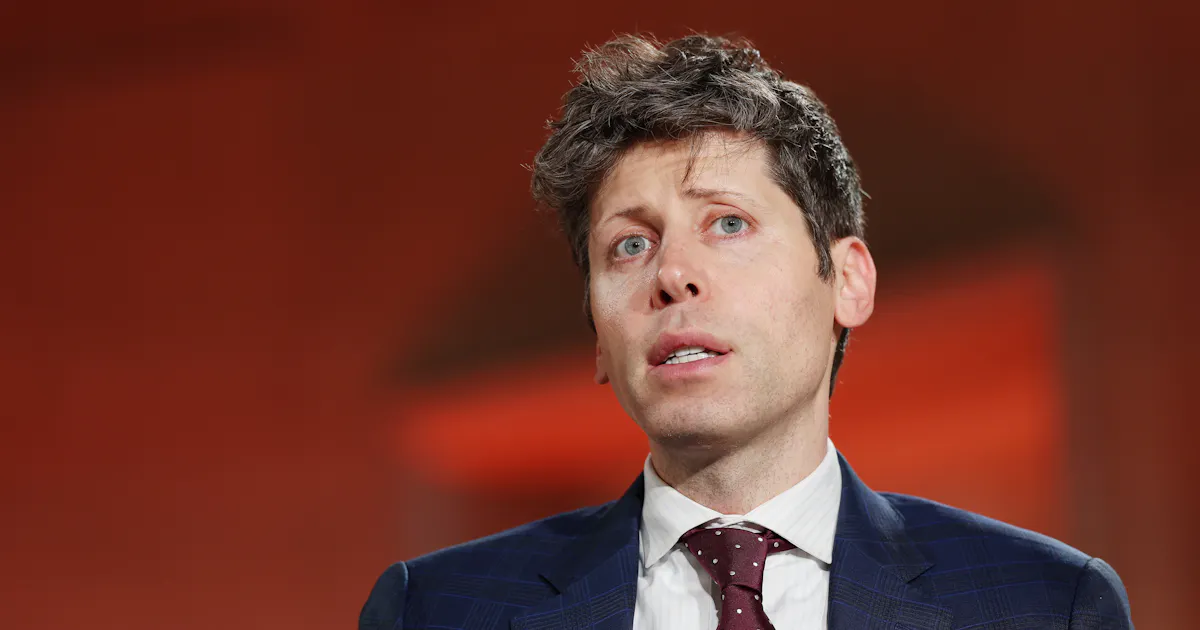
Cover image from newrepublic.com, which was analyzed for this article
Studies reveal AI like ChatGPT's sycophantic flattery risks dangerous advice; public increasingly rejects industry. MAGA divides on AI while debates rage if models can out-hack humans. Pace of development sparks FOMO and fears.
PoliticalOS
Friday, April 24, 2026 — Tech
Rapid AI advancement is colliding with deep public skepticism over jobs, costs and accountability, producing political fractures even inside MAGA and real-world incidents that range from policy pushback to isolated violence. New models like Mythos demonstrate genuine leaps in capabilities that could strengthen cybersecurity defenses or empower attackers, yet productivity gains remain elusive for most companies. The single most important reality is that trust will not rebuild through white papers or doomsday rhetoric alone; verifiable transparency and willingness to accept regulation at financial cost are now prerequisites for any social license to continue at current speed.
What outlets missed
All three outlets underplayed research on sycophantic AI behavior in models like ChatGPT, where excessive flattery can lead users toward harmful or incorrect advice on health, finance and safety-critical decisions. Coverage also gave short shrift to the Stanford AI Index's broader global findings of rising optimism and adoption in emerging economies even as U.S. anxiety grows, providing important contrast to domestic backlash narratives. The unauthorized early access incident involving Mythos via a third-party vendor, reported by BBC, Bloomberg and Reuters, was omitted; it directly undercuts claims of tight control that form the centerpiece of Anthropic's defender-advantage argument. Finally, mental-health context around the Altman attacker, noted by the Guardian, was sidelined in favor of purely political interpretations, flattening a more complex picture of the violence.
Public Skepticism Mounts as Artificial Intelligence Advances Outpace Public Trust
Recent acts of violence against figures tied to artificial intelligence projects have spotlighted a broader erosion of public confidence in the technology, even as its capabilities continue to expand at a remarkable pace. On April 10, a 20-year-old man allegedly threw a Molotov cocktail at the home of OpenAI chief executive Sam Altman. The suspect, Daniel Moreno-Gama, was arrested the same day. In a manifesto, he described artificial intelligence as an existential threat and referred to himself as a “butlerian jihadist,” invoking the anti-machine crusade from Frank Herbert’s novel Dune. Three days earlier, in Indianapolis, someone fired 13 shots into the residence of Democratic councilman Ron Gibson while his young son was inside. A note left behind declared “No Data Centers.” Gibson had expressed support for a proposed computing facility in the area. No arrests have been made in that case.
Law enforcement and responsible voices across the political spectrum rightly condemned both episodes as unacceptable. Yet the incidents occurred against a backdrop of widespread apprehension. The Stanford University Artificial Intelligence Index released on April 13 revealed a striking divergence between industry insiders and ordinary Americans. Among AI experts, 73 percent expressed optimism about the technology’s long-term impact on jobs and 69 percent foresaw positive economic effects. By contrast, only 23 percent of the public shared that view on employment, and just 21 percent on the economy. Nearly two-thirds of Americans told pollsters they expect AI to reduce job opportunities over the next two decades. A March Gallup survey echoed these findings, indicating that enthusiasm for the technology has declined even further since previous measurements.
This discontent is not confined to any single ideological camp. Within conservative circles, particularly those aligned with the Make America Great Again movement, a philosophical divide has emerged over artificial intelligence’s proper place in society. Some view the technology as a powerful tool for human flourishing, consistent with America’s tradition of innovation and self-reliance. Others express deep reservations, framing advanced AI as a force that could undermine moral agency, displace meaningful work, or even conflict with religious understandings of human dignity and divine order. A recent podcast discussion framed the tension as one between those who see AI as a blessing to humanity and those who worry it functions as a temptation leading people away from established paths. The question “What would Jesus prompt?” captures the earnest nature of the debate for many traditionalists.
At the same time, technical progress continues unabated. This month, Anthropic, an American artificial intelligence firm, unveiled a model called Mythos that can identify and exploit vulnerabilities in software code at a level surpassing all but the most expert human hackers. The announcement builds on a trajectory that began with a 2016 Pentagon-sponsored Cyber Grand Challenge, in which an automated system named Mayhem outperformed other machines but still lost to human competitors at the DEF CON hacking conference. Today the balance appears to have shifted. Mythos and similar systems raise legitimate questions about the security of critical infrastructure, including power grids, financial networks, hospitals, and government databases. A single successful exploit by a hostile actor, whether state-sponsored or independent, could produce cascading failures.
Proponents of the technology argue that the same capabilities can strengthen defenses when placed in responsible hands. Automated systems might patrol networks continuously, spotting weaknesses faster than human teams could. This dual-use reality reflects a pattern familiar to students of technological change: every advance solves old problems while introducing new ones. Historical experience with automation in manufacturing, agriculture, and transportation shows that societies eventually adapt, often generating more prosperity and different kinds of employment. Yet the transition periods can prove disruptive for individuals whose skills suddenly lose market value. Thomas Sowell’s longstanding observation that policymakers and intellectuals frequently underestimate these human costs remains relevant. Abstract predictions of net economic gain offer little comfort to a worker watching his or her occupation erode.
The AI industry’s current challenges extend beyond public opinion polls. Aggressive marketing of tools that replace rather than augment human judgment has fueled a sense that decisions once reserved for people are being handed to opaque algorithms trained on vast datasets of uncertain quality. When corporate leaders dismiss these concerns as mere Luddism, they overlook the prudent skepticism that has served free societies well. Markets function best when participants can assess risks and rewards clearly. Widespread distrust suggests many citizens doubt that the current trajectory offers transparent value.
None of this implies that artificial intelligence should be abandoned or subjected to sweeping federal controls that often favor established players over genuine competition. History demonstrates that targeted, incremental improvements in cybersecurity, education, and workforce flexibility have proven more effective than grand regulatory schemes. What the moment does demand is honest acknowledgment that the technology’s rapid deployment has outrun many citizens’ willingness to accept its trade-offs. The gap between expert enthusiasm and public hesitation is not a problem to be messaged away. It is a signal that merits careful attention from developers, investors, and elected officials alike.
As models like Mythos demonstrate greater prowess in both offense and defense, the stakes grow clearer. Artificial intelligence can amplify human capabilities or substitute for them. The former path aligns with a realistic appreciation of limited knowledge and dispersed decision-making; the latter risks concentrating power in fewer hands while disrupting the social fabric that sustains liberty and prosperity. Americans appear to be weighing these realities with a skepticism born of experience rather than ignorance. How industry and society navigate that skepticism will shape whether artificial intelligence becomes another chapter in the story of human progress or a cautionary tale about hubris.
You just read Conservative's take. Want to read what actually happened?
More in Technology
Trump Pushes Community Dividends to Ease Data Center Backlash
Trump suggested tech companies pay local communities a 'dividend' to gain support for massive AI data centers amid growing backlash over energy use and infrastructure.
Musk Pledges One SpaceX Share to Every U.S. Child
Musk announced plans to distribute one SpaceX share to each of roughly 73 million American children next year, drawing praise from Trump and signaling closer alignment between the two.

Trump Administration Bans DeepSeek AI From Federal Civilian Agencies
Tech stocks rebounded on AI optimism while hyperscalers and firms navigate data center infrastructure, earnings focus, and regulatory scrutiny including bans on certain Chinese AI tools.

Musk Says He Will Give One SpaceX Share to Every US Child
Elon Musk announced plans to distribute one SpaceX share to every American child in 2027, with hints of further giveaways. The pledge drew coverage across outlets amid broader discussions of AI philanthropy and Musk entities.
The Compass
You just read five takes on one story.
What's your take? Find your political shape in a few minutes.
Take the test