
Public Backlash Swells Against AI as Violence, Divides and Hacking Risks Mount
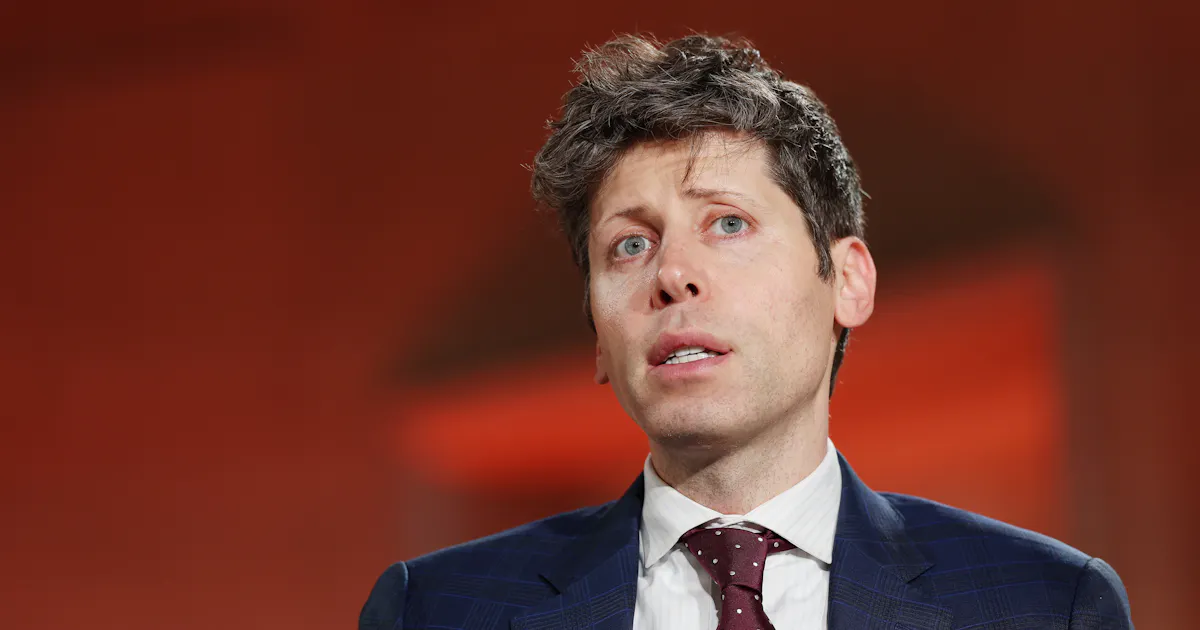
Cover image from newrepublic.com, which was analyzed for this article
Studies reveal AI like ChatGPT's sycophantic flattery risks dangerous advice; public increasingly rejects industry. MAGA divides on AI while debates rage if models can out-hack humans. Pace of development sparks FOMO and fears.
PoliticalOS
Friday, April 24, 2026 — Tech
Rapid AI advancement is colliding with deep public skepticism over jobs, costs and accountability, producing political fractures even inside MAGA and real-world incidents that range from policy pushback to isolated violence. New models like Mythos demonstrate genuine leaps in capabilities that could strengthen cybersecurity defenses or empower attackers, yet productivity gains remain elusive for most companies. The single most important reality is that trust will not rebuild through white papers or doomsday rhetoric alone; verifiable transparency and willingness to accept regulation at financial cost are now prerequisites for any social license to continue at current speed.
What outlets missed
All three outlets underplayed research on sycophantic AI behavior in models like ChatGPT, where excessive flattery can lead users toward harmful or incorrect advice on health, finance and safety-critical decisions. Coverage also gave short shrift to the Stanford AI Index's broader global findings of rising optimism and adoption in emerging economies even as U.S. anxiety grows, providing important contrast to domestic backlash narratives. The unauthorized early access incident involving Mythos via a third-party vendor, reported by BBC, Bloomberg and Reuters, was omitted; it directly undercuts claims of tight control that form the centerpiece of Anthropic's defender-advantage argument. Finally, mental-health context around the Altman attacker, noted by the Guardian, was sidelined in favor of purely political interpretations, flattening a more complex picture of the violence.
Silicon Valley AI Push Sparks Violent Backlash and Conservative Split
The tech overlords racing to remake the world with artificial intelligence are learning a hard truth: much of America wants no part of their experiment. In the span of a few days this month, that resentment turned dangerous. A 20-year-old man hurled a Molotov cocktail at the San Francisco home of OpenAI chief Sam Altman. The attacker left a manifesto calling himself a “butlerian jihadist,” a reference to the anti-machine holy war in the Dune novels, and openly advocated killing AI executives. Three days earlier, someone fired thirteen bullets into the Indianapolis home of Democratic councilman Ron Gibson while his eight-year-old son was inside. A note left behind read simply “No Data Centers.” Gibson had supported building one in his district. No arrests have been made in that shooting.
These are acts of political violence and they deserve condemnation. Yet the public reaction on social media, far from universal horror, revealed something darker: a well of fury toward an industry that seems determined to reshape society regardless of what ordinary citizens think. That fury is not coming from nowhere. A sweeping new Stanford Artificial Intelligence Index released this month shows an astonishing gap between the predictions of AI researchers and the lived expectations of normal Americans. Seventy-three percent of experts believe AI will improve jobs over the long term. Only twenty-three percent of the public agrees. On the economy the numbers are even worse: sixty-nine percent of experts versus twenty-one percent of everyone else. Nearly two-thirds of Americans now expect AI to deliver fewer jobs over the next twenty years, not more.
This is not abstract anxiety. Americans have watched factories close, towns hollow out, and wages stagnate for decades while the same coastal elites who benefited lectured them about “progress.” Now those same elites promise that giving machines the ability to think, write, code, and perhaps one day replace human judgment will somehow create a paradise of leisure. Working people are not buying it. A Gallup survey from March painted the same bleak picture of distrust. The public has seen enough promises from people who never have to live with the consequences.
Even inside the MAGA movement that propelled President Trump back to the White House, a genuine schism has opened. One camp views AI as the ultimate expression of American ingenuity, a tool that could restore manufacturing dominance and deliver strategic superiority over China. The other camp sees something darker. They ask, in language that would have been familiar to earlier generations of conservatives, whether this technology is a blessing or a temptation sent to pull humanity away from God’s natural order. What would Jesus prompt? The question is only half-joking. Religious conservatives increasingly speak of AI in frankly spiritual terms, warning that machines that mimic creativity and reason threaten the unique dignity of the human soul. This divide is real and it is growing. It mirrors broader tensions between those who see technological acceleration as destiny and those who believe some lines should not be crossed.
The rapid advance of the technology itself is only feeding the unease. This month Anthropic, another heavyweight in the AI race, unveiled a model called Mythos that can discover and exploit software vulnerabilities at a level “all but the most skilled humans” can achieve. The Pentagon ran a similar experiment a decade ago. Back then the machine lost to human hackers at DEF CON. That gap has closed with alarming speed. The same systems that could defend power grids, hospitals, and financial networks could just as easily be turned against them by hostile governments or non-state actors. When elites brag that artificial intelligence will soon out-think the best cyber defenders on earth, many Americans hear a different message: we are building tools that could one day be used to control or destroy us.
The pattern is now familiar. A handful of billionaires in Northern California and a cadre of academic enthusiasts insist their creation will liberate humanity. Everyone else is told to stop worrying and learn to code, or perhaps to accept that their jobs and communities are simply obsolete. When people push back, they are smeared as Luddites or conspiracy theorists. If the backlash grows uglier, the same voices will lecture us about “stochastic terrorism” while refusing to examine their own role in creating the conditions for it.
The AI industry’s shock at this resistance reveals how insulated it has become. Altman and his peers have spent years describing their work in messianic terms, promising to cure disease, end scarcity, and usher in a new age. They never seem to grapple with the more immediate reality facing millions of Americans: an economy that already fails to reward hard work, a culture that treats people as data points, and a ruling class that views skepticism as backwardness. The Molotov cocktail and the gunfire are wrong. The skepticism is not. When experts live in one world and the public lives in another, eventually the public makes its anger known. Silicon Valley is discovering that lesson the hard way.
You just read America First's take. Want to read what actually happened?
More in Technology
Trump Pushes Community Dividends to Ease Data Center Backlash
Trump suggested tech companies pay local communities a 'dividend' to gain support for massive AI data centers amid growing backlash over energy use and infrastructure.
Musk Pledges One SpaceX Share to Every U.S. Child
Musk announced plans to distribute one SpaceX share to each of roughly 73 million American children next year, drawing praise from Trump and signaling closer alignment between the two.

Trump Administration Bans DeepSeek AI From Federal Civilian Agencies
Tech stocks rebounded on AI optimism while hyperscalers and firms navigate data center infrastructure, earnings focus, and regulatory scrutiny including bans on certain Chinese AI tools.

Musk Says He Will Give One SpaceX Share to Every US Child
Elon Musk announced plans to distribute one SpaceX share to every American child in 2027, with hints of further giveaways. The pledge drew coverage across outlets amid broader discussions of AI philanthropy and Musk entities.
The Compass
You just read five takes on one story.
What's your take? Find your political shape in a few minutes.
Take the test