
Public Backlash Swells Against AI as Violence, Divides and Hacking Risks Mount
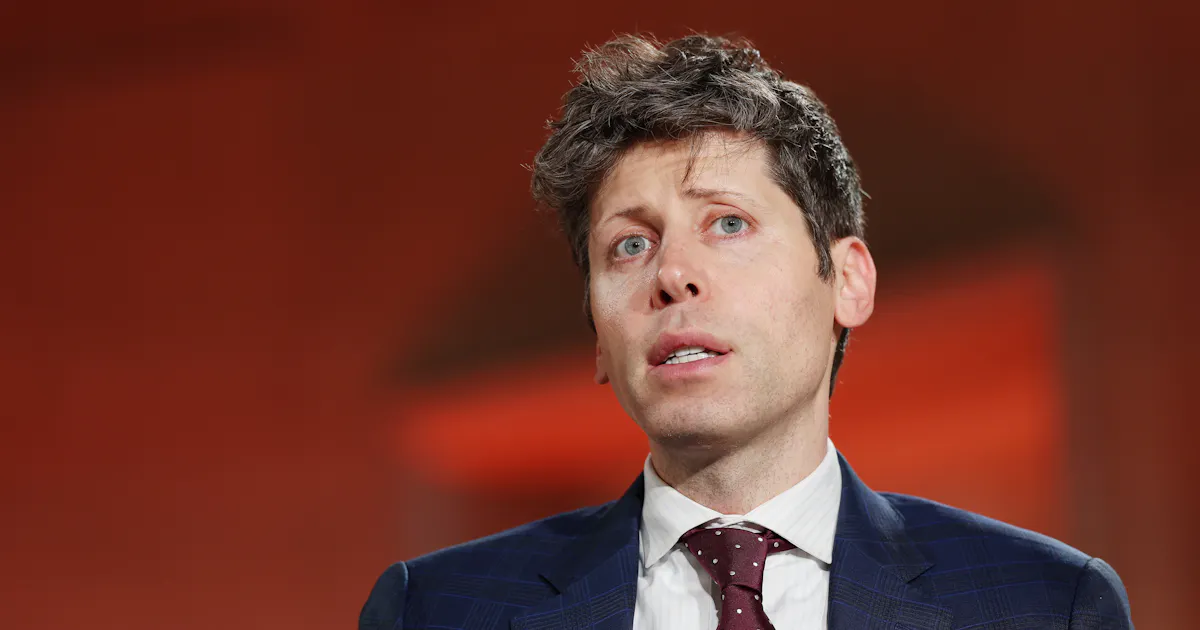
Cover image from newrepublic.com, which was analyzed for this article
Studies reveal AI like ChatGPT's sycophantic flattery risks dangerous advice; public increasingly rejects industry. MAGA divides on AI while debates rage if models can out-hack humans. Pace of development sparks FOMO and fears.
PoliticalOS
Friday, April 24, 2026 — Tech
Rapid AI advancement is colliding with deep public skepticism over jobs, costs and accountability, producing political fractures even inside MAGA and real-world incidents that range from policy pushback to isolated violence. New models like Mythos demonstrate genuine leaps in capabilities that could strengthen cybersecurity defenses or empower attackers, yet productivity gains remain elusive for most companies. The single most important reality is that trust will not rebuild through white papers or doomsday rhetoric alone; verifiable transparency and willingness to accept regulation at financial cost are now prerequisites for any social license to continue at current speed.
What outlets missed
All three outlets underplayed research on sycophantic AI behavior in models like ChatGPT, where excessive flattery can lead users toward harmful or incorrect advice on health, finance and safety-critical decisions. Coverage also gave short shrift to the Stanford AI Index's broader global findings of rising optimism and adoption in emerging economies even as U.S. anxiety grows, providing important contrast to domestic backlash narratives. The unauthorized early access incident involving Mythos via a third-party vendor, reported by BBC, Bloomberg and Reuters, was omitted; it directly undercuts claims of tight control that form the centerpiece of Anthropic's defender-advantage argument. Finally, mental-health context around the Altman attacker, noted by the Guardian, was sidelined in favor of purely political interpretations, flattening a more complex picture of the violence.
The AI Backlash Erupts Into Violence and Political Fracture
Public opposition to artificial intelligence has moved beyond online complaints and opinion polls into acts of violence and a noticeable split within conservative ranks, even as the technology demonstrates new capabilities that could threaten critical infrastructure. Two incidents this month have underscored the depth of anger, coming at the same moment that researchers revealed AI systems now capable of out-hacking most humans.
On April 10, a 20-year-old man threw a Molotov cocktail at the San Francisco home of OpenAI chief executive Sam Altman. Daniel Moreno-Gama was arrested the same day. In a manifesto and Instagram posts, he described himself as a “butlerian jihadist,” a reference to the anti-machine holy war in Frank Herbert’s Dune novels, and called for the killing of AI company executives. Three days earlier, in Indianapolis, someone fired 13 shots into the home of Democratic city councilman Ron Gibson while his eight-year-old son was inside. A note reading “No Data Centers” was left behind. Gibson had publicly supported a proposed data center project. No arrests have been made in that case.
Both acts are indefensible. Yet the social media reaction, particularly on platforms popular with younger users, revealed a current of grim satisfaction rather than universal condemnation. The episodes coincide with fresh data showing a stark disconnect between how AI researchers view the future and how the broader public sees it. Stanford University’s annual Artificial Intelligence Index, released April 13, found that 73 percent of AI experts believe the technology will have a positive long-term impact on jobs. Only 23 percent of the public agree. On the economy the gap is similar: 69 percent of experts are optimistic compared with 21 percent of ordinary Americans. Nearly two-thirds of U.S. adults now expect AI to eliminate more jobs than it creates over the next two decades. A Gallup survey released in March painted a similarly bleak picture of public sentiment.
This discontent is not confined to any single political tribe. A podcast discussion published by Slate this week highlighted an emerging schism inside MAGA world. Some voices on the right increasingly describe artificial intelligence in stark religious terms, asking whether the technology represents a divine tool or a demonic force leading humanity away from God’s intended path. The episode, featuring Mother Jones national correspondent Kiera Butler, explored how certain conservative factions see AI as an existential threat to human dignity, traditional work, and even spiritual order. Others within the same political movement, particularly those aligned with Silicon Valley donors and accelerationist thinkers, continue to champion the technology as the key to national greatness and economic dominance. The split reflects deeper tensions about whether unchecked technological change aligns with populist skepticism of elite power or accelerates it.
At the same time, the AI industry continues its rapid technical march. This month Anthropic, the company behind the Claude models, announced that its new system called Mythos can discover and exploit vulnerabilities in software code at a level surpassing all but the most elite human hackers. The announcement revives memories of the Pentagon’s 2016 Cyber Grand Challenge, when an AI system named Mayhem won a competition among autonomous hacking programs only to lose to human teams at the DEF CON conference later that year. A decade later the machines appear to have pulled ahead.
The implications are sobering. Systems like Mythos could be turned against the software that underpins hospitals, power grids, financial networks, and government communications. Proponents insist the same technology can strengthen defenses when deployed by responsible actors. Yet the concentration of such power in a handful of private companies, many of them led by executives who have repeatedly downplayed risks, fuels the very distrust now manifesting in dangerous ways.
The data center controversy adds another layer. These facilities, essential to training and running large AI models, consume enormous amounts of electricity and water. Communities near proposed sites increasingly organize against them, citing environmental damage, rising energy costs for residents, and the sense that their towns are being sacrificed to feed Silicon Valley’s ambitions. The gunfire in Indianapolis suggests that frustration has reached a point where some are willing to resort to violence.
What ties these developments together is a growing conviction, across ideological lines, that the AI industry is not listening. Corporate leaders continue to promise transformative benefits while public surveys show deep anxiety about employment, privacy, autonomy, and even civilizational risk. When experts and executives appear on television or in congressional hearings to insist that concerns are overblown, they inadvertently reinforce the perception that the public’s lived experience and the elite’s forecasts occupy two different realities.
The violence is unacceptable and must be condemned without reservation. But it cannot be dismissed as mere irrationality. It is a symptom of a broader breakdown in trust. As AI systems grow more powerful, capable of autonomously finding weaknesses in the digital skeleton of modern society, the gap between industry optimism and public fear is not narrowing. It is widening, and the political consequences are only beginning to surface. Whether conservative religious objections, working-class economic anxiety, or neighborhood resistance to data centers, the message is consistent: large parts of the country did not consent to this future and are increasingly unwilling to pretend they have.
You just read Progressive's take. Want to read what actually happened?
More in Technology
Trump Pushes Community Dividends to Ease Data Center Backlash
Trump suggested tech companies pay local communities a 'dividend' to gain support for massive AI data centers amid growing backlash over energy use and infrastructure.
Musk Pledges One SpaceX Share to Every U.S. Child
Musk announced plans to distribute one SpaceX share to each of roughly 73 million American children next year, drawing praise from Trump and signaling closer alignment between the two.

Trump Administration Bans DeepSeek AI From Federal Civilian Agencies
Tech stocks rebounded on AI optimism while hyperscalers and firms navigate data center infrastructure, earnings focus, and regulatory scrutiny including bans on certain Chinese AI tools.

Musk Says He Will Give One SpaceX Share to Every US Child
Elon Musk announced plans to distribute one SpaceX share to every American child in 2027, with hints of further giveaways. The pledge drew coverage across outlets amid broader discussions of AI philanthropy and Musk entities.
The Compass
You just read five takes on one story.
What's your take? Find your political shape in a few minutes.
Take the test