
AI False Arrests and Job Automation Spur Calls for Oversight
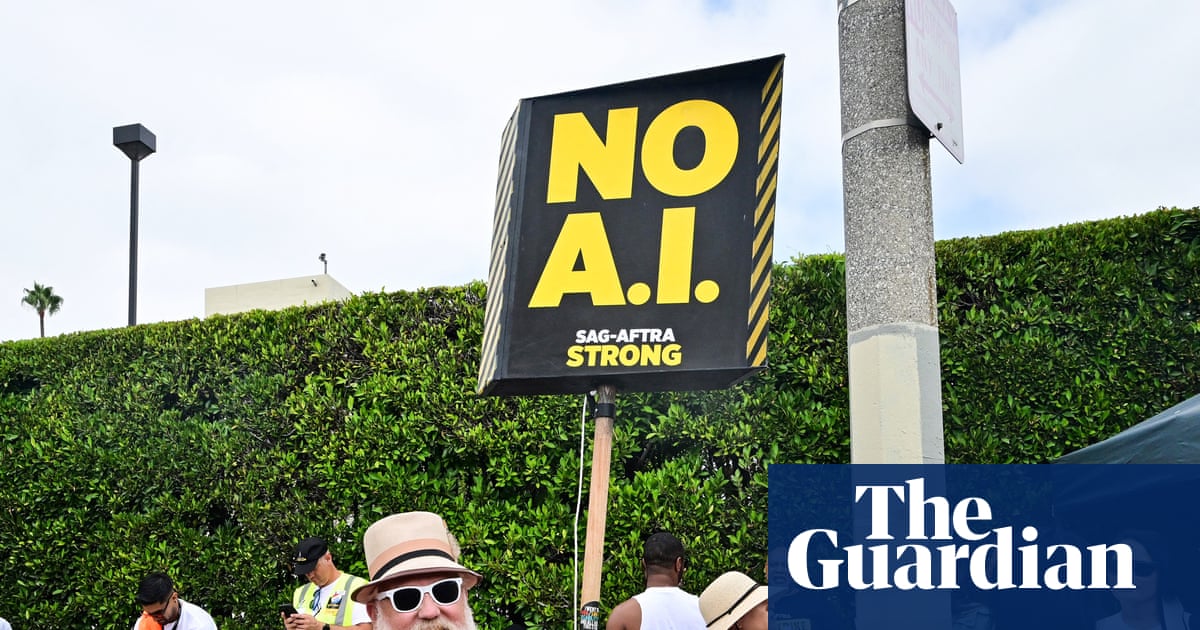
Cover image from theguardian.com, which was analyzed for this article
AI linked to false arrests and wrongful convictions, raising oversight calls. Workers back union policies on AI amid rapid job cuts at Meta, Microsoft. Tech sector pressures grow with geopolitical angles.
PoliticalOS
Tuesday, May 12, 2026 — Tech
AI tools can generate costly errors in policing and employment when probabilistic outputs are acted upon without verification. Workers and some agencies are already negotiating human oversight, yet no uniform standards exist. The central policy choice is how much uncertainty to tolerate before algorithmic suggestions become binding actions.
What outlets missed
Local reporting on the Baltimore County incident showed school safety staff canceled the AI alert before police were called and found no racial bias in the deployment. National coverage of the Tennessee case noted that bail denial and scheduling delays, not the initial AI match alone, extended the detention. Independent polling by Data for Progress recorded lower but still majority support for similar AI worker protections, providing a benchmark absent from the union-commissioned survey. No outlet examined actual performance data from the Omnilert system that correctly flagged firearms in other Maryland schools.
AI Errors and Labor Concerns Highlight Need for Stronger Oversight on Technology Use
A 17-year-old student in Baltimore sat outside his high school after football practice last October when an AI-powered surveillance camera flagged the Doritos bag in his pocket as a firearm. Police arrived within minutes, drew weapons and ordered Taki Allen to his knees before handcuffing him. Officers found only a crumpled bag of chips. In December, Angela Lipps, a grandmother in Tennessee, was released from jail after five months of detention. Facial recognition software had wrongly linked her to fraud cases in North Dakota, a state she had never visited. Officers arrested her at gunpoint while she cared for her grandchildren.
These incidents reflect a pattern where AI tools generate probabilities rather than definitive facts. Facial recognition and enhanced camera systems rely on statistical matches that can misfire when lighting, angles or training data fall short. Human operators then act on those outputs, amplifying the initial error. In Allen's case, the technology prompted an armed response to a routine after-school moment. In Lipps's case, it produced an arrest based on a match across state lines with no corroborating evidence.
Such outcomes occur because the systems are deployed in high-stakes environments without sufficient safeguards. Police departments adopt the tools for efficiency, yet the underlying algorithms remain opaque to the people they affect. When errors surface, accountability often rests on individual officers rather than the vendors or procurement processes that introduced the software. Studies of similar deployments have shown elevated error rates for people of color and younger individuals, though the technology continues to spread to schools, transit systems and public spaces.
Separately, workers across the United States are confronting AI in their own jobs and reaching similar conclusions about the limits of automated decision-making. A recent poll commissioned by the AFL-CIO surveyed 1,588 respondents and found overwhelming support for policies that keep humans in charge. Ninety-five percent backed a requirement that a person serve as the final decision-maker on matters affecting employment. Ninety-two percent favored guardrails against harmful workplace uses of AI along with mandatory transparency and accountability when employers deploy the tools. Even the least popular proposal in the survey, expanding union representation to counter AI-related job threats, drew 75 percent approval.
These preferences appear in contract negotiations as well. The Ziff Davis Creators Guild secured language in 2024 that bars layoffs or pay cuts tied to AI, requires disclosure of when the technology is used in editorial work and protects against undisclosed alterations to content. Union leaders describe the provisions as a response to companies testing AI for tasks previously handled by staff, sometimes with results that require extensive human correction.
The two domains, public safety and private employment, differ in their immediate risks, yet both illustrate how organizations adopt AI before fully testing its effects on people. In policing, the cost of a false positive can be immediate physical harm or loss of liberty. In workplaces, the cost can be reduced hours, altered performance evaluations or displacement without clear recourse. In each setting, the technology's output is treated as objective even when training data or model design introduces bias or inaccuracy.
Public agencies and companies continue to expand AI use because the tools promise lower costs and faster processing. The Baltimore school system and the Tennessee police department followed that logic. Employers in media, logistics and customer service are doing the same. Without external pressure for testing, auditing and human review, the pattern of mismatched outputs and downstream harm is likely to repeat. The polling data and recent contract wins suggest that workers and affected communities are already identifying the same remedy: requirements that keep final authority with people who can be held responsible for the consequences.
You just read Liberal's take. Want to read what actually happened?
More in Technology
Trump Pushes Community Dividends to Ease Data Center Backlash
Trump suggested tech companies pay local communities a 'dividend' to gain support for massive AI data centers amid growing backlash over energy use and infrastructure.
Musk Pledges One SpaceX Share to Every U.S. Child
Musk announced plans to distribute one SpaceX share to each of roughly 73 million American children next year, drawing praise from Trump and signaling closer alignment between the two.

Trump Administration Bans DeepSeek AI From Federal Civilian Agencies
Tech stocks rebounded on AI optimism while hyperscalers and firms navigate data center infrastructure, earnings focus, and regulatory scrutiny including bans on certain Chinese AI tools.

Musk Says He Will Give One SpaceX Share to Every US Child
Elon Musk announced plans to distribute one SpaceX share to every American child in 2027, with hints of further giveaways. The pledge drew coverage across outlets amid broader discussions of AI philanthropy and Musk entities.
The Compass
You just read five takes on one story.
What's your take? Find your political shape in a few minutes.
Take the test