
AI Tools Democratize Design but Blur Lines of Reality
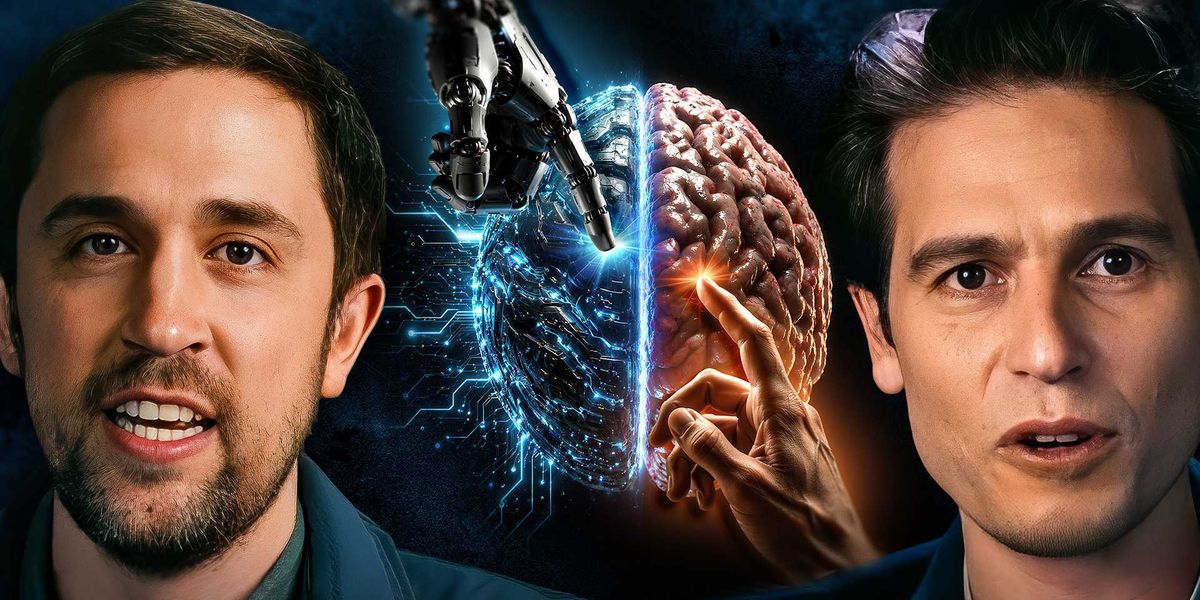
Cover image from theblaze.com, which was analyzed for this article
New AI developments include hardware design aids like Schematik backed by Anthropic and concerns over AI-enhanced beauty filters distorting reality. Discussions highlight navigating AI's risks and opportunities in a 'knife edge' balance. Tech leaders explore applications amid perfectionism critiques.
PoliticalOS
Saturday, April 18, 2026 — Tech
AI is simultaneously lowering barriers to creative experimentation in beauty inspiration and hardware design while generating expectations that frequently cannot be met in physical reality. The core challenge is designing institutions and professional practices that capture the technology's benefits without allowing distorted digital ideals or ungoverned risks to dominate. Readers should weigh anecdotal industry complaints and early tool demos against the absence of comprehensive usage data and the existence of emerging policy frameworks that aim to thread this needle.
What outlets missed
Most coverage omitted that many stylists successfully replicate individual elements like colors, textures and styles from AI-generated images even when full replication proves impossible, according to cross-reported details in Washington Post coverage referenced in the Axios analysis. Recent U.S. policy steps, including a December 2025 executive order and March 2026 National Policy Framework establishing federal AI oversight, received no mention despite directly addressing Hammond's governance concerns. Schematik's status as a side project for a founder employed full-time at another company was absent from the Wired profile, as were confirmed limitations on Anthropic's related tools including gated access and slow vulnerability patching. Broader platform data on the growth rate of AI beauty content, beyond anecdotal stylist estimates, was not provided by any outlet.
The AI Knife Edge Reshaping Daily Life and Human Limits
As artificial intelligence seeps into the mundane corners of American life, it is exposing a tension that defies the loudest voices in the national debate. On one side are the accelerationists who see technological singularity as an inevitable deliverance into prosperity. On the other are the doomers who warn of mass obsolescence and civilizational risk. Yet a growing cohort of researchers and builders is attempting to chart a narrower path: one that welcomes AI’s capacity to expand human capability while erecting guardrails against its capacity to distort reality and concentrate power.
That tension is no longer theoretical. It is playing out in bridal salons and suburban garages alike. Beauty professionals report that roughly half of their bridal clients now arrive armed with AI-generated images of impossible hairstyles and makeup looks. The pictures feature flawless skin, structurally improbable bone structures, and colors that do not exist in human hair. Celebrity hair extension specialist Angelina Murphy finds herself conducting lengthy reality-check consultations. “This is a digital fantasy,” she tells clients. “The roots aren’t real, the color isn’t real, her bone structure isn’t real. The end result will never, ever look like this.”
Mehry Schmitt, who runs a Northeast bridal beauty business, says the phenomenon has become routine. Stylists must rapidly triage which elements of an image can be approximated under time constraints while managing disappointed expectations. The frustration echoes broader complaints across creative fields: AI is not simply generating new content but actively warping the baseline of what people consider achievable. Social media already trained a generation to compare themselves to filtered ideals. Generative tools have intensified that dynamic, making perfection feel both closer and more unattainable.
At the same time, other corners of the culture are harnessing the same technology to expand what ordinary people can build. Samuel Beek, an Amsterdam-based tinkerer with no formal hardware background, learned this the hard way when ChatGPT-guided instructions for an electric door opener blew every fuse in his house. The model failed to distinguish wet from dry connections. Beek switched to Anthropic’s Claude model and began developing what he calls “Cursor for Hardware,” a program now known as Schematik. Users describe in plain language what they want to create, and the system generates parts lists, wiring diagrams, and step-by-step assembly guidance. It is currently raising money after securing $4.6 million from Lightspeed Venture Partners, with plans to integrate direct shopping links for components.
The appeal is obvious. Schematik promises to democratize physical invention in the same way large language models have democratized software prototyping. Early users have built audio equipment and other custom devices that would previously have required engineering degrees or expensive consultants. Anthropic itself has taken notice of the project, suggesting that even leading AI labs see value in tools that ground digital intelligence in the physical world.
Samuel Hammond, an AI researcher at the Foundation for American Innovation, argues these contrasting examples illustrate why neither utopian nor apocalyptic narratives fully capture the moment. In a recent discussion with BlazeTV hosts Christopher Rufo and Jonathan Keeperman, Hammond described AI as a “massive umbrella term” akin to electricity. It will generate novel drugs and efficient defense systems while simultaneously lowering the barrier for designing bioweapons and autonomous malware. Holding both realities in mind is “incredibly taxing,” he acknowledged.
The historical analogy that emerges repeatedly is the Industrial Revolution. That earlier transformation produced unprecedented wealth but also necessitated the creation of modern administrative states, labor regulations, and welfare systems to manage its dislocations. AI appears poised to follow a similar trajectory. The question is whether contemporary institutions possess the agility to respond before the technology’s second-order effects harden into permanent features of social life.
Regulation presents particular difficulties. Broad attempts to govern “AI” quickly become meaningless given the term’s vagueness. More targeted interventions focused on high-risk domains, such as biological weapons design or critical infrastructure attacks, face enforcement challenges in an open-source world where models proliferate rapidly. Meanwhile, subtler harms, such as the erosion of shared standards of physical beauty or the deskilling of certain crafts, resist legislative fixes altogether.
This is where the “third way” conversation becomes salient. It rejects both the fatalism of inevitable dystopia and the naive faith that market forces alone will optimize for human flourishing. Instead, it calls for deliberate institutional design: public investment in safety research, updated liability regimes for AI-generated harms, education systems that prioritize irreplaceably human skills, and cultural norms that treat synthetic media with appropriate skepticism.
The Schematik story offers a microcosm of the opportunity. By helping non-experts translate ideas into working hardware, such tools could revive a culture of local manufacturing and personal ingenuity. Yet the blown-fuse anecdote is a reminder that enthusiasm must be paired with rigorous verification. Similarly, the beauty industry’s complaint is not merely aesthetic. When AI shapes aspirations in ways that no human effort can satisfy, it risks deepening the very status anxieties and mental health challenges that digital platforms have already exacerbated.
Navigating this terrain will require more than better models. It will demand clearer public understanding of AI’s dual-use nature, more sophisticated policy architecture than current debates typically entertain, and a willingness to make trade-offs rather than choosing between breathless hype and reflexive opposition. The technology is no longer arriving. It is here, rewiring expectations in wedding parties and workshops alike. The relevant question is whether society can develop the collective wisdom to steer it toward genuine human benefit rather than novel forms of disappointment and risk. Early evidence suggests that task will test not only our machines but our institutions and our capacity for nuance.
You just read Liberal's take. Want to read what actually happened?
More in Technology
Trump Pushes Community Dividends to Ease Data Center Backlash
Trump suggested tech companies pay local communities a 'dividend' to gain support for massive AI data centers amid growing backlash over energy use and infrastructure.
Musk Pledges One SpaceX Share to Every U.S. Child
Musk announced plans to distribute one SpaceX share to each of roughly 73 million American children next year, drawing praise from Trump and signaling closer alignment between the two.

Trump Administration Bans DeepSeek AI From Federal Civilian Agencies
Tech stocks rebounded on AI optimism while hyperscalers and firms navigate data center infrastructure, earnings focus, and regulatory scrutiny including bans on certain Chinese AI tools.

Musk Says He Will Give One SpaceX Share to Every US Child
Elon Musk announced plans to distribute one SpaceX share to every American child in 2027, with hints of further giveaways. The pledge drew coverage across outlets amid broader discussions of AI philanthropy and Musk entities.
The Compass
You just read five takes on one story.
What's your take? Find your political shape in a few minutes.
Take the test