
States Skip Trump 250th Fair as Pool Failures Mount
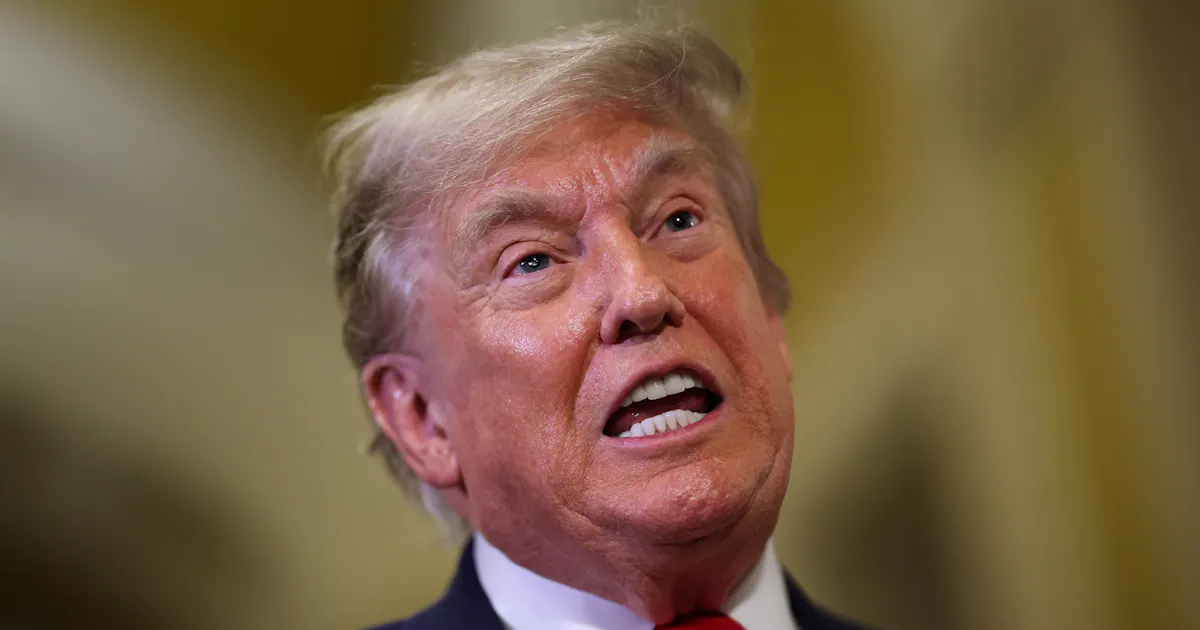
Cover image from newrepublic.com, which was analyzed for this article
The Great American State Fair opened in Washington with military flyovers and events marking the semiquincentennial. Coverage questioned whether Trump was celebrating the country or himself.
PoliticalOS
Thursday, June 25, 2026 — Politics
The 250th anniversary events opened amid documented state withdrawals and an unresolved maintenance failure at the Lincoln Memorial Reflecting Pool. Participation and technical outcomes now serve as the clearest available measures of how widely the commemoration has been embraced beyond its organizers.
What outlets missed
No outlet supplied attendance projections, total private-sector contributions, or the number of states that confirmed participation in the fair. Military flyover details and daily event schedules received only passing mention despite their prominence in the opening ceremonies. Technical specifications for the reflecting-pool liner material and any water-test results from the National Park Service remained absent across all coverage, leaving causation of the algae and peeling issues unverified. The articles also omitted statements from participating states or the Freedom 250 organizers explaining their decisions to proceed.
The United States marked the approach of its 250th anniversary with the opening of the Great American State Fair on the National Mall, an event that drew military flyovers and state-themed exhibits yet also exposed sharp divisions over how the semiquincentennial should be observed. Several states declined to participate, citing costs and concerns that the proceedings had become tied to one political figure. At the same time, the Lincoln Memorial Reflecting Pool developed an algae bloom and liner damage after a renovation intended to produce an “American flag blue” appearance, prompting the National Park Service to restrict access and the administration to announce plans to drain the 6.5-million-gallon basin.
President Trump addressed the fair’s kickoff by stating that the anniversary offered a chance to take pride in the past while building “the richest inheritance, most advanced civilization, and highest standard of living in human history.” He compared the United States to earlier powers that erected new monuments rather than dwelling on ruins. Organizers scheduled daily themes including military appreciation and health-focused activities, along with a 110-foot Ferris wheel and a refurbished Smithsonian carousel.
Pennsylvania Governor Josh Shapiro confirmed his state would not join after consulting the state chamber of commerce and finding no business interest; he noted that participation would have required $700,000 in state funds. Eight other states—Oregon, Washington, Massachusetts, Illinois, Connecticut, Maine, Rhode Island, and North Carolina—also stepped back. Shapiro said the decision reflected a desire to keep patriotism from becoming partisan and to direct resources toward separate state-level events.
Pool expert Steve Goodale, whose YouTube channel covers maintenance topics, reviewed available images and video of the reflecting pool and observed that visible liner sections appeared to be detaching. He noted that installation variables such as substrate moisture, ambient conditions, and chemical compatibility can cause membrane failure, and he said insufficient public data on water chemistry or source water prevented a single diagnosis. The administration attributed some damage to vandalism without releasing supporting evidence, while the Park Service deployed nanobubbler systems intended to control algae through oxygenation.
Summer movie schedules contained only limited Revolutionary-era titles, a contrast to the 1986 release of “Sweet Liberty,” which satirized Hollywood’s handling of historical material. No major studio productions centered on the founding period reached wide release, leaving reenactors and smaller documentaries as the primary public representations of the era.
The combination of uneven state participation, unresolved maintenance problems at a central memorial, and sparse cultural programming left open the question of how broadly the anniversary events would resonate beyond the immediate organizers and attendees.
More in Politics

Federal Agents Search Omar Home in Ongoing Immigration Probe
Homeland Security agents searched the Minnesota Democrat's DC residence in a criminal probe, prompting accusations of political intimidation from Omar and Democratic leaders. Coverage spans left-leaning outlets like NPR, BBC, and The Guardian alongside right-leaning criticism from The Federalist and Daily Wire.

Trump Diesel Import Plan Draws Pushback Over Russia Ties
The weekend agreement drew bipartisan congressional pushback and criticism from Ukraine's Zelenskyy, with analysts downplaying US fuel price impacts. Right-leaning outlets like National Review, Dispatch, and Washington Examiner questioned its legality and effectiveness.

Independents Test Voter Appetite for Middle Ground in 2026 Midterms
Nearly 200 independents are running in competitive races as voters weigh ballot measures on housing costs in states like Massachusetts. Left-leaning coverage from NYT, NPR, and Guardian highlights turnout and key races while right outlets focus on GOP strategy.

Trump Rallies in Alaska, Ohio to Bolster GOP Senate Candidates
The president rallied in Wasilla for Sen. Dan Sullivan and faced empty seats at an Ohio event amid midterm concerns. Outlets across the spectrum covered the trips as signals of GOP vulnerability weeks before Election Day.
The Compass
You just read five takes on one story.
What's your take? Find your political shape in a few minutes.
Take the test