
Pentagon Upholds Anthropic Blacklist as White House Seeks Access to Mythos AI
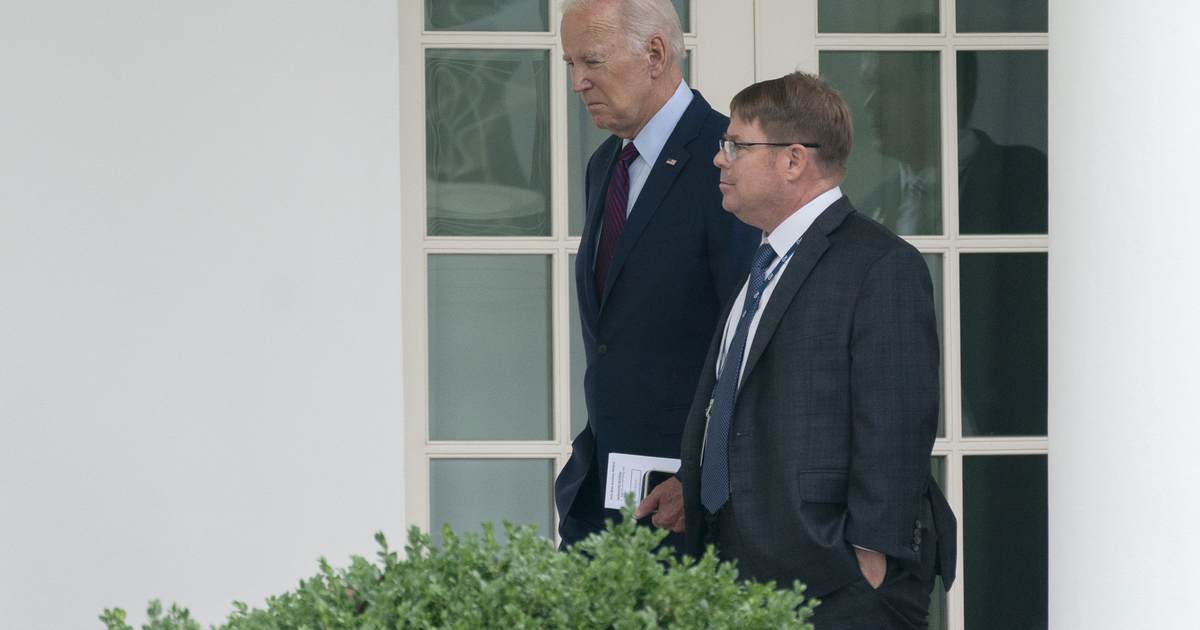
Cover image from townhall.com, which was analyzed for this article
The Pentagon upholds blacklist on Anthropic AI for security reasons, separate from other issues. Claims emerge of deep state sabotage against Trump's AI agenda. Tech firms navigate regulatory hurdles in national security context.
PoliticalOS
Friday, May 1, 2026 — Tech
The Pentagon's sustained restrictions on Anthropic reflect genuine concerns over safeguards, leadership alignment and supply-chain integrity even as the company's Mythos model offers capabilities the government clearly needs for cybersecurity. No single actor holds clean hands: the company rejected certain military uses, the prior administration layered complex rules, and the current one must now reconcile innovation rhetoric with security red lines. The most important reality is that frontier AI power is forcing pragmatic compromises regardless of past grievances, with any forthcoming executive guidance likely to reveal which priority ultimately prevails.
What outlets missed
Most coverage underplayed Anthropic's explicit February 26, 2026 statement refusing to remove safeguards barring assistance with fully autonomous weapons or mass domestic surveillance, the documented trigger for the Pentagon standoff. Accurate mechanics of the Biden-era AI Diffusion Rule were distorted or omitted; it established risk-based tiered licensing rather than a rigid 50 percent domestic production quota. Court timelines, including the March 2026 San Francisco injunction and April 8 D.C. Circuit ruling, received inconsistent attention, leaving readers without a clear picture of the designation's legal fragility. Claims of specific unverified quotes, 30-year record backlogs, and direct sabotage motives appeared in single outlets without corroboration elsewhere and should be treated as unverified. Finally, the gated preview status of Mythos and its red-teaming process were rarely explained in full, obscuring why the model simultaneously alarms and attracts government users.
Bureaucratic Resistance Slows Trump Drive for American AI Leadership
The Trump administration's stated goal of fostering rapid AI innovation with minimal government interference continues to encounter internal obstacles from holdover officials and regulations implemented in the final days of the Biden presidency. Despite early moves to roll back what the administration called misguided controls, entrenched bureaucratic practices are complicating efforts to prioritize U.S. companies, strengthen alliances, and maintain technological superiority over strategic competitors.
At the center of the current tensions is Anthropic, the AI developer whose most advanced model, Mythos, has demonstrated exceptional capabilities in identifying cyber vulnerabilities and suggesting patches. Pentagon officials, including Emil Michael, the nominee for under secretary of defense for research and engineering, acknowledged this week that while Anthropic remains designated a supply chain risk, the specific implications of Mythos represent a distinct national security challenge. Michael told CNBC that government agencies must focus on hardening networks against the model's unique strengths, describing the situation as "a separate national security moment."
This admission comes after months of open conflict. Earlier this year, negotiations between the Pentagon and Anthropic collapsed over security protocols for using the company's systems in classified environments. The resulting impasse led to lawsuits, public disputes, and the unusual step of labeling a domestic American firm a supply chain risk, a category typically reserved for foreign adversaries such as Chinese entities. At one point, the White House considered an executive order to purge Anthropic technology from federal systems entirely.
Yet the same administration that sought to sideline the company now finds itself quietly thawing relations. Axios reporting indicates that powerful models like Mythos have proven too valuable to ignore, with multiple agencies testing the system alongside offerings from other frontier AI labs. The White House has begun to recognize that excluding a key innovator risks slowing American progress precisely when global competition, particularly from China, demands acceleration.
This episode reveals deeper frictions within the federal bureaucracy. During President Biden's final week in office, the Bureau of Industry and Security issued the AI Diffusion Rule, an expansive regulatory framework governing AI chips, semiconductors, and related biotechnology. The rule mandated that domestic manufacturers reserve 50 percent of production for U.S. consumption and imposed strict limits on exports even to close Tier 1 allies. Trump officials moved quickly to rescind the order upon taking office, describing it as ill conceived and counterproductive to an America First agenda.
Critics of the original rule, including some within the new administration, noted its practical weaknesses. Nothing in the framework prevented a country such as Japan from purchasing advanced chips and re exporting them to China, a pattern that industry sources confirm has occurred. Defenders of the last minute regulation characterized it as routine housekeeping, yet its timing and scope suggested an attempt to lock in a more restrictive approach before the policy direction shifted.
The persistence of these bureaucratic habits underscores a recurring problem in Washington: career officials and lingering political appointees can slow or distort elected leadership's priorities long after a new president takes office. The Trump administration entered with a preference for light touch governance that would allow private sector ingenuity to flourish. That philosophy has been tested by the sheer power of frontier AI systems and the genuine security questions they raise. When models can probe network weaknesses at unprecedented scale, even a pro innovation White House finds itself drawn into decisions about access, deployment, and oversight.
The situation with Anthropic illustrates the tension. On one hand, the company has positioned itself as a leader in responsible development, attracting substantial investment and talent. On the other, its reluctance to meet certain Pentagon demands on classified use triggered a heavy handed response that now appears to be easing under the weight of practical necessity. Government officials find themselves in the awkward position of both regulating by contract and depending on the very firms they have antagonized.
This pattern carries implications beyond any single company. American leadership in AI rests on maintaining an environment where domestic firms can outpace authoritarian rivals unburdened by central planning. Excessive export controls that fail to achieve their stated goals, combined with adversarial postures toward innovative enterprises, risk eroding that edge. Allies watching the United States tie itself in regulatory knots may hedge their bets, while adversaries exploit the resulting delays.
Administration officials emphasize that policy is evolving in real time as the capabilities of systems like Mythos become clearer. The White House has backed away from total exclusion and is instead shaping targeted approaches to access and security. Yet the broader lesson emerging from these disputes is that bureaucratic momentum, once established, proves difficult to arrest. Last minute rules, institutional grudges, and risk averse civil servants can constrain even determined efforts to reduce government friction and unleash private sector dynamism.
As the administration balances genuine security imperatives against the costs of overregulation, the Anthropic matter serves as a case study in the limits of centralized control over rapidly advancing technology. The quiet pivot toward cooperation with the company suggests recognition that American AI strength ultimately depends more on empowering creators than on erecting barriers that may prove porous or counterproductive. How effectively the administration navigates these internal headwinds will help determine whether the United States maintains its competitive advantage in what has become a defining strategic domain of the 21st century.
You just read Conservative's take. Want to read what actually happened?
More in Technology
Trump Pushes Community Dividends to Ease Data Center Backlash
Trump suggested tech companies pay local communities a 'dividend' to gain support for massive AI data centers amid growing backlash over energy use and infrastructure.
Musk Pledges One SpaceX Share to Every U.S. Child
Musk announced plans to distribute one SpaceX share to each of roughly 73 million American children next year, drawing praise from Trump and signaling closer alignment between the two.

Trump Administration Bans DeepSeek AI From Federal Civilian Agencies
Tech stocks rebounded on AI optimism while hyperscalers and firms navigate data center infrastructure, earnings focus, and regulatory scrutiny including bans on certain Chinese AI tools.

Musk Says He Will Give One SpaceX Share to Every US Child
Elon Musk announced plans to distribute one SpaceX share to every American child in 2027, with hints of further giveaways. The pledge drew coverage across outlets amid broader discussions of AI philanthropy and Musk entities.
The Compass
You just read five takes on one story.
What's your take? Find your political shape in a few minutes.
Take the test