
Pentagon Upholds Anthropic Blacklist as White House Seeks Access to Mythos AI
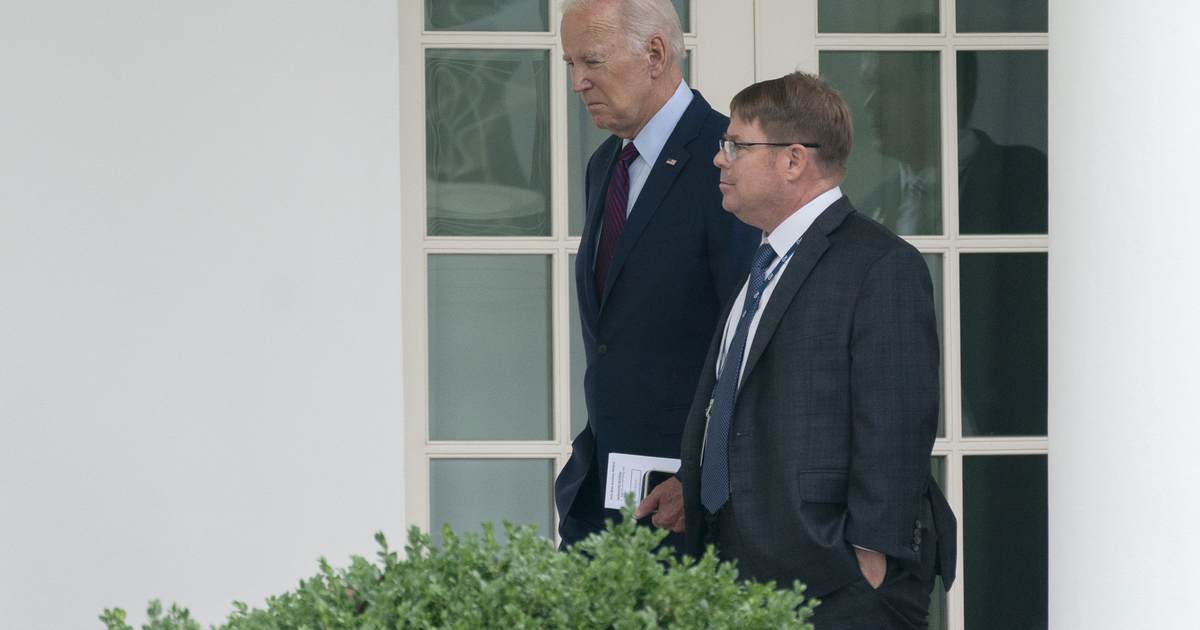
Cover image from townhall.com, which was analyzed for this article
The Pentagon upholds blacklist on Anthropic AI for security reasons, separate from other issues. Claims emerge of deep state sabotage against Trump's AI agenda. Tech firms navigate regulatory hurdles in national security context.
PoliticalOS
Friday, May 1, 2026 — Tech
The Pentagon's sustained restrictions on Anthropic reflect genuine concerns over safeguards, leadership alignment and supply-chain integrity even as the company's Mythos model offers capabilities the government clearly needs for cybersecurity. No single actor holds clean hands: the company rejected certain military uses, the prior administration layered complex rules, and the current one must now reconcile innovation rhetoric with security red lines. The most important reality is that frontier AI power is forcing pragmatic compromises regardless of past grievances, with any forthcoming executive guidance likely to reveal which priority ultimately prevails.
What outlets missed
Most coverage underplayed Anthropic's explicit February 26, 2026 statement refusing to remove safeguards barring assistance with fully autonomous weapons or mass domestic surveillance, the documented trigger for the Pentagon standoff. Accurate mechanics of the Biden-era AI Diffusion Rule were distorted or omitted; it established risk-based tiered licensing rather than a rigid 50 percent domestic production quota. Court timelines, including the March 2026 San Francisco injunction and April 8 D.C. Circuit ruling, received inconsistent attention, leaving readers without a clear picture of the designation's legal fragility. Claims of specific unverified quotes, 30-year record backlogs, and direct sabotage motives appeared in single outlets without corroboration elsewhere and should be treated as unverified. Finally, the gated preview status of Mythos and its red-teaming process were rarely explained in full, obscuring why the model simultaneously alarms and attracts government users.
Deep State Holdovers Block Trump from Unleashing American AI Power
The Trump administration's promise to put America First in the critical field of artificial intelligence is being quietly strangled by bureaucrats who never got the message that the election is over. Despite the president's swift action to scrap misguided Biden-era rules, entrenched officials at the Commerce Department and elsewhere continue to tie the hands of U.S. companies and allies while China advances unchecked. The latest evidence comes in the form of bizarre treatment of domestic AI leader Anthropic, which the Pentagon has labeled a supply chain risk on par with foreign adversaries even as the government desperately needs its technology.
The sabotage traces directly back to the final desperate days of the Biden presidency. In the last week of that administration, the Bureau of Industry and Security rushed through what it called the AI Diffusion Rule. This executive order demanded that American AI chip makers reserve half their production for domestic use only. What remained could be sold to a handful of approved "Tier 1" allies under heavy restrictions. The rule went into effect just days before President Trump took the oath of office in 2025. One of his first acts was to rescind the entire scheme as ill-conceived and contrary to American interests.
That should have ended the matter. Instead, Biden appointees and sympathetic career officials dug in. They defended the last-minute regulatory ambush as merely "wrapping up loose ends." The rule was not only poorly timed but fundamentally flawed. Nothing in it prevents a country like Japan from buying advanced U.S. chips and quietly reselling them to China, which is precisely what has happened. The policy punished American manufacturers and their workers while doing nothing to slow Beijing's ambitions. This is what America First looks like when filtered through the permanent bureaucracy: self-inflicted wounds dressed up as national security.
Now the same anti-Trump inertia has infected policy toward Anthropic, one of the country's most advanced AI firms. What began as a dispute over how the Pentagon could safely use Anthropic's models in classified environments has spiraled into lawsuits, public spats, and the extraordinary step of blacklisting an American company as a "supply chain risk." Such designations are normally reserved for Chinese or Russian entities. The Trump administration's instinct has been to pursue a light-touch, pro-innovation approach that lets American companies compete and win. Yet that vision is colliding with the reality of powerful new models and a bureaucracy that prefers control over results.
The irony is impossible to ignore. While the Pentagon maintains its blacklist of Anthropic, the company's most advanced model, Mythos, has proven impossible to ignore. Mythos possesses sophisticated capabilities for identifying cyber vulnerabilities and hardening networks. Defense Department Chief Technology Officer Emil Michael acknowledged as much in recent remarks, describing the Mythos situation as a "separate national security moment" that requires government-wide attention to strengthen America's defenses. In plain language, the government is fighting Anthropic in court even as federal agencies line up to test its technology because the alternatives cannot match its power.
This is not serious policy. It is the deep state asserting itself against an elected president who campaigned on reducing regulatory burdens and restoring American technological supremacy. The White House has begun quietly thawing relations with Anthropic out of necessity. Models this advanced cannot simply be wished away or replaced by second-tier options. Yet the continued bureaucratic resistance reveals how little has changed inside the agencies since January 2025. Career officials appear more interested in preserving their own power and the failed assumptions of the previous administration than in executing the clear mandate voters delivered.
The stakes could not be higher. Artificial intelligence will determine economic dominance and military superiority for the next century. China pours resources into its own programs without the self-doubt and regulatory mazes that hamstring American firms. Every delay in exporting chips to allies, every lawsuit against a domestic innovator, every blacklisting of a U.S. company is a gift to Beijing. The Biden Diffusion Rule was a parting shot from an administration that prioritized globalist constraints over national strength. Its lingering effects show how difficult it is to drain the swamp when the alligators remain in charge of the regulatory machinery.
President Trump has correctly identified that America must lead in AI or fall behind. His rescission of the Diffusion Rule was a strong first step. But implementation matters. If holdovers at Commerce and Defense continue slow-walking approvals, inventing new restrictions, and treating American success stories like Anthropic as threats rather than assets, the United States will lose ground that no amount of rhetoric can recover. The Mythos episode proves the technology is too important to be held hostage by internal political grudges. The deep state is not merely incompetent. In the AI arena, it is actively working against the interests of the country that pays its salaries. Americans who voted to reject the old failed approach have every right to demand their government finally follow through.
You just read America First's take. Want to read what actually happened?
More in Technology
Trump Pushes Community Dividends to Ease Data Center Backlash
Trump suggested tech companies pay local communities a 'dividend' to gain support for massive AI data centers amid growing backlash over energy use and infrastructure.
Musk Pledges One SpaceX Share to Every U.S. Child
Musk announced plans to distribute one SpaceX share to each of roughly 73 million American children next year, drawing praise from Trump and signaling closer alignment between the two.

Trump Administration Bans DeepSeek AI From Federal Civilian Agencies
Tech stocks rebounded on AI optimism while hyperscalers and firms navigate data center infrastructure, earnings focus, and regulatory scrutiny including bans on certain Chinese AI tools.

Musk Says He Will Give One SpaceX Share to Every US Child
Elon Musk announced plans to distribute one SpaceX share to every American child in 2027, with hints of further giveaways. The pledge drew coverage across outlets amid broader discussions of AI philanthropy and Musk entities.
The Compass
You just read five takes on one story.
What's your take? Find your political shape in a few minutes.
Take the test