
Pentagon Upholds Anthropic Blacklist as White House Seeks Access to Mythos AI
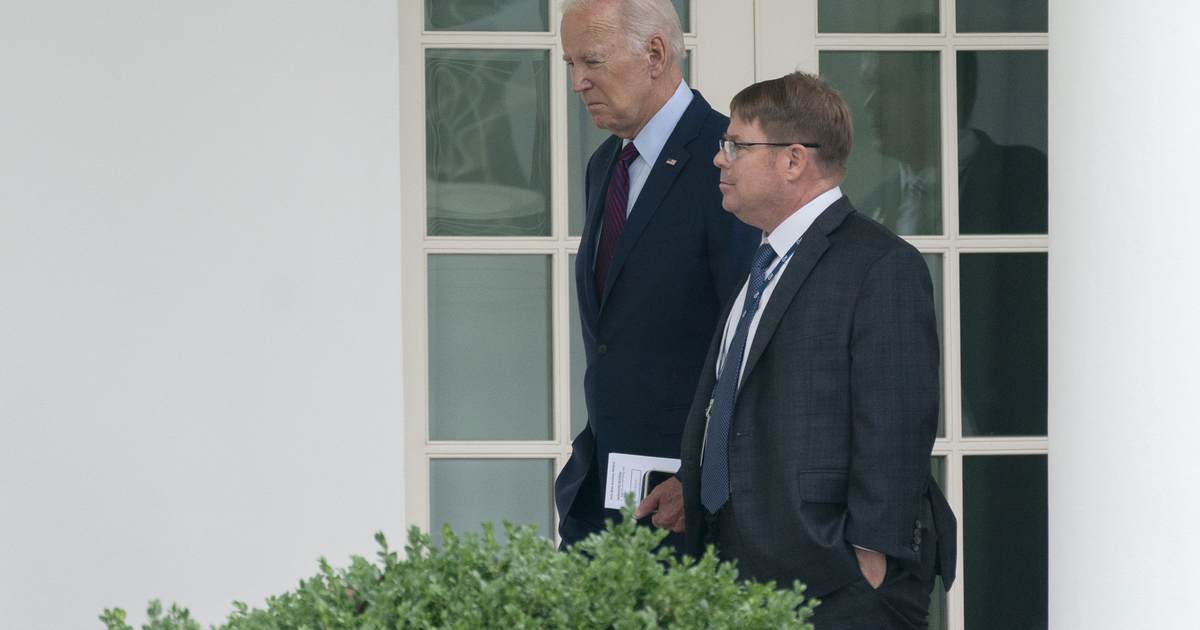
Cover image from townhall.com, which was analyzed for this article
The Pentagon upholds blacklist on Anthropic AI for security reasons, separate from other issues. Claims emerge of deep state sabotage against Trump's AI agenda. Tech firms navigate regulatory hurdles in national security context.
PoliticalOS
Friday, May 1, 2026 — Tech
The Pentagon's sustained restrictions on Anthropic reflect genuine concerns over safeguards, leadership alignment and supply-chain integrity even as the company's Mythos model offers capabilities the government clearly needs for cybersecurity. No single actor holds clean hands: the company rejected certain military uses, the prior administration layered complex rules, and the current one must now reconcile innovation rhetoric with security red lines. The most important reality is that frontier AI power is forcing pragmatic compromises regardless of past grievances, with any forthcoming executive guidance likely to reveal which priority ultimately prevails.
What outlets missed
Most coverage underplayed Anthropic's explicit February 26, 2026 statement refusing to remove safeguards barring assistance with fully autonomous weapons or mass domestic surveillance, the documented trigger for the Pentagon standoff. Accurate mechanics of the Biden-era AI Diffusion Rule were distorted or omitted; it established risk-based tiered licensing rather than a rigid 50 percent domestic production quota. Court timelines, including the March 2026 San Francisco injunction and April 8 D.C. Circuit ruling, received inconsistent attention, leaving readers without a clear picture of the designation's legal fragility. Claims of specific unverified quotes, 30-year record backlogs, and direct sabotage motives appeared in single outlets without corroboration elsewhere and should be treated as unverified. Finally, the gated preview status of Mythos and its red-teaming process were rarely explained in full, obscuring why the model simultaneously alarms and attracts government users.
Trump Administration Confronts Limits of Hands-Off AI Policy Amid Anthropic Tensions
The Trump administration came into office promising a light-touch approach to artificial intelligence that would prioritize American innovation and reduce regulatory burdens inherited from the Biden years. Yet events of the past week reveal a more complicated reality: bureaucratic inertia, genuine security concerns, and the sheer power of frontier AI models are forcing the White House to intervene in ways that complicate its deregulatory ambitions.
At the center of the story sits Anthropic, the AI company whose most advanced model, Mythos, has capabilities that both alarm and attract national security agencies. On Friday, Emil Michael, the Pentagon’s nominee for under secretary of defense for research and engineering, told CNBC that Anthropic remains blacklisted as a supply chain risk. Yet he described the company’s Mythos model as presenting “a separate national security moment” that requires government-wide attention to harden networks against its ability to identify cyber vulnerabilities and generate patches. The distinction matters. While the blacklist grew out of earlier disputes over how the Pentagon could safely use Anthropic’s systems in classified environments, the emergence of Mythos has made outright exclusion untenable.
This represents a notable thaw. Earlier this year, relations deteriorated to the point of lawsuits, public spats, and consideration of an executive order that would have purged Anthropic systems from government use entirely. The company had been treated with a designation typically reserved for foreign adversaries. Now, according to reporting by Axios, the White House is inching toward renewed cooperation precisely because its models have grown too powerful to ignore. Agencies have begun testing Mythos alongside competitors’ offerings, even as court battles continue. The episode illustrates a core tension in AI governance: the technology’s dual-use nature means the same capabilities that threaten security can also strengthen it.
The Anthropic saga does not exist in isolation. It reflects broader frictions within the administration over how to manage the AI supply chain. During the final week of the Biden presidency, the Bureau of Industry and Security issued the so-called AI Diffusion Rule. The regulation required U.S. AI chip makers to reserve 50 percent of production for domestic use and imposed strict limits on exports even to close “Tier 1” allies. Trump officials moved quickly to rescind what they called an “ill-conceived” policy. Yet sources within the Commerce Department describe a pattern of quiet resistance. Career officials and Biden-era holdovers have continued to apply similar caution in licensing decisions, slowing the administration’s goal of maximizing American technological advantage.
Critics on the right have labeled this “deep state” sabotage. The reality appears more mundane and more troubling. The Diffusion Rule was flawed. Nothing in it prevented allies such as Japan from purchasing advanced chips and potentially onward-shipping them to China. But the underlying worry, that unrestricted diffusion of frontier AI capabilities could accelerate adversaries’ progress, has not disappeared simply because the administration changed. Effective policy requires distinguishing between protectionism that harms U.S. competitiveness and prudent controls that preserve strategic advantage. So far, the Trump team has struggled to articulate that distinction clearly.
The administration’s original instinct toward minimal regulation made political sense after years of Democratic emphasis on AI risk. Yet the pace of technological change is exposing the limits of pure deregulation. When a single model like Mythos can meaningfully alter the cyber offense-defense balance, the government cannot credibly claim the issue is best left entirely to markets. The White House finds itself, somewhat reluctantly, shaping rules around access to the most capable systems. As one official put it to Axios, regulating by contract concentrates enormous power in whichever agency negotiates the deals. That concentration creates its own risks of arbitrary decision-making and regulatory capture.
What emerges is a portrait of AI policy being made on the fly. The administration wants to project strength and technological leadership. It also faces pressure from within the defense establishment to treat certain AI developers with the same caution once reserved for Chinese suppliers. Meanwhile, the private sector continues to race ahead. Anthropic itself has become both pariah and indispensable partner, a situation that underscores how concentrated power has become in the frontier AI sector.
For an administration that campaigned against bureaucratic overreach, these developments carry uncomfortable ironies. The same institutional forces it once denounced are now providing a brake on rapid diffusion that some national security officials quietly welcome. At the same time, the genuine policy dilemmas cannot be waved away with slogans. Advanced AI systems will require new thinking about how government and industry share risk, how access to powerful models is allocated, and how the United States coordinates with allies without inadvertently arming competitors.
The coming months will test whether the Trump administration can move beyond inherited fights and last-minute Biden regulations to craft a durable framework. That framework must encourage innovation while acknowledging that some capabilities are too strategically significant to treat as ordinary commercial products. The Anthropic episode, and the persistence of export control debates, suggest this balancing act will prove more difficult than campaign rhetoric allowed. In AI, as in other domains of emerging technology, reality keeps imposing itself on ideology.
You just read Liberal's take. Want to read what actually happened?
More in Technology
Trump Pushes Community Dividends to Ease Data Center Backlash
Trump suggested tech companies pay local communities a 'dividend' to gain support for massive AI data centers amid growing backlash over energy use and infrastructure.
Musk Pledges One SpaceX Share to Every U.S. Child
Musk announced plans to distribute one SpaceX share to each of roughly 73 million American children next year, drawing praise from Trump and signaling closer alignment between the two.

Trump Administration Bans DeepSeek AI From Federal Civilian Agencies
Tech stocks rebounded on AI optimism while hyperscalers and firms navigate data center infrastructure, earnings focus, and regulatory scrutiny including bans on certain Chinese AI tools.

Musk Says He Will Give One SpaceX Share to Every US Child
Elon Musk announced plans to distribute one SpaceX share to every American child in 2027, with hints of further giveaways. The pledge drew coverage across outlets amid broader discussions of AI philanthropy and Musk entities.
The Compass
You just read five takes on one story.
What's your take? Find your political shape in a few minutes.
Take the test