
Voters Wary of AI and Crypto as Industry PACs Flood Midterms
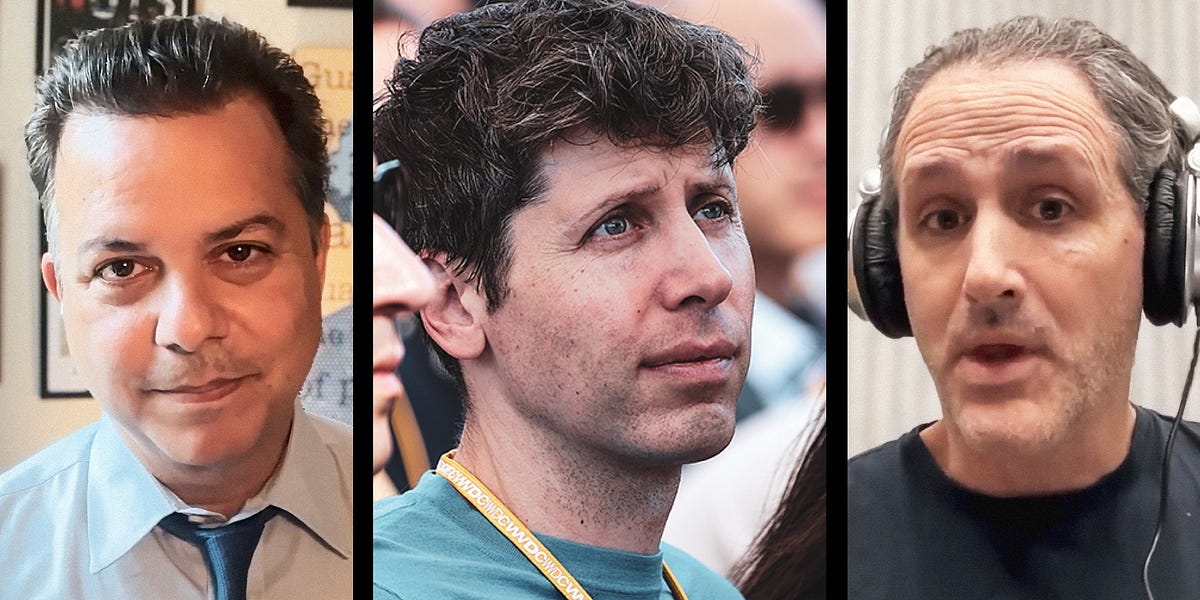
Cover image from thebulwark.com, which was analyzed for this article
Democrats and Republicans are united in concerns about AI, with polls showing public unease despite heavy midterm spending on tech and crypto. Warnings grow that AI could further erode democracy after social media.
PoliticalOS
Sunday, May 3, 2026 — Tech
Widespread public skepticism toward AI and crypto, centered on job losses, democratic risks and special-interest dominance, stands in sharp contrast to the record sums these industries are spending to shape the 2026 midterms. Despite courting candidates in both parties and pushing for uniform federal rules, the industries face the real possibility that financial influence will collide with voter distrust rather than overcome it. The most important reality is that past experience with social media has primed many Americans to view the next wave of technology with caution, making regulatory outcomes far from certain.
What outlets missed
Both outlets underplayed the IRS's documented AI expansion from 10 applications in 2022 to 126 currently deployed, alongside the specific GAO findings on management shortfalls, skills gaps and impending 25% workforce reductions that paint a more nuanced picture of implementation challenges rather than unqualified wins or unmitigated risks. Coverage also gave short shrift to rising real-world AI adoption, such as Quinnipiac data showing 51% of Americans using it for research, which sits alongside expressed skepticism and suggests the unease may be more abstract than absolute. The full scale of crypto PAC reserves, reported elsewhere as approaching $190 million entering the cycle, received only partial treatment, as did the explicit industry goal of securing federal preemption over state AI laws to avoid regulatory fragmentation. Finally, neither fully integrated how Operation Warp Speed's AI-adjacent tools were tied more closely to platforms like Palantir than to the core vaccine initiative itself, an unverified detail in promotional contexts that deserved clearer sourcing.
Americans Reject Silicon Valley Power Grab as AI and Crypto PACs Dominate Midterm Cash
A new poll exposes what millions of Americans already feel in their gut: they do not trust artificial intelligence or the crypto crowd that is spending unprecedented sums to bend Washington to its will. While tech billionaires and their aligned super PACs flood the political system with money, ordinary citizens are sending a clear message of skepticism that should worry anyone who still believes self-government means something more than rule by algorithms and venture capital.
The survey from Politico underscores a growing backlash. Respondents showed far less enthusiasm for candidates backed by groups pushing to loosen regulations on AI than for those demanding stricter rules on the technology and the companies behind it. Support tilted even more toward environmental protection priorities over the AI industry's agenda. The unease runs alongside deep distrust of cryptocurrency, with many viewing both sectors as twin forces of disruption that threaten jobs, privacy, and basic fairness.
This comes at a moment when AI and crypto super PACs have emerged as some of the heaviest hitters in politics. They are outspending traditional party organizations in key races, backing candidates across party lines in what amounts to an arms race for influence ahead of the midterms. The financial muscle is undeniable. Yet the public reaction suggests that money cannot yet purchase legitimacy. Forty-one percent of those polled said special interest groups already wield too much power in American politics. Only twelve percent thought they needed more.
Senator Chris Murphy, a Connecticut Democrat who has warned repeatedly about unchecked AI development, put it bluntly. "People do not want AI companies to run them over culturally and economically. They don’t trust crypto." His assessment aligns with what many voters appear to be sensing: an industry that lectures the public about progress while consolidating control over information, finance, and now governance itself.
This distrust arrives at a particularly dangerous time. As outlined in a recent Bulwark conversation between John Avlon and former Bloomberg executive Josh Tyrangiel, the same Silicon Valley forces that shattered public trust through social media are now positioning artificial intelligence as the next transformative tool. Social media did not simply connect people. It amplified division, censored dissent, and warped the information environment to the point where shared reality became optional. Tyrangiel, author of the forthcoming book "AI for Good," acknowledges that reality while pointing to limited success stories where AI has been deployed constructively inside government.
Operation Warp Speed, the Trump-era project that accelerated COVID vaccine development, relied on AI-driven data analysis to cut through traditional bottlenecks. Quiet upgrades at the IRS have reportedly improved fraud detection and processing efficiency. These examples show that artificial intelligence can deliver practical benefits when properly directed. Yet the conversation also highlighted the central problem: bureaucracy and risk aversion inside federal agencies make such successes rare. Most government offices remain stuck in outdated systems while Silicon Valley races ahead, unaccountable to voters and often hostile to traditional American values.
The deeper concern is what happens when AI moves beyond narrow efficiency gains into the realm of decision-making that affects human lives and democratic processes. Tech executives speak in utopian terms about solving humanity's problems. Their track record with social media suggests something closer to the opposite: addictive products that harvest personal data, manipulate behavior, and concentrate power in the hands of a few coastal elites who view much of the country with open contempt.
Americans have lived through this movie before. They watched as Facebook, Twitter, and Google promised to democratize information only to become the most sophisticated censorship and propaganda machines in history. Now the same players, many of them freshly enriched by cryptocurrency speculation, are moving into artificial intelligence with even fewer guardrails. The technology's ability to generate convincing deepfakes, automate entire job categories, and shape public opinion at scale makes the stakes fundamentally different.
What makes the current moment particularly alarming is the disconnect between elite enthusiasm and public sentiment. Inside Silicon Valley and certain corners of Washington, AI is treated as an inevitability that only Luddites would question. The poll suggests most citizens are not opposed to technological progress itself. They are opposed to progress defined exclusively by people who have repeatedly demonstrated indifference to the social costs of their inventions.
The rise of these industry-backed super PACs represents something new in American politics: an attempt by emerging technological powers to purchase policy outcomes before the public has even had a chance to fully understand the implications. If voters grow convinced that their government is being steered by unaccountable algorithms and the billionaires who control them, the resulting anger could make previous populist revolts look tame.
Tyrangiel and others argue that smarter government adoption of AI could help overcome bureaucratic inertia and deliver better results for citizens. That may be true in theory. In practice, handing advanced pattern-recognition tools to the same federal agencies that have spent years targeting parents at school boards and ordinary citizens as domestic threats carries obvious risks. Without genuine accountability and transparency, AI in government could become another vector for elite control rather than liberation.
The poll provides an early warning. Americans are watching closely as these industries flex their financial power. They remember how social media fractured families, communities, and the country itself. Many see artificial intelligence not as salvation but as the next chapter in a story of concentrated power that leaves regular people behind. If the tech industry's political spending continues unchecked, that unease could harden into outright opposition, with consequences that extend far beyond any single election cycle.
The question now is whether politicians in either party will listen to their constituents or continue serving the donors who write ever-larger checks. The public is growing restless. They sense that democracy is being rewritten in code, and they are right to demand a voice before it is too late.
You just read America First's take. Want to read what actually happened?
More in Technology
Trump Pushes Community Dividends to Ease Data Center Backlash
Trump suggested tech companies pay local communities a 'dividend' to gain support for massive AI data centers amid growing backlash over energy use and infrastructure.
Musk Pledges One SpaceX Share to Every U.S. Child
Musk announced plans to distribute one SpaceX share to each of roughly 73 million American children next year, drawing praise from Trump and signaling closer alignment between the two.

Trump Administration Bans DeepSeek AI From Federal Civilian Agencies
Tech stocks rebounded on AI optimism while hyperscalers and firms navigate data center infrastructure, earnings focus, and regulatory scrutiny including bans on certain Chinese AI tools.

Musk Says He Will Give One SpaceX Share to Every US Child
Elon Musk announced plans to distribute one SpaceX share to every American child in 2027, with hints of further giveaways. The pledge drew coverage across outlets amid broader discussions of AI philanthropy and Musk entities.
The Compass
You just read five takes on one story.
What's your take? Find your political shape in a few minutes.
Take the test