
Voters Wary of AI and Crypto as Industry PACs Flood Midterms
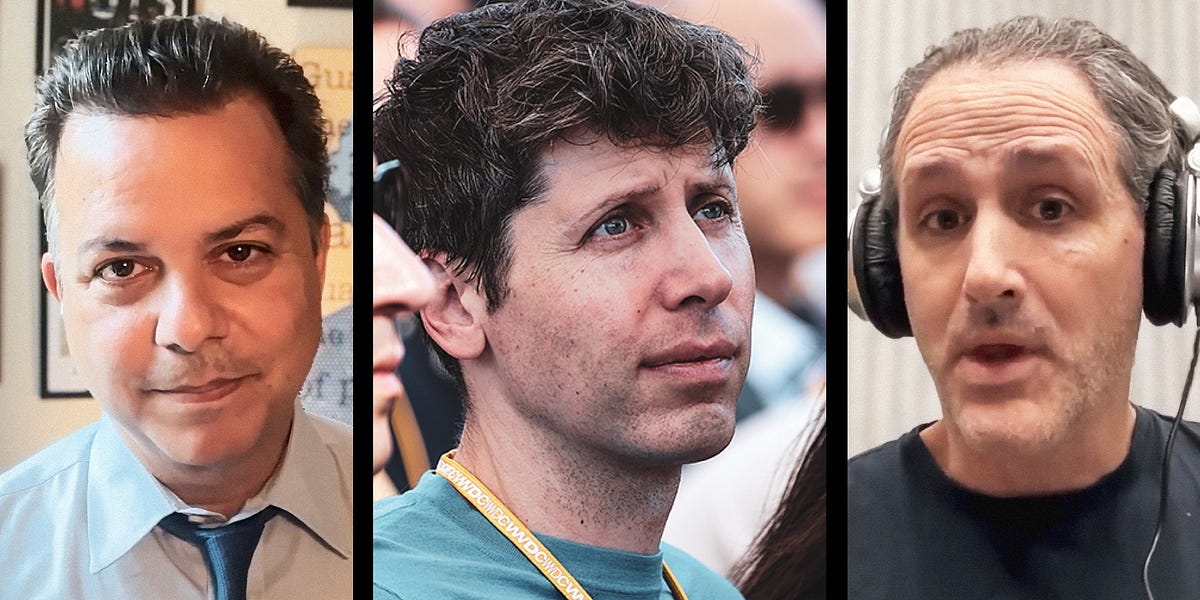
Cover image from thebulwark.com, which was analyzed for this article
Democrats and Republicans are united in concerns about AI, with polls showing public unease despite heavy midterm spending on tech and crypto. Warnings grow that AI could further erode democracy after social media.
PoliticalOS
Sunday, May 3, 2026 — Tech
Widespread public skepticism toward AI and crypto, centered on job losses, democratic risks and special-interest dominance, stands in sharp contrast to the record sums these industries are spending to shape the 2026 midterms. Despite courting candidates in both parties and pushing for uniform federal rules, the industries face the real possibility that financial influence will collide with voter distrust rather than overcome it. The most important reality is that past experience with social media has primed many Americans to view the next wave of technology with caution, making regulatory outcomes far from certain.
What outlets missed
Both outlets underplayed the IRS's documented AI expansion from 10 applications in 2022 to 126 currently deployed, alongside the specific GAO findings on management shortfalls, skills gaps and impending 25% workforce reductions that paint a more nuanced picture of implementation challenges rather than unqualified wins or unmitigated risks. Coverage also gave short shrift to rising real-world AI adoption, such as Quinnipiac data showing 51% of Americans using it for research, which sits alongside expressed skepticism and suggests the unease may be more abstract than absolute. The full scale of crypto PAC reserves, reported elsewhere as approaching $190 million entering the cycle, received only partial treatment, as did the explicit industry goal of securing federal preemption over state AI laws to avoid regulatory fragmentation. Finally, neither fully integrated how Operation Warp Speed's AI-adjacent tools were tied more closely to platforms like Palantir than to the core vaccine initiative itself, an unverified detail in promotional contexts that deserved clearer sourcing.
Americans Wary of AI as Industry Super PACs Flood Midterm Campaigns
A new poll finds Americans deeply uneasy about artificial intelligence and cryptocurrency even as allied super PACs pour record sums into the 2026 midterm elections, raising the prospect of voter backlash against candidates tied to the industries. The survey, conducted for POLITICO, shows that skepticism could complicate the tech sector’s effort to translate financial dominance into lasting political power at a moment when experts warn that AI threatens to inflict even greater damage on democracy than social media already has.
The numbers are striking. Respondents strongly preferred candidates backed by groups calling for stricter AI regulation over those supported by PACs pushing for looser rules. A similar pattern held for environmental protection groups over crypto-aligned organizations. Only 12 percent of those surveyed believe special interests have too little influence over American politics, while 41 percent say they wield too much. The AI and crypto super PACs stand out even in an era of big money, sometimes rivaling or exceeding the fundraising totals of traditional party committees. Their spending spans both parties, complicating simple partisan narratives but amplifying fears that unaccountable tech money is shaping the rules that will govern emerging technologies.
Senator Chris Murphy, a Connecticut Democrat who has repeatedly called for robust AI oversight, sees an opening. “Democrats’ best approach is to make their spending an issue,” he told POLITICO. “People do not want AI companies to run them over culturally and economically. They don’t trust crypto.” Murphy’s assessment reflects a broader public fatigue with the way technology platforms have already reshaped American life, often in ways that feel corrosive to shared reality and institutional trust.
That corrosion is central to conversations taking place beyond the campaign trail. In a wide-ranging discussion with John Avlon, former Bloomberg executive editor Josh Tyrangiel argues that the social media era demonstrated how rapidly new technologies can destabilize democratic norms, and that AI represents the next, more powerful chapter. Tyrangiel, whose forthcoming book is titled “AI for Good,” urges a clearer-eyed view of the technology beyond Silicon Valley marketing. He points to concrete successes where AI has already strengthened government capacity rather than undermined it.
Operation Warp Speed, the Trump-era initiative that dramatically accelerated COVID-19 vaccine development, relied on AI-driven modeling and data analysis to compress years of work into months. More quietly, the Internal Revenue Service has deployed machine learning tools to detect fraudulent tax returns and improve customer service, producing measurable efficiency gains without fanfare. These examples, Tyrangiel contends, show AI’s potential to make government more effective at delivering public goods when deployed thoughtfully.
Yet such wins remain rare. Tyrangiel identifies bureaucratic inertia, risk-averse procurement rules, and cultural resistance inside agencies as formidable obstacles. Government, he argues, has largely failed to build the internal expertise and flexible processes needed to harness AI for public benefit. The result is a vacuum that private industry is only too happy to fill, often on terms that prioritize speed, profit, and minimal oversight over democratic accountability.
This tension sits at the heart of the current political moment. While Tyrangiel makes the case for smarter government adoption of AI, the midterm landscape reveals how industry is instead leveraging its resources to shape policy in ways that could entrench its advantages. The super PACs aligned with AI interests are not merely advocating for innovation; they are actively working to prevent the kind of stringent regulation that a plurality of voters appear to support. The poll suggests that if voters come to view these efforts as self-serving attempts to evade accountability, the financial advantage could become a political liability.
The pattern echoes the social media experience that Tyrangiel and others cite as a cautionary tale. What began as tools for connection morphed into engines of polarization, misinformation, and institutional decay. Platforms optimized for engagement frequently amplified the most extreme voices, eroded trust in expertise, and left democratic institutions struggling to respond. Many of the same companies and investors are now central to the AI boom, promising transformative benefits while resisting the very guardrails that might channel those benefits toward the public interest.
The 2026 midterms will test whether voters distinguish between the technology’s genuine promise and the concentrated power behind its deployment. Early signals from the polling suggest many Americans already draw that distinction. They appear open to AI’s practical applications, from faster medical breakthroughs to more efficient public services, but they distrust the motives of an industry that has repeatedly demonstrated how quickly it will prioritize growth over societal consequences.
For now, the advantage lies with those who can write the largest checks. But the poll indicates that translating money into votes may prove more difficult than anticipated. If candidates closely associated with the push for light-touch AI regulation underperform, it could mark an early rebuke to the idea that technological inevitability must dictate political outcomes.
The deeper challenge extends beyond any single election cycle. Rebuilding government’s capacity to steer powerful new technologies, as Tyrangiel advocates, would require overcoming the very bureaucratic and cultural barriers he describes. Without that work, the alternative is clear: AI will be shaped primarily by the same forces that bent social media to commercial logic, with consequences that extend far beyond any midterm tally. Americans’ unease, the poll suggests, is not a rejection of progress. It is a demand that technological change serve democratic ends rather than undermine them. Whether politicians of either party prove capable of meeting that demand remains the central unanswered question of the AI era.
You just read Liberal's take. Want to read what actually happened?
More in Technology
Trump Pushes Community Dividends to Ease Data Center Backlash
Trump suggested tech companies pay local communities a 'dividend' to gain support for massive AI data centers amid growing backlash over energy use and infrastructure.
Musk Pledges One SpaceX Share to Every U.S. Child
Musk announced plans to distribute one SpaceX share to each of roughly 73 million American children next year, drawing praise from Trump and signaling closer alignment between the two.

Trump Administration Bans DeepSeek AI From Federal Civilian Agencies
Tech stocks rebounded on AI optimism while hyperscalers and firms navigate data center infrastructure, earnings focus, and regulatory scrutiny including bans on certain Chinese AI tools.

Musk Says He Will Give One SpaceX Share to Every US Child
Elon Musk announced plans to distribute one SpaceX share to every American child in 2027, with hints of further giveaways. The pledge drew coverage across outlets amid broader discussions of AI philanthropy and Musk entities.
The Compass
You just read five takes on one story.
What's your take? Find your political shape in a few minutes.
Take the test