
Voters Wary of AI and Crypto as Industry PACs Flood Midterms
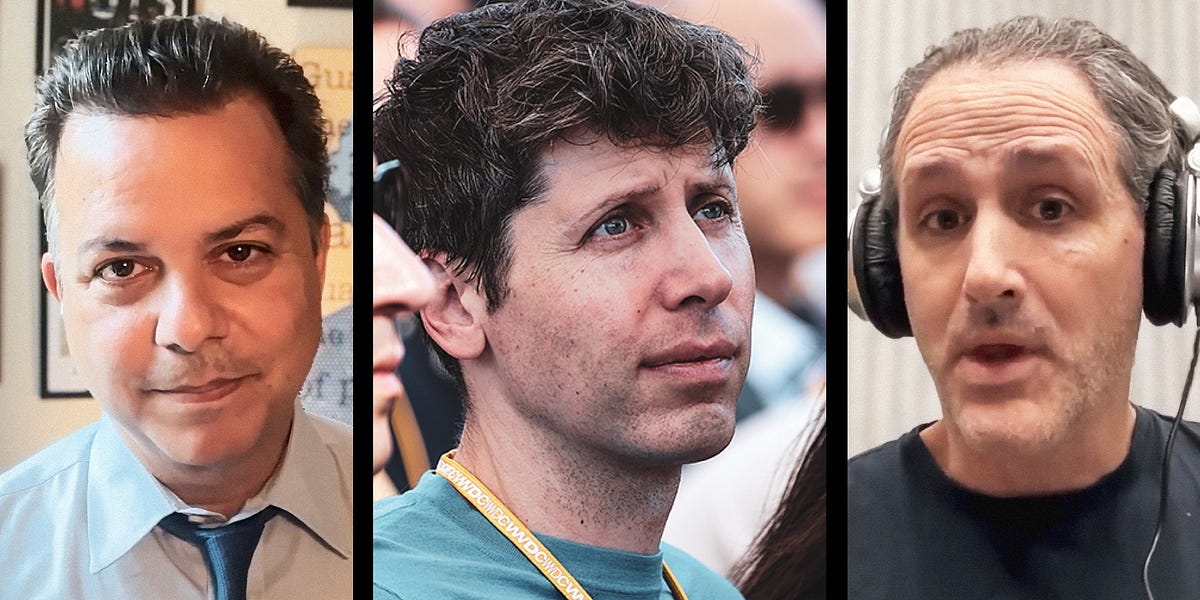
Cover image from thebulwark.com, which was analyzed for this article
Democrats and Republicans are united in concerns about AI, with polls showing public unease despite heavy midterm spending on tech and crypto. Warnings grow that AI could further erode democracy after social media.
PoliticalOS
Sunday, May 3, 2026 — Tech
Widespread public skepticism toward AI and crypto, centered on job losses, democratic risks and special-interest dominance, stands in sharp contrast to the record sums these industries are spending to shape the 2026 midterms. Despite courting candidates in both parties and pushing for uniform federal rules, the industries face the real possibility that financial influence will collide with voter distrust rather than overcome it. The most important reality is that past experience with social media has primed many Americans to view the next wave of technology with caution, making regulatory outcomes far from certain.
What outlets missed
Both outlets underplayed the IRS's documented AI expansion from 10 applications in 2022 to 126 currently deployed, alongside the specific GAO findings on management shortfalls, skills gaps and impending 25% workforce reductions that paint a more nuanced picture of implementation challenges rather than unqualified wins or unmitigated risks. Coverage also gave short shrift to rising real-world AI adoption, such as Quinnipiac data showing 51% of Americans using it for research, which sits alongside expressed skepticism and suggests the unease may be more abstract than absolute. The full scale of crypto PAC reserves, reported elsewhere as approaching $190 million entering the cycle, received only partial treatment, as did the explicit industry goal of securing federal preemption over state AI laws to avoid regulatory fragmentation. Finally, neither fully integrated how Operation Warp Speed's AI-adjacent tools were tied more closely to platforms like Palantir than to the core vaccine initiative itself, an unverified detail in promotional contexts that deserved clearer sourcing.
Voters Fear Techs AI Power Grab as Super PACs Flood Midterms With Cash
Americans are growing increasingly uneasy about artificial intelligence and cryptocurrency even as industry-aligned super PACs pour unprecedented money into the 2026 midterm elections, a new poll shows, amplifying warnings that the same forces that destabilized democracy through social media are preparing to do it again with more powerful tools.
The survey, released amid a surge in tech and crypto political spending, reveals a clear preference among voters for candidates who back stricter regulations on artificial intelligence rather than those pushing to loosen oversight. In hypothetical head-to-head matchups, respondents consistently favored campaigns advocating tighter rules on AI and tech companies over groups seeking deregulation. Support was even stronger for organizations focused on environmental protection and combating climate change. The results expose a widening gap between the industries massive financial investments in politics and the publics deep skepticism about their intentions.
This unease presents an immediate challenge for the super PACs that have rapidly become some of the most dominant forces in American elections. These groups, flush with money from AI and crypto interests, are rivaling traditional party organizations in fundraising and spending heavily to support candidates across party lines. Their goal is transparent: translate economic power into regulatory relief and political influence. Yet the poll suggests that strategy could backfire, producing the kind of voter backlash that has long haunted unchecked corporate influence in Washington.
Senator Chris Murphy, a Connecticut Democrat who has repeatedly sounded alarms about artificial intelligence, did not mince words. People do not want AI companies to run them over culturally and economically, Murphy said. They dont trust crypto. His assessment aligns with broader discontent captured in the survey. Forty-one percent of respondents believe special interest groups already wield too much power in American politics, while only 12 percent say they have too little. Just 23 percent think the current level of influence is appropriate. In this environment, the rise of AI and crypto super PACs stands out as particularly concerning because it represents a new scale of concentrated power from industries already viewed with suspicion.
These findings arrive at a moment when prominent voices are explicitly connecting techs past failures to the looming dangers of artificial intelligence. In a wide-ranging conversation, journalist John Avlon spoke with Josh Tyrangiel, author of the forthcoming book AI for Good, about what AI actually looks like once the Silicon Valley hype is stripped away. The discussion painted a sobering picture. Tech broke democracy with social media, the conversation underscored, and AI is next unless policymakers approach the technology with far more wisdom than they showed in the last decade.
Tyrangiel pointed to genuine successes that demonstrate AIs potential when deployed thoughtfully. Artificial intelligence played a significant role in Operation Warp Speed, helping to accelerate the development and distribution of COVID-19 vaccines at a pace once thought impossible. More quietly, the Internal Revenue Service has used AI tools to modernize operations, improving efficiency in ways that directly benefit taxpayers without fanfare. These examples, however, remain exceptions rather than the rule. Bureaucratic inertia, outdated procurement rules, and risk-averse government culture have largely prevented wider adoption of AI for public benefit.
The rarity of these positive applications is not accidental, Tyrangiel argued. It reflects a systemic failure to integrate transformative technology into government in ways that serve the broader public rather than private profit. A smarter approach, he suggested, would require cutting through red tape while maintaining democratic accountability, something Washington has repeatedly failed to do when confronting powerful industries. The conversation served as both a cautious endorsement of AIs possibilities and a stark reminder of its risks. Social media platforms were once celebrated as tools of liberation and connection. Instead they supercharged polarization, amplified disinformation, and eroded trust in everything from elections to expertise. Many fear AI, with its capacity to generate convincing falsehoods at scale and reshape entire economies overnight, could intensify those harms exponentially.
This tension between potential benefit and democratic risk sits at the heart of the current political moment. While proponents inside Silicon Valley and on Capitol Hill tout AI as an unstoppable force for progress, the American public appears far less convinced. The poll makes clear that voters draw sharp distinctions between innovation and unchecked power. They are not rejecting technology itself but the idea that the companies developing it should be allowed to write their own rules while spending lavishly to shape elections.
Democrats, Murphy suggested, would be wise to make this spending itself a central campaign issue. By highlighting how AI and crypto interests are attempting to buy influence over regulation, candidates could tap into widespread frustration with a political system that too often seems rigged for the wealthy and well-connected. Republicans, meanwhile, must navigate their own complicated relationship with these industries, balancing traditional skepticism of regulation against the reality that many voters in their base share the same distrust of Big Tech.
The midterm landscape is still taking shape, and it remains too early to predict exactly how candidates tied to these super PACs will perform. What the polling and expert analysis both make clear, however, is that the battle over artificial intelligence is no longer confined to Silicon Valley boardrooms or academic conferences. It has become a central political struggle over who controls the technology that will define the next generation of American life.
If the past decade of social media has taught anything, it is that profound technological change rarely delivers only the upsides its creators promise. The public appears to have absorbed that lesson. Whether politicians heed the warning and impose meaningful guardrails before AI further erodes democratic norms will likely rank among the most consequential decisions of the coming years. For now, voters are signaling loud and clear that they want a seat at the table, not to be run over by another wave of unaccountable tech power.
You just read Progressive's take. Want to read what actually happened?
More in Technology
Trump Pushes Community Dividends to Ease Data Center Backlash
Trump suggested tech companies pay local communities a 'dividend' to gain support for massive AI data centers amid growing backlash over energy use and infrastructure.
Musk Pledges One SpaceX Share to Every U.S. Child
Musk announced plans to distribute one SpaceX share to each of roughly 73 million American children next year, drawing praise from Trump and signaling closer alignment between the two.

Trump Administration Bans DeepSeek AI From Federal Civilian Agencies
Tech stocks rebounded on AI optimism while hyperscalers and firms navigate data center infrastructure, earnings focus, and regulatory scrutiny including bans on certain Chinese AI tools.

Musk Says He Will Give One SpaceX Share to Every US Child
Elon Musk announced plans to distribute one SpaceX share to every American child in 2027, with hints of further giveaways. The pledge drew coverage across outlets amid broader discussions of AI philanthropy and Musk entities.
The Compass
You just read five takes on one story.
What's your take? Find your political shape in a few minutes.
Take the test