
Liberals and Conservatives Unite to Block AI Data Centers
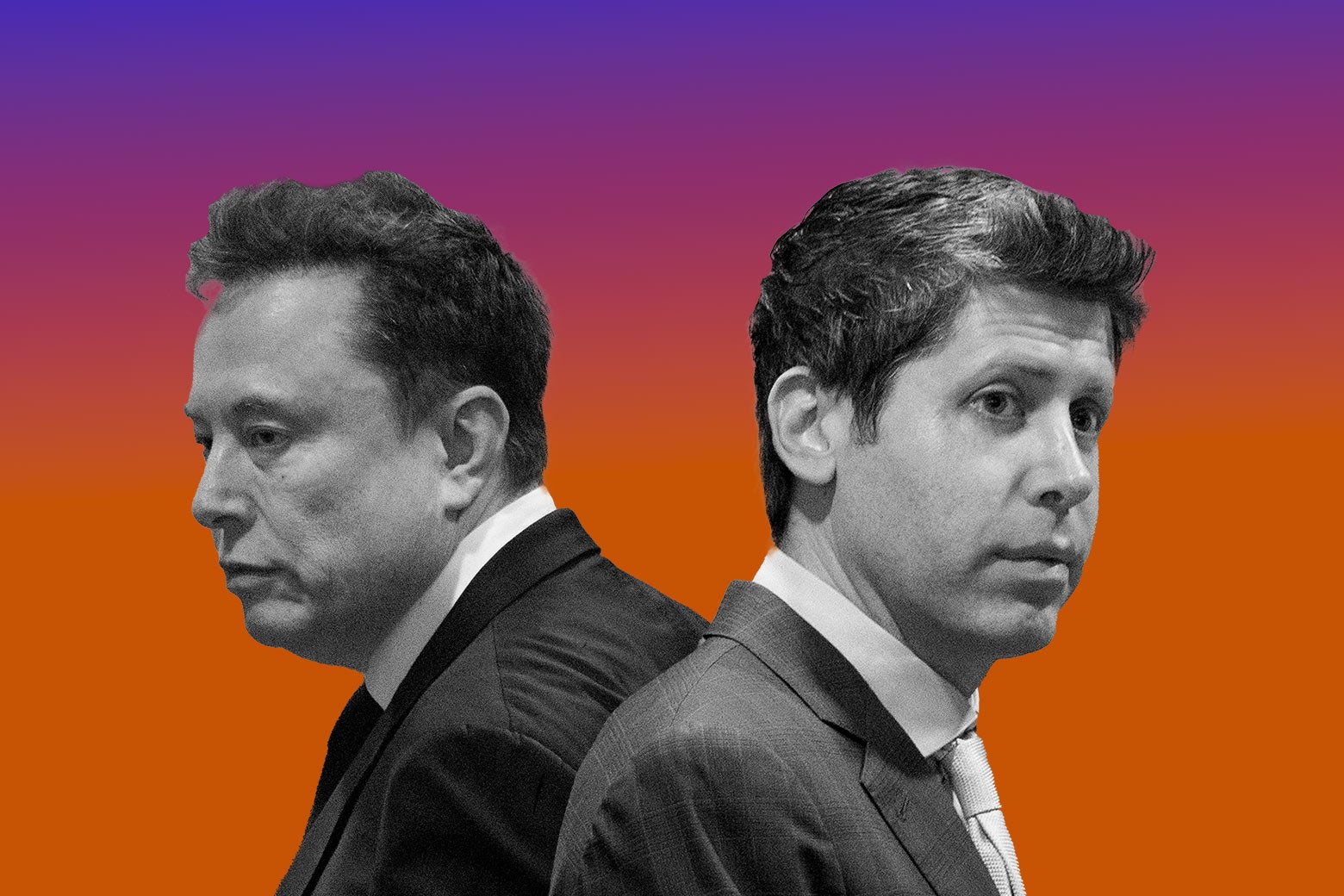
Cover image from slate.com, which was analyzed for this article
Liberals and conservatives oppose new hyperscale AI data centers due to energy demands and land use, per polls. Resistance grows in states like Michigan against tech infrastructure boom. AI investments clash with community concerns.
PoliticalOS
Friday, May 1, 2026 — Tech
The AI boom's physical footprint has created an unexpected bipartisan revolt in communities asked to host massive data centers. Residents across political lines cite higher energy costs, land consumption, secrecy and limited permanent jobs, forcing politicians to confront trade-offs that national rhetoric about innovation often ignores. How lawmakers balance these local concerns with the industry's growth will shape both 2026 elections and the regulatory environment for AI itself.
What outlets missed
Most coverage omitted detailed comparisons between promised construction jobs and the far smaller number of permanent positions that remain once centers operate, a discrepancy that explains much resident skepticism. Outlets also underreported the scale of blocked or delayed projects nationwide, with one tracker estimating more than $64 billion affected across 28 states. Coverage gave limited attention to the specific mechanics of state tax incentives that accelerated proposals while leaving townships without resources to evaluate them. Redacted utility contracts and their legal challenges received only passing mention despite revealing deeper transparency problems. Finally, few connected the local land-use fights to parallel national debates over AI safety legislation and high-stakes primary spending, leaving readers without the full picture of how physical infrastructure disputes are reshaping both local and federal policy.
AI Billionaires Clash in Court and Congress as Americans Unite Against Data Centers
As Elon Musk escalates his legal fight against Sam Altman, other tech billionaires are pouring millions into a New York congressional race that has become a proxy battle over artificial intelligence regulation, even as communities across the political spectrum mobilize against the sprawling data centers that power the technology.
The Musk lawsuit, the subject of intense discussion this week, represents the latest chapter in the bitter rift between the two men over OpenAI’s direction. Musk, who has long warned about the existential dangers of unchecked AI development, is taking Altman to court in a move that underscores the personal, philosophical, and financial stakes involved when a handful of extraordinarily wealthy individuals shape a technology that promises to transform society.
That same power struggle is playing out on the campaign trail in Manhattan. Chris Larsen, the California-based billionaire behind Ripple Labs, announced plans to spend $3.5 million to support Alex Bores, a state assemblyman running for Congress. Bores co-authored legislation that established some of the nation’s most substantive AI rules in New York, including transparency requirements and safeguards around high-risk uses of the technology. His efforts have drawn fierce opposition from a super PAC aligned with OpenAI, which has blanketed the airwaves with attack ads intended to make Bores an example for any lawmaker considering state-level regulation.
Larsen did not mince words about the campaign against Bores, calling the effort “really despicable.” OpenAI, for its part, has lobbied for light-touch federal rules that protect what it calls the “freedom to innovate,” while resisting a patchwork of stricter state laws that could slow deployment or raise compliance costs. The seven-figure intervention from Larsen has transformed the Democratic primary into one of the most expensive House races in the country, turning a local contest into a national referendum on who gets to write the rules for an industry already worth hundreds of billions of dollars.
This elite maneuvering stands in sharp contrast to the anger bubbling up from ordinary neighborhoods where the physical infrastructure of AI is being built. Across the country, large data centers have become lightning rods for opposition from both liberals and conservatives, a rare point of agreement in an otherwise fractured political landscape.
In Lyon Township, Michigan, a recent town board meeting that was supposed to address a routine drainage easement instead drew dozens of residents prepared to speak for hours about a proposed hyperscale data center. One man in a black puffer vest reminded the board that a single 1.8-million-square-foot facility equals roughly 32 NFL football fields. A motorcyclist raised concerns about traffic. Others questioned whether proper environmental reviews had been completed to protect endangered bat habitats. A woman in a pink shirt played a recording of the low, constant roar emitted by a similar facility in another Michigan town, forcing board members to listen as her allotted time expired.
The sentiment is not confined to one party or region. Ryan Wagner, a local activist, has joined forces with Mitch Distin, an evolutionary biologist and Democrat, in opposing these projects. Their collaboration reflects a broader trend: polls now show widespread public disillusionment with data centers. Liberals cite the massive energy and water demands that strain electrical grids and exacerbate climate change. Conservatives decry the loss of local control, the industrialization of farmland, and the transformation of quiet communities into humming server farms.
These facilities are not optional. Training and running today’s advanced AI models requires enormous computing power. A single large language model can consume as much electricity as thousands of households. The race between companies like OpenAI, Google, and xAI to build ever more powerful systems is driving a construction boom that often lands in communities with cheap land and available power before residents fully understand what is coming.
The New York legislation Bores helped write attempts to address some of these downstream effects by requiring impact assessments, bias audits, and restrictions on certain automated decision-making tools. OpenAI’s super PAC clearly views such measures as a threat. By trying to defeat Bores, the industry hopes to send a message that challenging the AI gold rush carries a political price.
Yet the bipartisan backlash against data centers suggests that message may not land as intended. In an era when Americans disagree about almost everything, from elections to electric vehicles, the visceral, immediate impacts of these windowless industrial buildings have created unlikely alliances. Residents are not debating AI safety in the abstract. They are measuring noise levels, calculating electricity bills, and watching tractor-trailers roll through towns that were never designed for them.
The convergence of Musk’s lawsuit, Larsen’s campaign spending, and grassroots opposition highlights a central tension: the people who stand to profit most from AI are fighting for control of its governance, while the costs of that development are being borne by everyone else. As midterm primaries heat up and more communities confront data center proposals, the question is whether elected officials will listen to the billionaires writing checks or the constituents showing up at town halls with noise recordings and zoning concerns.
For now, the answer remains unsettled. What is clear is that artificial intelligence is no longer a futuristic abstraction. It is a political, environmental, and economic reality that is already reshaping campaigns, court dockets, and quiet Michigan town meetings alike.
You just read Progressive's take. Want to read what actually happened?
More in Technology
Trump Pushes Community Dividends to Ease Data Center Backlash
Trump suggested tech companies pay local communities a 'dividend' to gain support for massive AI data centers amid growing backlash over energy use and infrastructure.
Musk Pledges One SpaceX Share to Every U.S. Child
Musk announced plans to distribute one SpaceX share to each of roughly 73 million American children next year, drawing praise from Trump and signaling closer alignment between the two.

Trump Administration Bans DeepSeek AI From Federal Civilian Agencies
Tech stocks rebounded on AI optimism while hyperscalers and firms navigate data center infrastructure, earnings focus, and regulatory scrutiny including bans on certain Chinese AI tools.

Musk Says He Will Give One SpaceX Share to Every US Child
Elon Musk announced plans to distribute one SpaceX share to every American child in 2027, with hints of further giveaways. The pledge drew coverage across outlets amid broader discussions of AI philanthropy and Musk entities.
The Compass
You just read five takes on one story.
What's your take? Find your political shape in a few minutes.
Take the test