
Florida Approves GOP-Leaning Map as SCOTUS Ruling Reshapes Redistricting
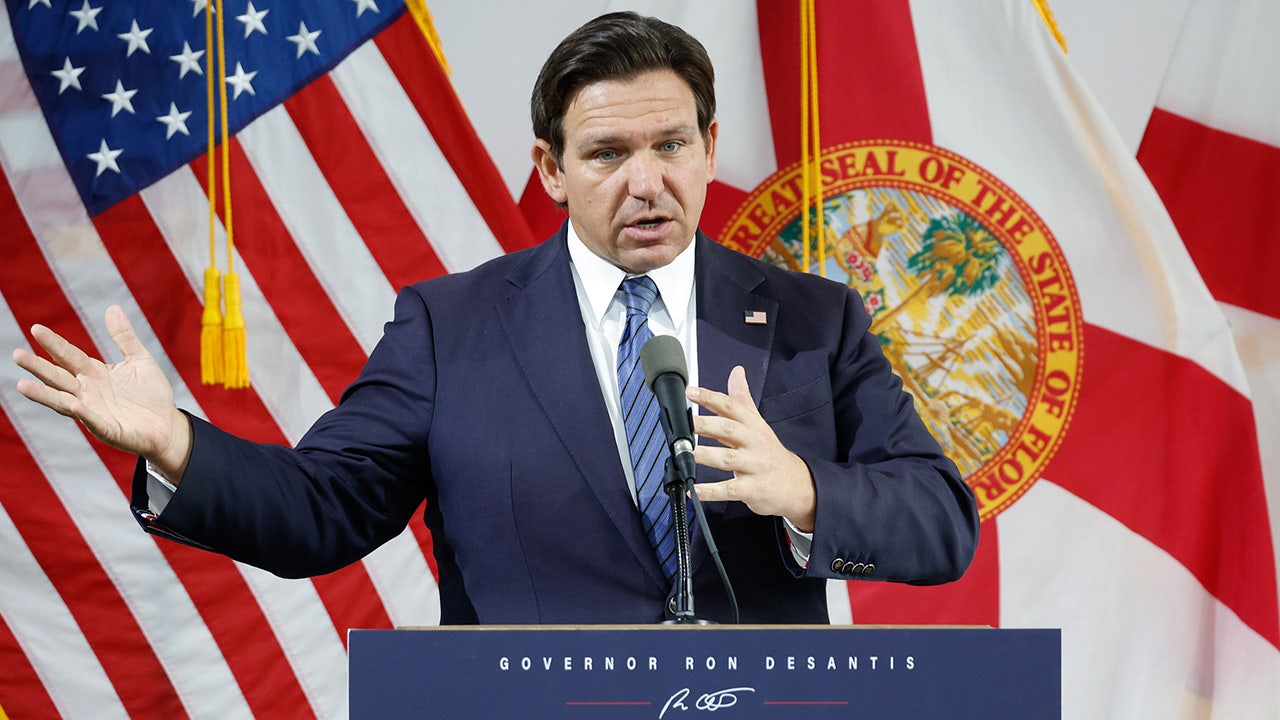
Cover image from foxnews.com, which was analyzed for this article
Florida lawmakers approved a new congressional voting map poised to help Republicans secure additional House seats, leveraging the Supreme Court's recent Voting Rights Act decision. The move boosts DeSantis' redistricting efforts and aligns with potential GOP gains nationwide. Democrats express regret over prior independent commissions now vulnerable.
PoliticalOS
Thursday, April 30, 2026 — Politics
The Supreme Court's narrowing of race-conscious districting under the Voting Rights Act has removed a significant constraint on mapmakers, prompting an immediate wave of partisan redistricting that Florida has now joined. Both parties are exploiting the opening, meaning the story is less about one-sided suppression than a mutual escalation with uncertain effects on minority representation and House balance. The single most important reality is that legal standards for drawing districts have changed, and the resulting maps will face further court tests before the 2026 elections settle the matter.
What outlets missed
Most outlets underplayed the procedural reality that mid-decade redistricting absent new census data has historically invited legal skepticism, yet both parties are now pursuing it aggressively with uncertain court outcomes. Coverage also gave limited attention to Democratic regrets over independent redistricting commissions created after 2010 abuses; several blue states are now moving to bypass or eliminate those commissions to enable their own partisan maps. The precise mechanics of the Supreme Court opinion, which struck down one specific Louisiana map as an unconstitutional racial gerrymander while leaving parts of Section 2 intact, received uneven treatment, with some reports framing the entire decision as eliminating minority protections rather than rebalancing constitutional considerations. Finally, few noted that Black voters and candidates were among those challenging the Louisiana map at issue, complicating the narrative of a simple partisan or racial divide.
Republicans stand to gain as many as four congressional seats in Florida alone after state lawmakers approved a new district map late Wednesday. The plan, advanced by Gov. Ron DeSantis and enabled by this week's Supreme Court decision limiting race-based map drawing, arrives at a moment when both parties have abandoned norms against mid-decade redistricting to chase House control in 2026. What once required a new census now unfolds through aggressive legislative sessions and legal reinterpretation. The central tension is stark: a court finding that racial considerations cannot predominate in drawing lines without violating the 14th Amendment, set against warnings that minority voting strength will erode as a result.
The 6-3 ruling came in a Louisiana case where the state legislature had created a second majority-Black district under pressure from lower courts applying Section 2 of the Voting Rights Act. Justice Samuel Alito, writing for the conservative majority, cited "vast social change" since 1965. Black voter registration and turnout in the South now approximate or exceed white rates in many jurisdictions, he noted, drawing on earlier opinions. The decision did not eliminate Section 2 but narrowed its application, stating that traditional districting principles such as compactness, contiguity and respect for political subdivisions must not yield to race as the dominant factor. Justice Elena Kagan dissented, joined by the court's two other liberals. She argued that only Congress can decide when the law has outlived its usefulness and warned that recent gains in Black officeholding may not survive without federal protections.
Florida's new map moves quickly to capitalize on that opening. The state currently holds a 20-8 Republican advantage in its congressional delegation, according to Ballotpedia tracking. The approved boundaries are projected to flip up to four Democratic-held seats by concentrating Democratic voters into fewer districts while spreading Republican-leaning areas. DeSantis released the proposal earlier in the week. The Republican-led legislature passed it in a special session. The governor is expected to sign it into law for use in next year's midterms.
This Florida action forms one piece of a national scramble. President Trump urged GOP-led states last year to redraw maps outside the normal decennial cycle. Republicans now project gains of nine to 13 seats across states including Ohio, North Carolina, Texas and Missouri, per analyses cited by multiple outlets. Democrats have responded in kind. Maryland lawmakers advanced a map targeting the state's only Republican-held seat. Virginia Democrats secured advantages through a recent referendum. In California and New York, officials explore ways to suspend or override independent redistricting commissions established to curb partisanship. Those commissions, once praised by Democrats as good-government reforms, are now viewed by some in the party as liabilities.
Reactions split along predictable lines. Rep. Byron Donalds, a Florida Republican running for governor, endorsed the map without reservation. He pointed to past Democratic efforts, including a New York map struck down by state courts for overly aggressive gerrymandering. House Minority Leader Hakeem Jeffries called the broader GOP strategy risky and warned it could jeopardize Republican incumbents. California Gov. Gavin Newsom suggested Florida's move might mark the end of a dangerous arms race in map manipulation. Democrats from affected districts, including Rep. Sanford Bishop of Georgia and Rep. Cleo Fields of Louisiana, described the moment as leaving minority voters exposed. Harvard law professor Nicholas Stephanopoulos told the Washington Post the ruling could produce the largest decline in minority representation since Reconstruction.
Yet the picture is not one-sided. Conservative officials, including Alabama Attorney General Steve Marshall, welcomed the decision as ending what they called racial quotas in mapmaking. They argue the Voting Rights Act was never intended to require proportional representation by race. Litigation is certain. The American Civil Liberties Union and other groups have signaled plans to challenge maps under remaining federal and state provisions. Timing complicates matters. Several states have primaries already underway or early voting deadlines that make immediate changes difficult. Louisiana's governor has signaled possible delays to its May primaries. In Georgia and Tennessee, Republican candidates for governor are pressing for special sessions, but legal and calendar obstacles remain.
Numbers circulating in coverage vary. Projections of nationwide Republican gains range from nine seats in some Republican analyses to as many as 19 districts at risk in the South according to groups like Fair Fight Action and Black Voters Matter. These figures could not be independently verified in full and depend on assumptions about future court rulings and map finalization. What is clear is that the Supreme Court has shifted the legal terrain. Earlier decisions, including Shelby County v. Holder in 2013 and Brnovich v. Democratic National Committee in 2021, had already narrowed the act. Wednesday's opinion continues that trend while insisting that progress against discrimination does not justify perpetual race-based remedies.
The stakes reach beyond any single state's delegation. Control of the House in 2027 and 2029 will shape tax policy, spending priorities and oversight of the executive branch. Redistricting also determines which voices hold power in Washington for the next half-decade. Both parties have abandoned earlier rhetoric against partisan mapmaking when it suits them. Florida's map is now law. Similar battles play out from the Deep South to the Mountain West. The unresolved question is whether courts will allow these mid-decade changes to stand or whether new legal standards will once again redraw the lines.
More in Politics

Federal Agents Search Omar Home in Ongoing Immigration Probe
Homeland Security agents searched the Minnesota Democrat's DC residence in a criminal probe, prompting accusations of political intimidation from Omar and Democratic leaders. Coverage spans left-leaning outlets like NPR, BBC, and The Guardian alongside right-leaning criticism from The Federalist and Daily Wire.

Trump Diesel Import Plan Draws Pushback Over Russia Ties
The weekend agreement drew bipartisan congressional pushback and criticism from Ukraine's Zelenskyy, with analysts downplaying US fuel price impacts. Right-leaning outlets like National Review, Dispatch, and Washington Examiner questioned its legality and effectiveness.

Independents Test Voter Appetite for Middle Ground in 2026 Midterms
Nearly 200 independents are running in competitive races as voters weigh ballot measures on housing costs in states like Massachusetts. Left-leaning coverage from NYT, NPR, and Guardian highlights turnout and key races while right outlets focus on GOP strategy.

Trump Rallies in Alaska, Ohio to Bolster GOP Senate Candidates
The president rallied in Wasilla for Sen. Dan Sullivan and faced empty seats at an Ohio event amid midterm concerns. Outlets across the spectrum covered the trips as signals of GOP vulnerability weeks before Election Day.
The Compass
You just read five takes on one story.
What's your take? Find your political shape in a few minutes.
Take the test