
Trump Extends Israel-Lebanon Ceasefire as Hormuz Blockade Enters Week 8 of Iran War
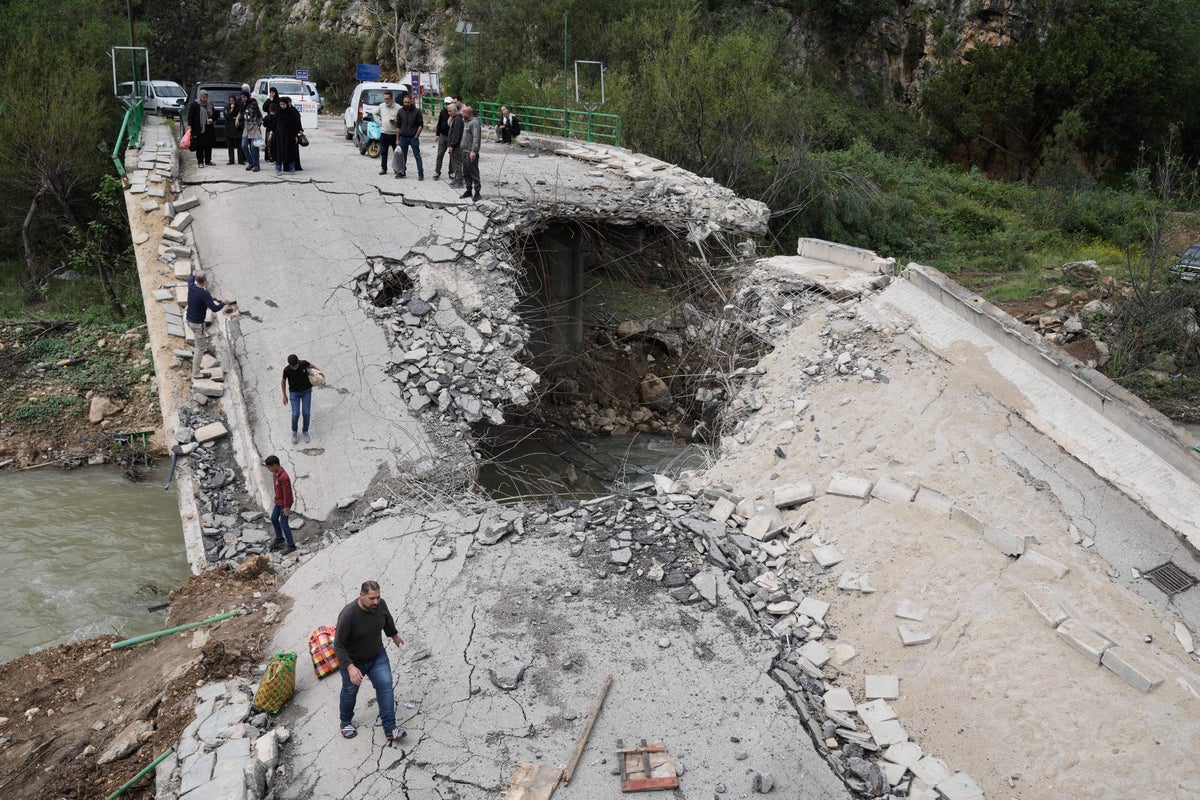
Cover image from independent.co.uk, which was analyzed for this article
President Trump extends the Israel-Lebanon ceasefire amid day 56 of the Iran war, with Hegseth and Caine briefing on 'epic fury' in the Strait of Hormuz including shoot-and-kill orders and minimal shipping. Israeli strikes continue despite truce, as Iran delegation heads to Pakistan for talks. Global allies strain under US pressure.
PoliticalOS
Friday, April 24, 2026 — Politics
The Iran conflict sits in an uneasy pause where the U.S. Hormuz blockade exerts real pressure yet Iran has adapted through higher oil prices, floating storage and willingness to endure longer than Washington may prefer. Diplomatic channels in Pakistan remain active but fragile, while the separate Israel-Lebanon ceasefire is repeatedly tested by strikes and retaliatory fire. The single most important reality is that economic pain is mutual, shipping data is opaque, and any miscalculation risks rapid escalation; readers should track primary military releases and trade-intelligence numbers rather than any single outlet's framing.
What outlets missed
Most coverage underplayed documented U.S. casualties, including six soldiers killed by an Iranian drone on March 1 and the loss of a KC-135 tanker with four crew on March 12, per CENTCOM. Outlets also gave short shrift to Iran's actual oil export revenues rising about 40 percent in March-April due to prices above $90-100 per barrel despite the blockade, with 160-170 million barrels already afloat providing cash flow potentially into August. Iranian mine-laying that tripled before U.S. minesweeping, attacks on energy infrastructure across six Gulf states, and the precise timeline of mutual escalations (Iran closing the strait March 2, U.S. blockade April 13) received uneven attention. Finally, the fragility of the Israel-Lebanon truce was often buried; Israeli strikes killed a journalist and others the day before the extension announcement, while Hezbollah conducted four operations in response.
Soaring oil prices and fears of prolonged global disruption now hang over a fragile pause in the Iran conflict. On day 56 of fighting that began Feb. 28 with U.S. and Israeli strikes, President Trump extended a three-week ceasefire between Israel and Lebanon while U.S. forces continue enforcing a naval blockade targeting Iranian ports and shipping in the Strait of Hormuz. The central tension is whether diplomacy, including reported Iranian talks in Pakistan, can produce a lasting agreement before economic strain, naval incidents or renewed strikes unravel the pause.
Trump announced the Lebanon extension after White House meetings with Israeli ambassador Yechiel Leiter and Lebanese ambassador Nada Moawad, attended by Vice President JD Vance and Secretary of State Marco Rubio. The original truce, reached in mid-April, had reduced violence but not eliminated it. Israeli strikes the day before the announcement killed at least five people in Lebanon, including journalist Amal Khalil, according to Lebanese officials and her employer Al-Akhbar. Hezbollah fired rockets, drones and a missile at Israeli forces and aircraft in response; Israel said it targeted militant infrastructure and killed three Hezbollah members. No injuries were reported on the Israeli side. Nearly 2,500 people have died in Lebanon since early March, per Lebanese authorities. Israel maintains a 5-to-10-kilometer buffer zone in southern Lebanon.
At the Pentagon, Defense Secretary Pete Hegseth and Joint Chiefs Chairman Gen. Dan Caine briefed on Operation Epic Fury, the U.S. air campaign. One account described it as the most intensive of the 21st century with roughly 1,000 sorties per day early on; those figures could not be independently verified in other reporting. The U.S. has maintained the Hormuz naval enforcement with orders to use live fire when necessary against Iranian small boats, Trump himself stating he directed forces to "shoot and kill" such vessels. Shipping through the strait has dropped sharply. Iran declared the U.S. actions illegal and responded by closing the waterway to foreign vessels, capturing several ships, laying mines and imposing tolls on some traffic, according to multiple regional reports. Iran has continued limited oil exports, earning elevated revenue because prices climbed above $100 per barrel on many days.
Analysts cited across outlets note Iran exported about 1.7 million barrels per day in April at higher prices, generating roughly 40 percent more revenue in the past month than in early February before the war. Tehran holds floating storage estimated at 127 to 170 million barrels that could sustain cash flow into August, according to trade intelligence firm Kpler, former Congressional Research Service analyst Kenneth Katzman and Middle East Council fellow Frederic Schneider. Iran has also collected initial "toll booth" payments, some in Chinese yuan. At the same time, the blockade has strained storage at Kharg Island, prompting reactivation of an aging tanker for floating storage. Schneider and former U.S. ambassador Adam Ereli told Al Jazeera that Iran appears prepared for a long game, while Trump faces a May 1 deadline after which congressional approval is needed for continued offensive operations.
Iranian officials projected unity despite Trump's claims of internal collapse and leadership confusion following the death of Supreme Leader Ali Khamenei in the opening strikes. President Masoud Pezeshkian, Parliament Speaker Mohammad Bagher Ghalibaf and Foreign Minister Abbas Araghchi issued statements rejecting factionalism. "We are all Iranians and revolutionaries," they said. A senior Iranian delegation led by Araghchi was reported heading to Pakistan for potential ceasefire talks, according to New York Post sources; other outlets described earlier rounds as stalled after roughly 21 hours with U.S. demands labeled maximalist. The White House has not confirmed the latest movement.
European Union foreign policy chief Kaja Kallas warned that narrow nuclear-focused talks risk producing a weaker deal than the 2015 JCPOA and could leave Iran more dangerous if missile, proxy and cyber issues are sidelined. A Turkish medical aid convoy crossed into Iran on Friday. Global allies have expressed strain from disrupted energy flows and U.S. pressure. One unverified claim in early coverage put daily Iranian losses at $500 million; analysts instead describe mixed economic pain buffered by reserves and alternative routes. Six U.S. soldiers were killed by an Iranian drone on March 1 and a KC-135 tanker was lost March 12 with four crew, according to CENTCOM data referenced in several analyses; Iranian strikes also hit bases in Gulf states. These details appeared inconsistently across initial reporting.
The blockade began April 13. Iran had already restricted the strait to non-friendly vessels after early March. Exactly how many ships evade enforcement remains unclear. What is clear is that 20 percent of global oil trade normally transits the waterway; current volumes are sharply lower, prices elevated and patience on all sides tested.
More in Politics

Federal Agents Search Omar Home in Ongoing Immigration Probe
Homeland Security agents searched the Minnesota Democrat's DC residence in a criminal probe, prompting accusations of political intimidation from Omar and Democratic leaders. Coverage spans left-leaning outlets like NPR, BBC, and The Guardian alongside right-leaning criticism from The Federalist and Daily Wire.

Trump Diesel Import Plan Draws Pushback Over Russia Ties
The weekend agreement drew bipartisan congressional pushback and criticism from Ukraine's Zelenskyy, with analysts downplaying US fuel price impacts. Right-leaning outlets like National Review, Dispatch, and Washington Examiner questioned its legality and effectiveness.

Independents Test Voter Appetite for Middle Ground in 2026 Midterms
Nearly 200 independents are running in competitive races as voters weigh ballot measures on housing costs in states like Massachusetts. Left-leaning coverage from NYT, NPR, and Guardian highlights turnout and key races while right outlets focus on GOP strategy.
Trump Rallies in Alaska, Ohio to Bolster GOP Senate Candidates
The president rallied in Wasilla for Sen. Dan Sullivan and faced empty seats at an Ohio event amid midterm concerns. Outlets across the spectrum covered the trips as signals of GOP vulnerability weeks before Election Day.
The Compass
You just read five takes on one story.
What's your take? Find your political shape in a few minutes.
Take the test