
JD Vance's Loyalty Tested as GOP Questions His Path to 2028
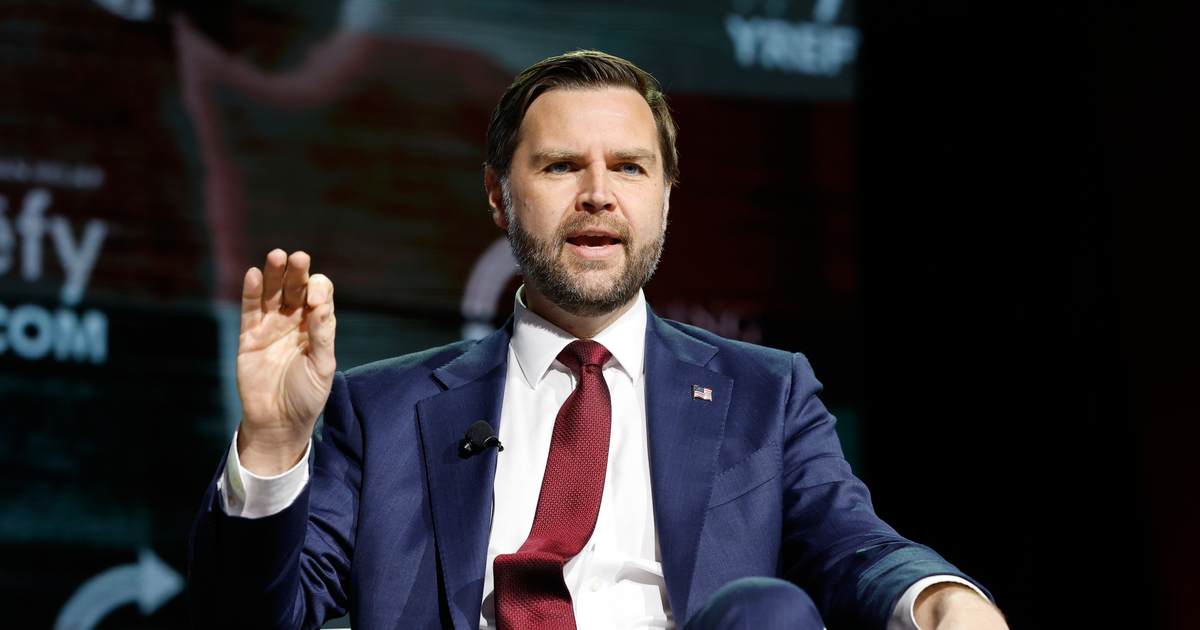
Cover image from townhall.com, which was analyzed for this article
Observers suggest JD Vance must break from Trump soon to rescue his career in a changing GOP landscape. Coverage portrays him as an enigma whose loyalty could determine his viability. Debates reflect broader tensions within Republican ranks.
PoliticalOS
Sunday, April 19, 2026 — Politics
JD Vance's political future depends on balancing demonstrated loyalty to Donald Trump against the need to define his own voice on issues such as Israel policy, religious engagement and foreign interventions. Many dramatic claims about his recent missteps remain unverified across outlets, underscoring the importance of distinguishing opinion from corroborated reporting. In a party still centered on Trump, Vance's adaptability, already evident in his ideological shifts, will likely determine whether he emerges as a unifying 2028 figure or becomes defined by unresolved internal tensions.
What outlets missed
Both analyzed columns leaned heavily on specific anecdotes that could not be independently verified in reporting from PBS, CNN, Forbes or the Times of Israel, including Vance's alleged tarmac comments on Lebanon, his precise role in Islamabad talks, and details of a Turning Point USA event reaction from Ben Shapiro. Coverage across outlets underplayed Vance's documented pro-Israel record, such as his public rejection of claims that Israel exerts undue influence over Trump and his defense of continued aid, as noted in Middle East Monitor and TRT World reporting from late 2025. Multiple pieces omitted granular theological context from Vance's exchange with Pope Leo XIV, in which he referenced truth-telling and historical examples rather than simply telling the Pope to avoid moral commentary on war. The analyses also gave short shrift to corroborated Trump administration outcomes, including early military recruiting successes and reported damage from Iran operations, which supporters argue bolster the case for continuity through Vance.
Vice President JD Vance stands at a crossroads that could define the Republican Party's direction long after President Donald Trump leaves office. His close alignment with Trump has fueled speculation that the 41-year-old former senator must soon establish greater independence or risk diminishing prospects in a post-Trump landscape already showing internal fractures over foreign policy, religion and the party's future identity.
Those tensions sharpened in mid-April 2026. A public disagreement with Pope Leo XIV over the morality of recent U.S. military actions in Iran placed Vance, a Catholic convert, in an uncomfortable spotlight. According to reports from PBS NewsHour, CNN and Forbes, Vance cautioned the pontiff to focus on theological matters rather than geopolitical statements, citing examples from World War II to illustrate distinctions between moral questions and matters of war and peace. Trump added his own criticisms of the Pope, prompting backlash from some Christian communities in the United States, Italy and elsewhere. Vance later described an image depicting Trump in Christ-like imagery as "a joke," a characterization that drew further scrutiny.
One opinion column argued these episodes formed part of a damaging week for Vance that also included indirect association with Hungarian Prime Minister Viktor Orbán's electoral challenges and the outcome of U.S.-Iran talks held in Islamabad. Those specific claims, including assertions that Vance served as the public face of failed negotiations and that he was dispatched by Trump to campaign for Orbán, were not corroborated by other major outlets. Wikipedia and contemporaneous reporting listed the U.S. Islamabad delegation as including Steve Witkoff, Michael Anton, Brad Cooper and Jared Kushner, with no mention of Vance in a direct negotiating role. Searches found no confirmation of a 2026 Hungarian election or Vance's involvement in it.
A separate conservative column raised different concerns about Vance's standing within the MAGA movement. It cited an unverified tarmac interview in Hungary where Vance reportedly described a Lebanon ceasefire dispute as having "nothing to do" with Iran, and an appearance at a Turning Point USA event in which he allegedly urged young conservatives to overlook disagreements on Israel in favor of other policy wins such as actions against Iran and domestic economic gains. Those anecdotes could not be independently verified. The piece also referenced Vance's praise for podcaster Theo Von, linking it to broader worries about antisemitic or anti-Israel voices, including the "Groyper" movement, gaining traction among some younger Republicans. It noted that Israel’s Christian population is the only one growing in the Middle East, that Hamas itself identified over 80 percent of Gaza fatalities as operatives according to certain tallies, and that the 1967 USS Liberty incident was a mistake for which Israel apologized and paid reparations. None of these specific event descriptions appeared in coverage by The Washington Post, The Week or the Times of Israel, which instead described Vance as walking a "tightrope" in debates over Israel without citing the same exchanges.
Vance’s political evolution remains central to assessments of his viability. Once a sharp critic who warned Trump could become "America’s Hitler," he later embraced the MAGA agenda, hardened his immigration stance, defended Trump’s 2024 campaign rhetoric on Haitian migrants and supported U.S. strikes in multiple countries including Venezuela, Iraq, Syria, Yemen, Somalia, Nigeria and Iran. His 2019 conversion to Catholicism was viewed as expanding his appeal to religious conservatives, yet his recent comments have drawn criticism from some in that same constituency.
Trump’s leadership receives credit from supporters for tangible outcomes. The stock market has reached record highs. Military recruiting goals were met five months ahead of schedule. Tariff revenue has increased. Operations against Iran inflicted what administration officials describe as massive damage. Senator Tommy Tuberville, according to one column, argued that roughly 80 million 2024 Trump voters expect continued support for the president’s agenda, including legislation such as the SAVE America Act. Marco Rubio has publicly stated he would not challenge Vance for the 2028 nomination if Vance chooses to run.
Yet doubts persist. Some commentaries, citing unattributed polls, describe Vance’s approval as plunging and label him the most unpopular vice president in modern history. These figures could not be corroborated across available sources. Democrats in Congress have floated the possibility of Vance participating in a 25th Amendment process should Trump’s fitness be questioned, though no such action appears imminent. Trump’s past treatment of former Vice President Mike Pence, who faced threats during the January 6 Capitol events after refusing to block certification of the 2020 election, is frequently invoked as evidence that loyalty is not always reciprocated.
The broader Republican landscape reflects competing pressures. On one side, voices warn that insufficient defense of Israel could erode support among traditional conservatives and Jewish voters. On the other, some MAGA-aligned figures express skepticism of overseas engagements and question aspects of U.S.-Israel policy. Coverage from outlets including the New York Times noted the Hungary events as part of a difficult period without endorsing specific unverified claims. Fox News highlighted social media reactions supporting the Pope after Vance’s suggestion that he "stay in his lane" on Iran.
Vance cannot be removed by Trump as an elected vice president, giving him structural protection but also visibility when controversies arise. Whether he maintains strict loyalty for the remainder of the term, distances himself on select issues or attempts to reposition as a steadier successor remains unresolved. At 41, he retains time to adapt. The coming months, particularly leading into the 2026 midterms and beyond, will test if loyalty sustains him or becomes the constraint that limits his ambitions in a party still shaped by one dominant figure.
More in Politics

Federal Agents Search Omar Home in Ongoing Immigration Probe
Homeland Security agents searched the Minnesota Democrat's DC residence in a criminal probe, prompting accusations of political intimidation from Omar and Democratic leaders. Coverage spans left-leaning outlets like NPR, BBC, and The Guardian alongside right-leaning criticism from The Federalist and Daily Wire.

Trump Diesel Import Plan Draws Pushback Over Russia Ties
The weekend agreement drew bipartisan congressional pushback and criticism from Ukraine's Zelenskyy, with analysts downplaying US fuel price impacts. Right-leaning outlets like National Review, Dispatch, and Washington Examiner questioned its legality and effectiveness.

Independents Test Voter Appetite for Middle Ground in 2026 Midterms
Nearly 200 independents are running in competitive races as voters weigh ballot measures on housing costs in states like Massachusetts. Left-leaning coverage from NYT, NPR, and Guardian highlights turnout and key races while right outlets focus on GOP strategy.

Trump Rallies in Alaska, Ohio to Bolster GOP Senate Candidates
The president rallied in Wasilla for Sen. Dan Sullivan and faced empty seats at an Ohio event amid midterm concerns. Outlets across the spectrum covered the trips as signals of GOP vulnerability weeks before Election Day.
The Compass
You just read five takes on one story.
What's your take? Find your political shape in a few minutes.
Take the test