
Fragile Trump-Brokered Lebanon Ceasefire Holds as Iran Pressure Mounts

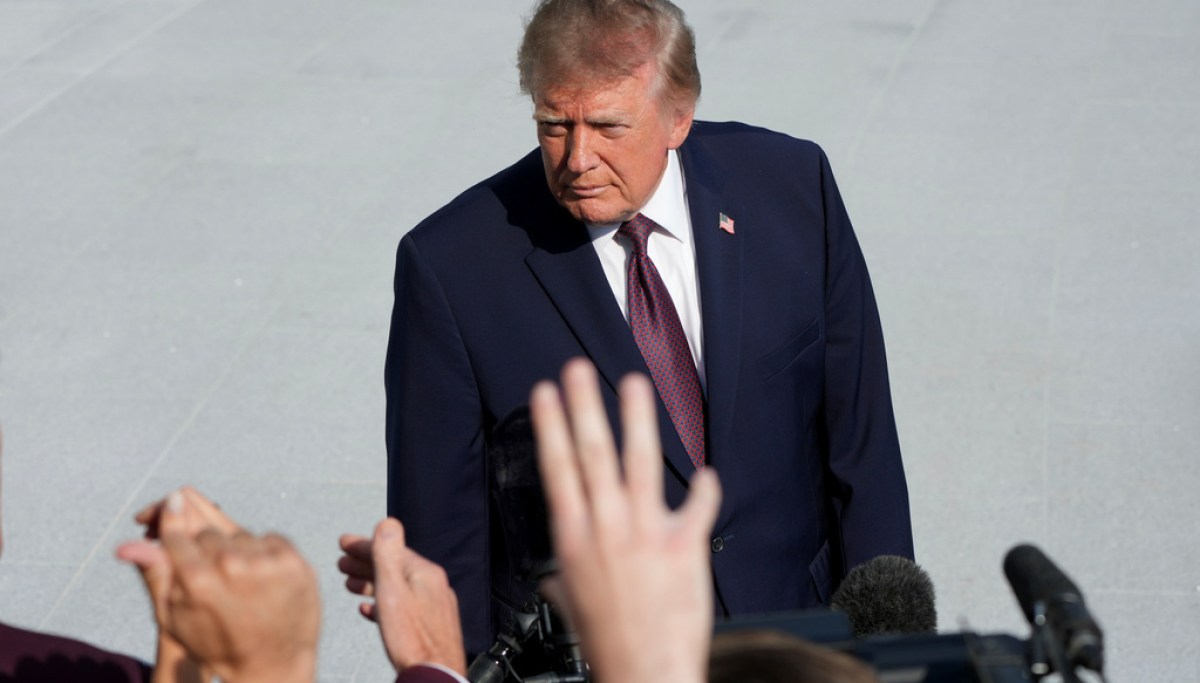
Cover image from aljazeera.com, which was analyzed for this article
Israel and Lebanon initiated a fragile 10-day truce brokered by Trump, enabling Lebanese returns to southern homes despite violation claims, as a step toward wider peace. Simultaneously, US naval blockade pressures Iran toward ceasefire negotiations, with Trump optimistic on a deal and warning of strikes if talks fail. Coverage contrasts de-escalation hopes with ongoing risks across political spectrum.
PoliticalOS
Friday, April 17, 2026 — Politics
A 10-day Israel-Lebanon ceasefire brokered by Trump has allowed displaced civilians to begin returning south, yet both sides have already reported violations and Hezbollah has conditioned its restraint on Israeli behavior. The pause is framed by Washington as removing an obstacle to nuclear talks with Iran, where a U.S. port blockade is exerting daily economic pressure estimated at hundreds of millions in lost oil revenue. The single most important reality is that core disputes over Iran's uranium stockpile, enrichment rights and verification remain unresolved, making the current de-escalation precarious and dependent on rapid, verifiable diplomatic follow-through.
What outlets missed
Most coverage underplayed the precise mechanics of the U.S. naval operation after Gen. Dan Caine clarified it applied only to Iranian ports rather than a full Strait of Hormuz closure; this distinction appeared in Al Jazeera and Reuters but was omitted or softened elsewhere, leaving readers with an inflated sense of scope. Iran's explicit same-day rejection of Trump's uranium handover claim, reported by Firstpost and referenced indirectly in UPI, received limited follow-through and was often reduced to 'no immediate confirmation.' Pre-truce Hezbollah rocket fire injuring Israelis on April 16 was detailed by the Times of Israel but not corroborated across the provided sample and therefore remains unverified by multiple independent sources. Finally, the 2026 conflict's origin point—Hezbollah's March 2 rocket barrage cited in Wikipedia compilations drawing from multiple wires—was downplayed in favor of focusing on Israeli actions, though the sequence itself has not been uniformly disputed.
Tens of thousands of displaced Lebanese began picking through the rubble of their southern villages on April 17, 2026, hours after a U.S.-brokered 10-day ceasefire with Israel took effect. The truce, fragile from the start, arrives amid a parallel American naval operation that has cut off Iranian oil exports in hopes of forcing nuclear concessions from Tehran. What hangs in the balance is whether this pause can stabilize one conflict long enough to resolve another.
The agreement was announced by President Donald Trump following separate calls with Lebanese President Joseph Aoun and Israeli Prime Minister Benjamin Netanyahu. It began at midnight local time, according to multiple outlets including The Guardian and Al Jazeera. Trump described the conversations as "excellent" on social media and invited both leaders to the White House for follow-on talks. Netanyahu welcomed the opportunity for what he termed a potential "historic peace agreement" while stressing that Hezbollah must disarm. Lebanese authorities, citing intermittent shelling, urged residents to delay their return. Hezbollah stated its fighters would keep "a finger on the trigger" against any violations.
On the ground the picture was mixed. Al Jazeera correspondent Zeina Khodr reported from Nabatieh that civilians "couldn't wait" to reclaim their land even for 10 days, though many found only destruction. Lebanon's National News Agency documented unexploded ordnance killing at least one boy and rescue teams recovering bodies from prior strikes. Israeli officials have not publicly detailed post-truce incidents from their side. Casualty figures remain attributed to each party: Lebanese authorities report more than 2,100 killed and 1.2 million displaced by Israeli operations since early March; Israel reports two civilians and 13 soldiers killed by Hezbollah actions. These numbers have not been independently verified by a single third party.
The ceasefire is explicitly linked to broader U.S.-Iran negotiations. Iranian officials had insisted any deal with Washington must address the Lebanon front. Pakistani Prime Minister Shehbaz Sharif, who hosted earlier indirect talks, praised Trump's mediation and called the truce a step toward "sustainable peace." Yet the core tension persists over Iran's nuclear program. Trump told reporters the same day that Tehran had "agreed very powerfully" to surrender its remaining highly enriched uranium stockpile—described by him as "nuclear dust" buried after 2025 U.S. strikes—and to forgo nuclear weapons. Iran did not confirm the claim. The U.N.'s International Atomic Energy Agency has previously estimated roughly 440 kilograms of such material at issue.
Simultaneously the U.S. Navy imposed a blockade on Iranian ports in the Strait of Hormuz after talks in Islamabad stalled. Trump called the measure "more powerful than the bombs," claiming it had already shifted Iranian behavior. The Federalist and Washington Examiner reported administration estimates of $435 million in daily lost oil revenue for Iran, already grappling with over 50 percent inflation. However, Gen. Dan Caine, chairman of the Joint Chiefs, clarified that the operation targets vessels entering or leaving Iranian ports rather than the entire strait, according to Al Jazeera and Reuters reporting. China, which buys the majority of Iran's seaborne crude, condemned the move.
Skeptics quickly pushed back. The Institute for the Study of War assessed that Iran's enriched uranium stockpile and enrichment rights remain the "core obstacle," with Tehran offering only partial transfers or down-blending for purported medical use. Rep. Adam Smith, the top Democrat on the House Armed Services Committee, told CNN that Trump's characterization of Iranian concessions was "manifestly false" and "pure fantasy." He cited a classified briefing indicating Iran retains thousands of missiles and drones. Brett McGurk, a former National Security Council official, emphasized on air that verification and inspectors would be essential.
Details that appeared in only one or two accounts could not be independently corroborated. These include specific pre-truce rocket fire from Hezbollah into Israel on April 16 that reportedly injured two people, cited by the Times of Israel but not uniformly echoed. Similarly, exact casualty breakdowns for the 2026 escalation vary by source and lack a unified audit. The broader timeline—Hezbollah opening the latest round on March 2 in solidarity with Iran—receives uneven attention depending on the outlet.
Trump has set a tight timeline, suggesting weekend talks and warning of renewed strikes if diplomacy collapses. Whether the Lebanon pause survives its initial days will test if military pressure and personal diplomacy can align interests long enough to produce verifiable commitments. For civilians on both sides of the border and for global energy markets, the stakes are immediate.
More in Politics

Federal Agents Search Omar Home in Ongoing Immigration Probe
Homeland Security agents searched the Minnesota Democrat's DC residence in a criminal probe, prompting accusations of political intimidation from Omar and Democratic leaders. Coverage spans left-leaning outlets like NPR, BBC, and The Guardian alongside right-leaning criticism from The Federalist and Daily Wire.

Trump Diesel Import Plan Draws Pushback Over Russia Ties
The weekend agreement drew bipartisan congressional pushback and criticism from Ukraine's Zelenskyy, with analysts downplaying US fuel price impacts. Right-leaning outlets like National Review, Dispatch, and Washington Examiner questioned its legality and effectiveness.

Independents Test Voter Appetite for Middle Ground in 2026 Midterms
Nearly 200 independents are running in competitive races as voters weigh ballot measures on housing costs in states like Massachusetts. Left-leaning coverage from NYT, NPR, and Guardian highlights turnout and key races while right outlets focus on GOP strategy.
Trump Rallies in Alaska, Ohio to Bolster GOP Senate Candidates
The president rallied in Wasilla for Sen. Dan Sullivan and faced empty seats at an Ohio event amid midterm concerns. Outlets across the spectrum covered the trips as signals of GOP vulnerability weeks before Election Day.
The Compass
You just read five takes on one story.
What's your take? Find your political shape in a few minutes.
Take the test