
Virginia's Redistricting Vote Ignites National Gerrymandering Clash

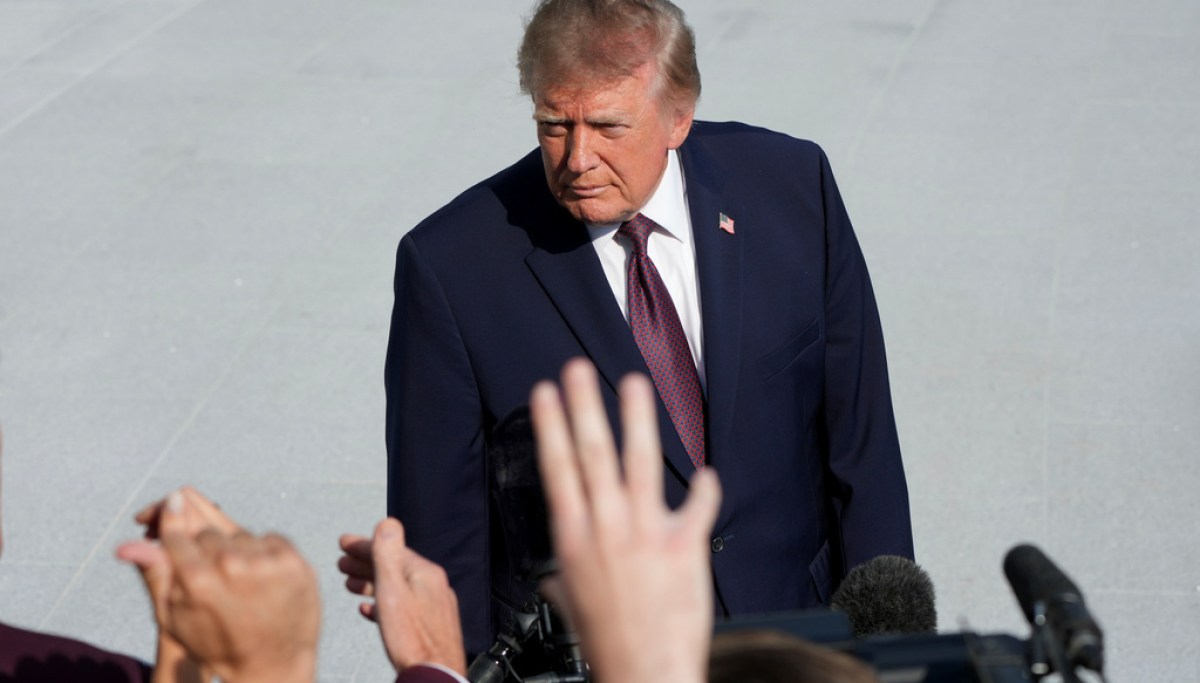
Cover image from washingtonexaminer.com, which was analyzed for this article
Virginia's map ruling amplifies fights over gerrymandering, with Democrats holding edge but GOP pushing back. Midterm implications loom as states rewrite lines. Coverage notes GOP remorse and legal strategies.
PoliticalOS
Thursday, April 23, 2026 — Politics
Virginia's narrow referendum approval has triggered an immediate court block, meaning the projected 10-1 Democratic map is not yet in effect and could still be overturned. This episode reveals gerrymandering as a self-reinforcing cycle in which each party's maximalism invites retaliation, with judges rather than voters likely to set the final boundaries before 2026. The single most important reality is that competing nonpartisan projections leave the net effect on House control uncertain, turning mid-decade map fights into a high-stakes gamble for both sides.
What outlets missed
Most coverage downplayed or omitted the precise mechanics of Virginia's approved amendment, which authorized the legislature to draw maps rather than letting voters directly enact new boundaries. Nonpartisan seat projections showing Republicans potentially netting between one and six House seats overall, even after Virginia and California moves, were rarely integrated; NPR and Cook Political Report analyses suggesting a continued GOP edge received little emphasis outside specialized trackers. The full timeline of parallel legal challenges, including an earlier federal court block on aspects of Texas's maps later partially upheld, was fragmented across outlets, obscuring that both sides' efforts remain provisional. Low turnout below 48 percent and the razor-thin margin were sometimes noted but seldom connected to broader questions about whether the outcome reflected a genuine public mandate for 10-1 partisan skew.
Control of the House in 2026 suddenly feels more precarious. One narrow vote in Virginia has escalated a retaliatory battle over congressional maps that now stretches from Texas to California to Florida, with courts poised to issue the final verdicts. Voters there approved a measure Tuesday that would let Democrats redraw lines in a state that leans only slightly blue, concentrating Republican strength into a single district and potentially flipping the delegation to 10-1. Republicans cried foul and won an immediate court injunction blocking certification. The map remains frozen.
The central tension is as old as the republic yet newly vicious: when one party redraws maps for maximum advantage, does the other gain moral or practical license to do the same? Texas Republicans, acting after public urging from President Trump, redrew their state's congressional boundaries mid-decade last summer. According to the Texas Tribune, the legislature passed the changes by comfortable margins in both chambers; the move was projected to net the GOP as many as five additional seats. Some Texas Republicans have since expressed private doubts about the reliability of certain Tejano districts, per reporting from NPR and the Brookings Institution, though those maps have largely withstood early legal tests.
Democrats responded in kind. California voters backed a countermeasure expected to deliver five Democratic seats. Then came Virginia. The referendum, which authorized the Democratic-controlled legislature to pursue new maps rather than drawing them by popular vote, passed 51.45 percent to 48.55 percent with turnout under 48 percent, according to the Virginia Public Access Project. Urban strongholds in Northern Virginia, Richmond and Virginia Beach provided the margin. Within 24 hours a circuit court judge halted certification, citing procedural concerns; the state attorney general appealed to the Virginia Supreme Court the same day. That injunction, reported across outlets including CNBC and Fox News, means the 10-1 map touted by supporters is not yet law.
Both sides have precedents. Gerrymandering received its name in 1812 from a Democratic-Republican governor. Republicans mastered newer mapping software after 2010 and netted seats in several states following the 2020 census, according to Princeton Gerrymandering Project trackers. Democrats, who once pushed independent commissions in Virginia, abandoned that stance once they held leverage. The Dispatch noted the irony: a state with a modest Democratic edge in presidential voting had maintained a near-even House split until this effort.
Republican reactions split. NRCC Chairman Richard Hudson offered a cautious defense when asked if the original strategy was worth it. Rep. Don Bacon of Nebraska called the sequence a mistake in hindsight, telling Axios the party failed to anticipate multi-state responses. Rep. Brian Fitzpatrick of Pennsylvania labeled it "a race to the bottom." California Rep. Kevin Kiley, who caucuses with Republicans, said he wished cooler heads had produced a truce. Speaker Mike Johnson, by contrast, voiced support for Florida proceeding with its own redraw. Florida lawmakers are scheduled to meet soon on maps that could add up to five Republican seats, though Gov. Ron DeSantis's team has encountered internal resistance and constitutional hurdles.
Democrats frame their moves as defensive. House Minority Leader Hakeem Jeffries has described them as a direct reply to Republican initiation of mid-decade changes. Yet a quote attributed to him in one newsletter, claiming Republicans sought to "rig the midterm elections," could not be independently verified in New York Times reporting.
Further complications loom. The Supreme Court is weighing a Voting Rights Act provision that has required creation of majority-minority districts in Southern states. A decision striking it down could trigger additional map changes potentially costing Democrats a dozen seats, according to a New York Times analysis cited by Vox. That single ruling could erase whatever edge Virginia and California deliver.
Nonpartisan projections differ. Some forecasts, including those referenced by NPR in late 2025, suggest Republicans could still emerge with a net gain of several House seats once all maps and court outcomes are settled. Others warn of a wash or slight Democratic advantage. No consensus exists because multiple states retain unsettled litigation and because demographic assumptions, particularly Latino voting patterns in Texas and Florida, remain uncertain.
History offers little comfort. Redistricting has always been political. Independent commissions have not eliminated partisan considerations. Mathematical tests for fairness collide with the reality that Americans do not live in evenly spaced grids. salamander-shaped districts emerge even under good-faith efforts. The test, as one columnist observed, is ultimately seemliness, restraint and moderation, qualities in short supply when power is on the line.
Legal fights will likely decide more than voters. Virginia's Supreme Court must rule on the injunction. Florida's constitution may constrain its legislature. Any new maps face inevitable lawsuits. By the time primaries begin in earnest, the landscape could shift again. What began as a targeted push in Texas has become a national arms race that neither party appears able to quit, even as many lawmakers quietly admit they wish it had never started.
More in Politics

Federal Agents Search Omar Home in Ongoing Immigration Probe
Homeland Security agents searched the Minnesota Democrat's DC residence in a criminal probe, prompting accusations of political intimidation from Omar and Democratic leaders. Coverage spans left-leaning outlets like NPR, BBC, and The Guardian alongside right-leaning criticism from The Federalist and Daily Wire.

Trump Diesel Import Plan Draws Pushback Over Russia Ties
The weekend agreement drew bipartisan congressional pushback and criticism from Ukraine's Zelenskyy, with analysts downplaying US fuel price impacts. Right-leaning outlets like National Review, Dispatch, and Washington Examiner questioned its legality and effectiveness.

Independents Test Voter Appetite for Middle Ground in 2026 Midterms
Nearly 200 independents are running in competitive races as voters weigh ballot measures on housing costs in states like Massachusetts. Left-leaning coverage from NYT, NPR, and Guardian highlights turnout and key races while right outlets focus on GOP strategy.
Trump Rallies in Alaska, Ohio to Bolster GOP Senate Candidates
The president rallied in Wasilla for Sen. Dan Sullivan and faced empty seats at an Ohio event amid midterm concerns. Outlets across the spectrum covered the trips as signals of GOP vulnerability weeks before Election Day.
The Compass
You just read five takes on one story.
What's your take? Find your political shape in a few minutes.
Take the test