
Third Trump Assassination Attempt Ignites Debate on Political Violence and Rhetoric
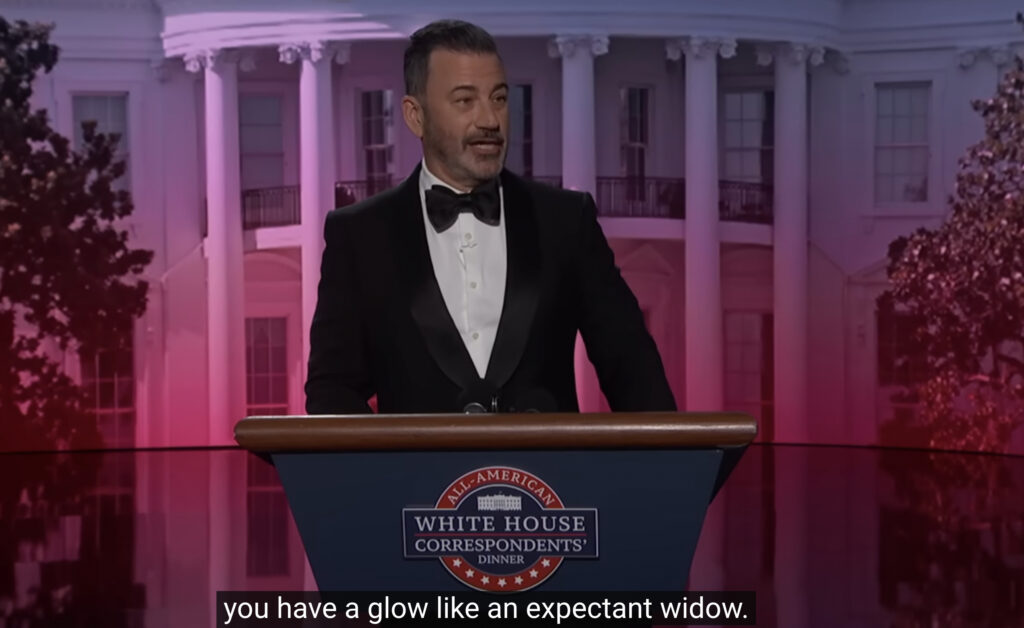
Cover image from thefederalist.com, which was analyzed for this article
Another assassination attempt on President Trump has renewed discussions on rising political violence in the US, with analysts noting bipartisan rhetoric fueling tensions. Trump is highlighted as a frequent target, but coverage points to broader societal issues. Security measures are under scrutiny following the incident.
PoliticalOS
Wednesday, April 29, 2026 — Politics
While President Trump has faced three documented attempts on his life since 2024 and both parties have lost prominent figures to violence, available data show support for actual political killing remains below 3 percent across the population and incidents are carried out by isolated, often mentally troubled individuals rather than organized movements. Public fear far outstrips the statistical reality, giving politicians on all sides incentive to exploit anxiety for policy or electoral gain. The republic has endured far higher historical rates of assassination and domestic terrorism; whether today’s polarized rhetoric and social-media amplification erode norms further will depend on whether leaders dial down inflammatory language and institutions maintain precise focus on genuine threats.
What outlets missed
Most coverage omitted granular shooter backgrounds that blur partisan lines: Crooks was a registered Republican who voted in 2022 midterms; Routh voted for Trump in 2016. These details, drawn from FBI and registrar records, were not corroborated across all outlets and therefore remain partially unverified in aggregate. Independent trackers such as Princeton’s Bridging Divides Initiative and American University’s PERIL have quantified political violence incidents reaching 30-year highs in some categories since 2016, with documented spikes in 2025; these trend lines received little sustained attention. The full video of fired UnitedHealthcare employee Alison King shows her explicitly criticizing her own cynical reaction and calling national division “sad,” a nuance collapsed in sensational retellings. Finally, cumulative hate-crime statistics cited by experts require cross-checking against annual FBI releases; the four-year aggregates of 9,000 religious and 25,000 racial incidents could not be independently verified in every source.
A gunman rushing security at the White House Correspondents’ Association Dinner on April 26, 2026, has once again placed President Donald Trump at the center of national fears about political violence. The suspect, Cole Tomas Allen, a 31-year-old California tutor and computer engineer, allegedly opened fire inside the Washington Hilton, armed with two firearms and three knives. No one was injured; Allen was arrested on the spot and now faces life in prison. Authorities say he left a document expressing fury at Trump administration policies, alluding to sexual misconduct and declaring he was “no longer willing” to “coat my hands with his crimes.”
The incident marks the third known attempt on Trump since July 2024. That earlier rally shooting in Butler, Pennsylvania, grazed the president’s ear, killed one attendee and wounded two others; the gunman, Thomas Matthew Crooks, was a 20-year-old registered Republican whose online searches included both Trump and Biden events. A second 2024 effort at a golf course involved Ryan Routh, who was unaffiliated with either party and had voted for Trump in 2016. Law enforcement has described all three attackers as acting alone.
What makes this moment different is the breadth of recent violence touching both parties. In 2025, conservative activist Charlie Kirk was assassinated. Minnesota Democratic state legislator Melissa Hortman and her husband were killed. An arson attack targeted the Pennsylvania governor’s mansion during Passover while Democratic Gov. Josh Shapiro and his family were inside. Earlier episodes include the 2022 hammer attack on Paul Pelosi, husband of then-Speaker Nancy Pelosi, and a foiled 2020 plot by right-wing militia members to kidnap Michigan Gov. Gretchen Whitmer. In 2022, Nicholas Roske was arrested outside Justice Brett Kavanaugh’s home carrying a gun and knife after the leak of the Dobbs abortion decision sparked protests and doxxing of conservative Supreme Court justices.
The central tension is whether these episodes signal a dangerous new phase or fit within America’s long, grim history of political attacks. Dartmouth professor Sean Westwood, who studies violence and public attitudes, told The New York Times that the 19th century saw three of nine presidents assassinated; the 1960s and 1970s brought killings of John F. Kennedy, Robert Kennedy and Martin Luther King Jr. plus waves of bombings by organized radical groups. Today’s pattern, he said, involves disorganized “lone wolves,” often young, male and struggling with mental illness, driven more by personal anger than coherent ideology. Most leave no manifesto.
Public opinion data paint a complicated picture. Surveys from the Polarization Research Lab conducted after Kirk’s killing found fewer than 1 percent of Americans deem murder for partisan reasons acceptable, with near-total rejection across parties. Yet an NPR-PBS News-Marist poll last fall showed nearly three in 10 adults believe “Americans may have to resort to violence in order to get the country back on track,” split roughly evenly between Democrats and Republicans. Westwood’s tracking over five years shows support for political violence holding steady around 2 percent for both parties, with no major post-attempt surge; Republican support actually dropped near zero after the 2024 Butler shooting. Still, 90 percent of Americans fear political violence, and one-third hesitate to display yard signs or bumper stickers.
Perceptions appear miscalibrated. Westwood noted that 73 percent of respondents ranked political violence as a greater threat than a future pandemic, 67 percent greater than China’s influence and 66 percent greater than climate change, despite FBI data showing thousands more hate crimes each year. Over four years ending in 2024, trackers recorded roughly three dozen political violence incidents versus more than 9,000 religious hate crimes and 25,000 racial ones. Some independent monitors, including Princeton’s Bridging Divides Initiative, have documented rises in certain political violence metrics since 2016, though exact national tallies vary by definition.
Rhetoric receives heavy blame. Trump allies, including White House press secretary Karoline Leavitt, pointed to Allen’s document and argued that “deranged lies and smears” from Democrats and media inspire unstable individuals. Trump himself has described the attempts as proof of his impact, while using phrases such as “enemy from within.” Critics note Trump’s own statements have at times invoked violence and spread conspiracy theories about opponents. James Comey, former FBI director, was indicted for a second time after posting then deleting an Instagram image of seashells arranged to spell “86 47”; officials called it a threat—86 as slang for elimination, 47 as Trump’s presidential numbering—while Comey described it as a political statement.
Corporate America reacted swiftly to visible approval. UnitedHealthcare fired social media manager Alison King after she posted a TikTok video reacting to the dinner incident. In it she said her first thought was that the attempt was “probably fake,” followed by “Aww, they missed?” She then called her own reaction “sad” and added, “That’s when you know we’re cooked as a country.” The company stated that “violence is never acceptable and any comments that suggest otherwise are in no way consistent with our mission and values.”
Security questions linger. The Secret Service and local police have faced renewed scrutiny over perimeter breaches at high-profile events. Broader societal factors—social media amplification, untreated mental illness, eroded trust—appear to lower barriers for troubled individuals to act on circulating grievances. Experts from across institutions agree that organized ideological networks like the Weather Underground no longer dominate; today’s threats are fragmented.
History offers perspective. The republic survived the 1860s, the 1960s and the political bombings of the 1970s. Isolated killings of leaders have not ended American democracy. Yet the steady drip of incidents, paired with sky-high fear, creates fertile ground for politicians to propose measures that test civil liberties—whether expanded speech restrictions, faculty purges or heightened surveillance. The data suggest the violence itself remains limited. The reaction to it, and the incentives it creates, may prove more corrosive.
More in Politics

Federal Agents Search Omar Home in Ongoing Immigration Probe
Homeland Security agents searched the Minnesota Democrat's DC residence in a criminal probe, prompting accusations of political intimidation from Omar and Democratic leaders. Coverage spans left-leaning outlets like NPR, BBC, and The Guardian alongside right-leaning criticism from The Federalist and Daily Wire.

Trump Diesel Import Plan Draws Pushback Over Russia Ties
The weekend agreement drew bipartisan congressional pushback and criticism from Ukraine's Zelenskyy, with analysts downplaying US fuel price impacts. Right-leaning outlets like National Review, Dispatch, and Washington Examiner questioned its legality and effectiveness.

Independents Test Voter Appetite for Middle Ground in 2026 Midterms
Nearly 200 independents are running in competitive races as voters weigh ballot measures on housing costs in states like Massachusetts. Left-leaning coverage from NYT, NPR, and Guardian highlights turnout and key races while right outlets focus on GOP strategy.
Trump Rallies in Alaska, Ohio to Bolster GOP Senate Candidates
The president rallied in Wasilla for Sen. Dan Sullivan and faced empty seats at an Ohio event amid midterm concerns. Outlets across the spectrum covered the trips as signals of GOP vulnerability weeks before Election Day.
The Compass
You just read five takes on one story.
What's your take? Find your political shape in a few minutes.
Take the test