
Pope Leo XIV Encyclical Calls for AI Regulation to Protect Human Dignity
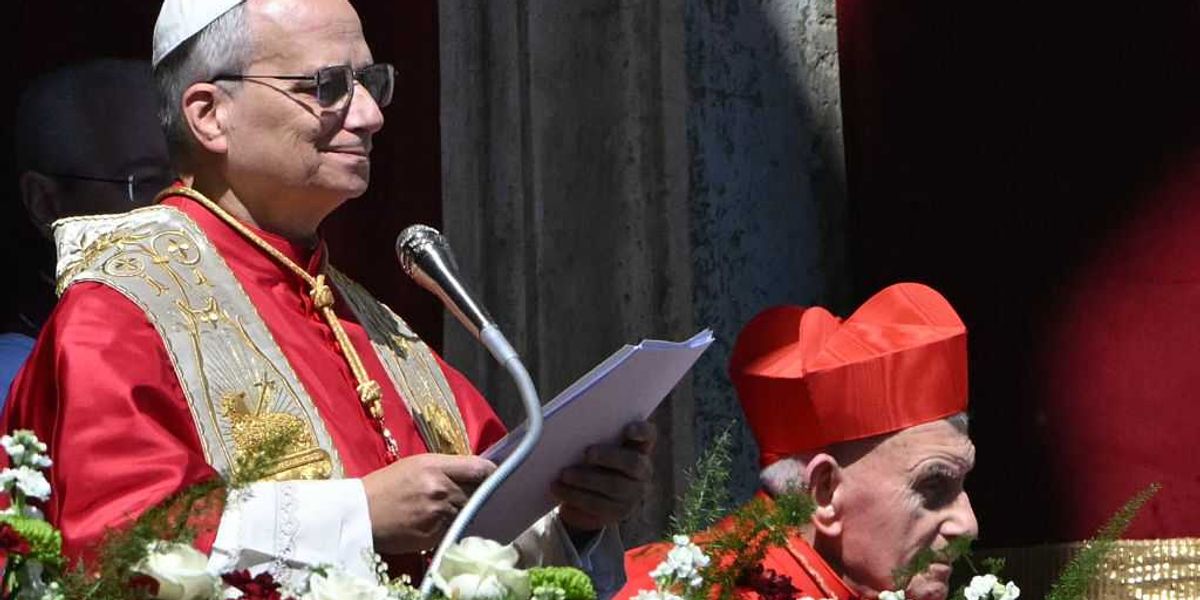
Cover image from theblaze.com, which was analyzed for this article
Pope Leo XIV released a major 42,000-word document urging governments to regulate AI, protect workers and children, and ensure humans retain decision-making authority including on weapons. The statement drew input from AI leaders and commentary across the spectrum.
PoliticalOS
Wednesday, May 27, 2026 — Tech
The encyclical supplies moral principles rather than detailed policy prescriptions, urging that AI development remain subordinate to human dignity and that governments retain authority over high-stakes decisions. Its reception has been shaped more by each outlet’s existing framing of technology and politics than by new facts in the text itself.
What outlets missed
The encyclical explicitly connects AI governance to earlier Vatican initiatives, including the 2020 Rome Call for AI Ethics signed by Microsoft, IBM and others, and Pope Francis’s G-7 remarks on lethal autonomous weapons. Multiple outlets omitted the document’s repeated emphasis on subsidiarity and the need for decisions to be made at the most local effective level rather than through centralized global mandates. The text also contains an extended section on the moral status of truth in democratic life that received little attention outside the primary document itself.
Pope Leo XIV Addresses Artificial Intelligence in New Encyclical
Pope Leo XIV released his first encyclical on Monday, a 42,000-word document titled Magnifica Humanitas that examines the rise of artificial intelligence and its effects on work and human participation in society. The text, also referred to as On Safeguarding the Human Person in the Time of Artificial Intelligence, draws explicit parallels to Pope Leo XIII's 1891 encyclical Rerum Novarum, which addressed labor conditions during the industrial era.
The new document stresses that work serves purposes beyond mere income. It describes labor as a path to personal maturity, relationships, and contribution to the common life, rather than simply a means of sustenance. This framing echoes longstanding observations that productive activity shapes skills, habits, and social standing in ways that transfers or subsidies rarely replicate.
The encyclical arrives amid rapid AI development and differing policy approaches across governments. The Trump administration has favored a deregulatory stance to speed innovation, as articulated by Vice President J.D. Vance at recent international summits where safety concerns took a back seat to competitive deployment. Industry participants, including figures at Anthropic, have sought input from religious and academic sources on broader questions raised by the technology.
Critics of unchecked AI displacement argue that removing large numbers of workers from economic roles risks creating new layers of inequality based on participation rather than outcomes alone. Proponents of faster adoption counter that markets have historically absorbed technological shifts by redirecting labor toward higher-value tasks, provided incentives remain intact. The encyclical leans toward the former view by questioning whether efficiency gains justify sidelining human agency in production.
Historical patterns offer some guidance here. Past industrial transitions expanded overall opportunity when prices, wages, and investment signals operated without heavy distortion. Attempts to preserve specific jobs through mandates or restrictions often slowed adaptation and raised costs for consumers. AI presents similar trade-offs: gains in productivity against potential losses in the dispersed knowledge that workers acquire through direct involvement.
The document also touches on power concentrations in technology sectors, framing certain Silicon Valley approaches as dismissive of labor's non-material role. Yet concentrated authority in any quarter, whether corporate or institutional, tends to overlook localized information that markets aggregate more effectively than central directives.
Catholic social teaching has long rejected both socialism and laissez-faire extremes, a position restated in the new text. Empirical records from various economies show that systems preserving property rights, contract enforcement, and open competition have lifted living standards more consistently than alternatives reliant on top-down allocation. Whether AI accelerates or interrupts that record will depend less on declarations than on the rules governing capital allocation and labor mobility.
The encyclical's length and scope reflect the scale of questions now facing policymakers, businesses, and individuals. Its emphasis on work as integral to dignity aligns with evidence that sustained employment correlates with better health, family stability, and civic engagement across populations. Future developments in AI will test whether those benefits can be maintained when algorithms perform growing shares of routine and cognitive tasks.
You just read Conservative's take. Want to read what actually happened?
More in Technology
Trump Pushes Community Dividends to Ease Data Center Backlash
Trump suggested tech companies pay local communities a 'dividend' to gain support for massive AI data centers amid growing backlash over energy use and infrastructure.
Musk Pledges One SpaceX Share to Every U.S. Child
Musk announced plans to distribute one SpaceX share to each of roughly 73 million American children next year, drawing praise from Trump and signaling closer alignment between the two.

Trump Administration Bans DeepSeek AI From Federal Civilian Agencies
Tech stocks rebounded on AI optimism while hyperscalers and firms navigate data center infrastructure, earnings focus, and regulatory scrutiny including bans on certain Chinese AI tools.

Musk Says He Will Give One SpaceX Share to Every US Child
Elon Musk announced plans to distribute one SpaceX share to every American child in 2027, with hints of further giveaways. The pledge drew coverage across outlets amid broader discussions of AI philanthropy and Musk entities.
The Compass
You just read five takes on one story.
What's your take? Find your political shape in a few minutes.
Take the test